



E-Commerce•10 Min
Replatform or Optimize? A Decision Framework for Ageing Ecommerce Stores (2026)

Written byRishi Thacker
Posted onSep 16, 2026



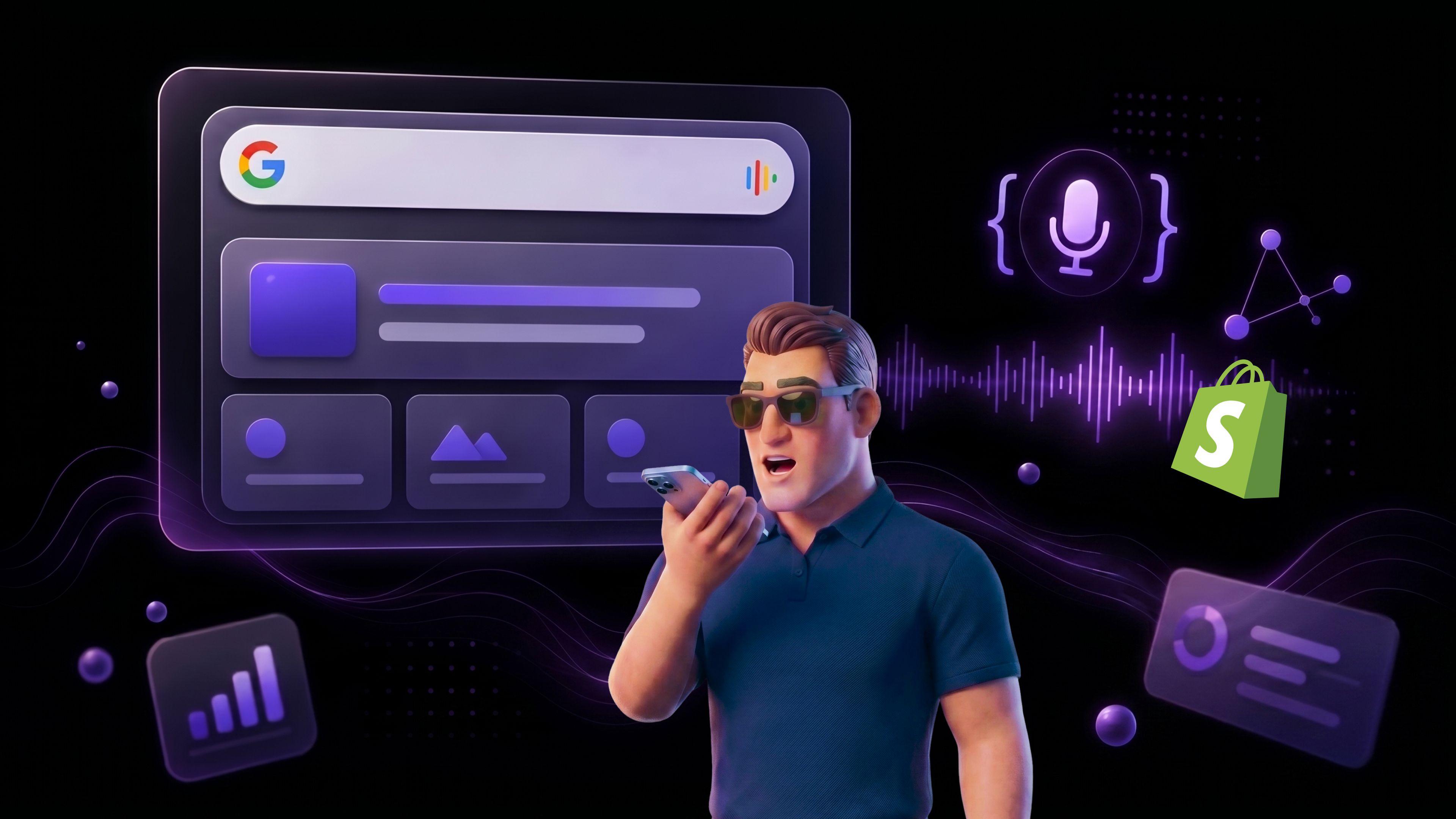
People are no longer searching only by typing keywords into Google.
They are asking full questions.
They ask Siri where to buy a product. They ask Google Assistant for recommendations. They ask Alexa for product ideas. They ask AI tools like ChatGPT, Gemini, and Perplexity to compare brands, explain options, and suggest what to buy.
For Shopify merchants, this changes the rules.
Traditional SEO was about ranking on a results page. Voice search is about becoming the answer. There is no long list of blue links. There is usually one spoken result, one summary, or one recommended brand.
That means your Shopify store needs to be easy for search engines and AI systems to understand, summarize, and speak aloud.
This is where voice search optimization and Speakable Schema become important.
Voice search optimization is the process of preparing your Shopify store content so it can answer spoken questions clearly.
Instead of only targeting short keywords like “men’s running shoes,” you optimize for natural questions like “What are the best running shoes for daily training?” or “Where can I buy comfortable sneakers online?”
For Shopify stores, this means your product pages, collection pages, blogs, and FAQs should be written in a way that sounds natural, answers real buying questions, and gives search engines enough structure to understand your content.
Speakable Schema is a type of structured data that helps search engines identify which parts of your content are suitable to be read aloud by voice assistants.
In simple terms, it tells search engines:
“This part of the page is clear, useful, and suitable for a spoken answer.”
It does not rewrite your content. It does not guarantee voice search visibility. But it helps search engines understand which sections of your page can work well as voice responses.
For Shopify merchants, this can be useful on content like buying guides, FAQ pages, product education blogs, and comparison articles.
Voice search matters because customer behavior is becoming more conversational.
A shopper may not type “best collagen supplement Shopify store.” Instead, they may ask, “Which collagen supplement is best for women over 30?” That question has more intent, more context, and more purchase potential.
Voice searches are usually longer and more specific. They often reveal exactly what the customer wants, what problem they are trying to solve, and how close they are to buying.
This is valuable for Shopify merchants because voice search users often have high intent. They are not just browsing. They are asking for help making a decision.
If your content answers those questions clearly, your store has a better chance of being surfaced in search results, AI summaries, and voice responses.
Also Read: GEO: The Foundation of AI Visibility Every Shopify Store Needs
Traditional SEO often focuses on keywords, rankings, metadata, backlinks, and technical performance. These still matter.
But voice search adds another layer.
Voice queries are more natural. They sound like how people speak in real life. Instead of “best protein powder,” someone might ask, “What is the best protein powder for beginners who work out three times a week?”
That difference matters.
To optimize for voice search, your content should answer complete questions. It should be clear enough for a voice assistant to read aloud without sounding awkward. It should also avoid unnecessary complexity because spoken answers need to be quick and understandable.
This does not mean your content should become basic. It means your answers should be direct first, then detailed.
Most Shopify stores are not built for voice search.
Product pages often contain short descriptions that focus only on features. Collection pages may have little or no explanatory content. Blog posts may be keyword-focused but not question-focused. FAQ sections are often missing or too thin.
This creates a problem.
Search engines and AI tools need context. They need to understand what your products are, who they are for, why they matter, and what questions they answer.
For example, a product page that says “Premium organic face serum with vitamin C” is not enough.
A voice-friendly product page should also answer questions like:
Who is this serum for?
How should it be used?
What skin concerns does it help with?
Can it be used daily?
Is it suitable for sensitive skin?
These answers help both customers and search engines.
Also Read: Your Shopify Store Is Now Shoppable Inside ChatGPT
Speakable Schema works best when your content already has clear answers.
Think of it as a signal layer. It highlights the parts of your page that are most useful for spoken responses.
For Shopify stores, Speakable Schema should not be applied randomly across every product page. It should be used carefully on pages where spoken answers make sense.
Good candidates include:
The goal is not to mark up everything. The goal is to help search engines identify the most useful parts of your content.
Before implementing Speakable Schema, your content needs to be voice-ready.
The best voice search content has three qualities.
First, it answers a specific question. Every important section should clearly respond to something a customer might ask.
Second, it sounds natural when read aloud. If a sentence feels too long, complicated, or robotic, it is probably not ideal for voice search.
Third, it gives the answer quickly before expanding into more detail. This format helps both humans and search engines.
For example, instead of starting a section with a long explanation, begin with a direct answer:
“Organic cotton is better for sensitive skin because it is softer, breathable, and less likely to contain harsh chemical residues.”
Then expand with supporting details.
This structure works well for voice search, featured snippets, and AI-generated summaries.
Implementing Speakable Schema requires two parts: choosing the right content and adding structured data correctly.
Start by selecting the page you want to optimize. A blog post or FAQ page is usually the best place to begin because these pages naturally answer questions.
Next, identify the specific section that should be read aloud. This might be a short answer under an FAQ question or a concise explanation inside a guide.
Then add Speakable Schema using JSON-LD. Here is a simple example:
{
"@context": "https://schema.org",
"@type": "WebPage",
"speakable": {
"@type": "SpeakableSpecification",
"cssSelector": [
".speakable-summary"
]
}
}
In this example, .speakable-summary is the CSS class used for the section you want to highlight.
For Shopify, this can usually be added through your theme code, a custom Liquid section, or a schema management app. If you are not comfortable editing theme files, it is better to get help from a Shopify developer.
After implementation, test the structured data using a schema validation tool. This helps ensure the markup is clean and does not create technical errors.
Not every page needs Speakable Schema.
Start with pages that answer real customer questions.
A strong starting point is your FAQ page. Customers often ask direct questions about shipping, returns, sizing, materials, usage, ingredients, compatibility, and delivery time.
Next, optimize your buying guides. These pages are ideal because they naturally help customers compare options and make decisions.
Product education blogs are also valuable. For example, if you sell skincare, blogs like “How to choose the right serum for dry skin” or “What does niacinamide do for your skin?” can work well for voice and AI search.
Collection pages can also be improved, but they need carefully written content. A collection page should not only list products. It should explain who the collection is for and how to choose the right product.
Voice search keywords are usually question-based.
Instead of only targeting short phrases, focus on conversational queries. These often begin with words like what, how, which, where, when, why, and best.
For example, a Shopify store selling supplements could target questions like:
“What is the best supplement for better sleep?” “How do I choose a protein powder?” “Which vitamins should beginners take daily?”
A fashion store might target:
“What should I wear to a summer wedding?”
“How do I style oversized shirts?”
“Which fabric is best for hot weather?”
These questions can become headings, FAQ entries, blog topics, and short answer sections.
This is also useful for LLM optimization because AI tools prefer clear, question-answer content.
Speakable Schema is not only about voice assistants. It also supports a broader shift toward AI-driven discovery.
Large language models prefer content that is clear, structured, and easy to summarize. If your Shopify store has well-written answers, strong headings, schema markup, and clean page structure, it becomes easier for AI tools to understand.
This is where SEO and LLM optimization overlap.
Search engines want reliable answers. Voice assistants want speakable answers. AI tools want extractable answers.
The same foundation helps all three.
That foundation includes clear content, strong structure, schema markup, internal linking, and technical performance.
Also Read: LLMs.txt for Shopify Stores
The biggest mistake is adding schema before fixing the content.
Schema helps search engines understand content. It does not make weak content strong.
Another mistake is marking up long paragraphs. Speakable content should be concise and easy to read aloud. If a section takes too long to speak, it is not ideal.
Merchants also make the mistake of optimizing only blog posts while ignoring product and collection pages. Voice search can influence commercial discovery too. Customers ask product-related questions, not just informational ones.
Finally, many stores forget mobile performance optimization. Voice search is heavily mobile-driven, and a slow Shopify store creates a poor experience after the user clicks through.
Use this checklist before publishing or updating important pages:
| Area | What to Check |
|---|---|
| Content | Does the page answer real customer questions? |
| Structure | Are headings clear and question-based? |
| Readability | Can key answers be read aloud naturally? |
| Schema | Is Speakable Schema added only where relevant? |
| Speed | Is the page fast on mobile? |
| Internal Links | Does the page guide users to products or collections? |
This keeps the process simple without overcomplicating the strategy.
Speakable Schema is structured data that tells search engines which parts of your page are suitable to be read aloud by voice assistants.
Not directly. It is not a traditional ranking factor. However, it can improve how search engines understand your content, which may support visibility in voice and AI-driven results.
No. Use it only where the content is clear, informational, and useful as a spoken answer. FAQ pages, guides, and educational content are usually better starting points.
Yes, indirectly. Voice search helps customers discover answers faster. If your store provides those answers clearly, it can build trust and bring more qualified visitors to your store.
No. Voice search optimization is part of a broader SEO strategy. It focuses more on conversational queries, direct answers, structured content, and mobile experience.
Voice search is not replacing SEO.
It is expanding.
Shopify merchants now need to think beyond rankings. They need to think about how their store is understood, summarized, and spoken by search engines and AI tools.
Speakable Schema is one piece of that shift.
It helps identify the parts of your content that are clear enough to become spoken answers. But the real work is deeper than schema. It starts with better content, clearer structure, stronger FAQs, faster pages, and a better understanding of how customers ask questions.
The stores that adapt early will have an advantage.
Because in voice search, being visible is good.
But being the answer is better.
At Huptech Web, we help Shopify brands prepare for the next generation of ecommerce discovery.
That includes technical SEO, structured data, AI-ready content, voice search optimization, and conversion-focused user experience.
If your goal is to make your Shopify store easier to find, easier to understand, and easier to recommend, we can help you build that foundation.

Drop your details and we'll email the download link straight to your inbox.