



E-Commerce•10 Min
Replatform or Optimize? A Decision Framework for Ageing Ecommerce Stores (2026)

Written byRishi Thacker
Posted onSep 16, 2026



Who This Guide Is For :-
This guide is built for three groups:
Whether you're running a single DTC brand or managing twenty client stores, the playbook here applies. If you've already invested in SEO, you're closer to GEO-readiness than you think.
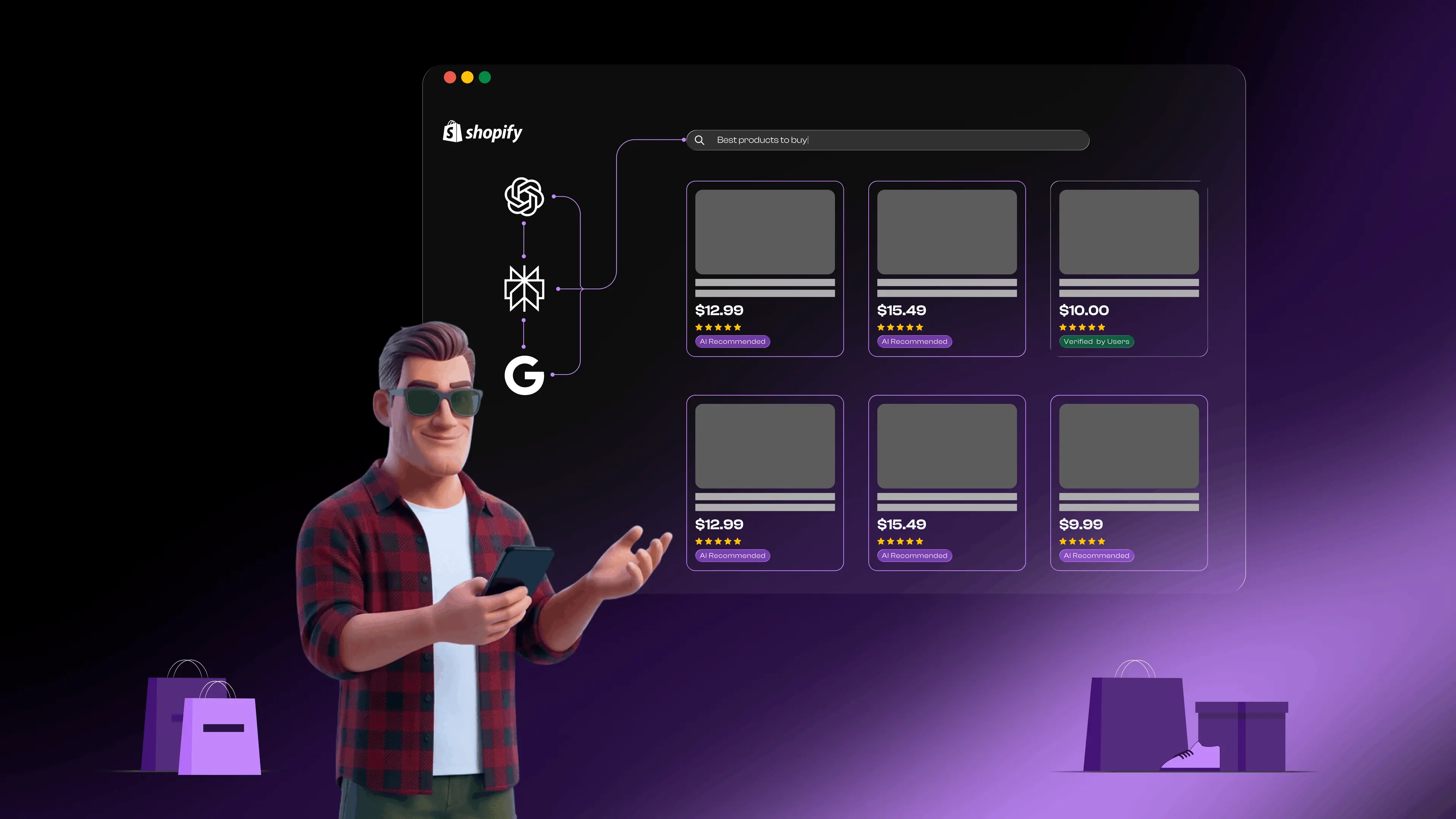
Here's what's shifting. More shoppers are typing product questions into ChatGPT, Perplexity, and Google's AI Overviews instead of running traditional Google searches. They're asking things like "what's the best running shoe under $150" and getting a direct, curated recommendation not a page of ten blue links.
The data reflects this. According to Shopify's official reporting, orders flowing to Shopify stores from AI search queries increased roughly 11x between January 2025 and January 2026, while AI-driven traffic grew approximately 7x over the same period (source: Shopify "AI Commerce at Scale" announcement, March 2026). A Profound Commerce study analyzing 94 ecommerce sites found that ChatGPT referral traffic converted at 1.81% compared to 1.39% for non-branded organic search that is a 31% higher conversion rate (source: Search Engine Land, March 2026).
Meanwhile, organic click-through rates are declining in queries where AI-generated answers appear. Research from several SEO platforms indicates that zero-click rates for AI Overview queries can reach 60–80%.
This doesn't mean traditional search is dead. But a new discovery layer is forming on top of it. And stores that aren't optimized for it are missing a growing segment of high-intent buyers.
GEO stands for Generative Engine Optimization. It's the practice of optimizing your content, product data, and online presence so AI-powered platforms like ChatGPT, Perplexity, Google's AI Overviews, Microsoft Copilot can cite and recommend your products in their responses.
The key difference from SEO: traditional search optimization gets you ranked as a link. GEO gets you cited as a recommendation. When someone asks ChatGPT "best Shopify themes for fashion," they don't see ten results to choose from. They get three or four recommendations with reasons. Being one of those recommendations is fundamentally different from being one of ten links.
How AI engines work under the hood is different too. They use a query fan-out that breaks a user's question into multiple sub-queries, searching across dozens of sources simultaneously, then synthesizing everything into a single answer. What they look for:
GEO doesn't replace SEO. It extends it. A strong SEO foundation makes GEO dramatically easier. But SEO alone won't get you into AI-generated answers.
Three developments in early 2026 made GEO immediately relevant.
Shopify's Agentic Storefronts Are Live
Shopify's Winter '26 Edition introduced Agentic Storefronts that is making Shopify product catalogs accessible to AI shopping agents on ChatGPT, Perplexity, Copilot, Google AI Mode, and Gemini. Merchants configure data once; Shopify handles distribution.
Important context: Agentic Storefronts make your products available to AI platforms, but availability isn't the same as being recommended. Whether AI agents surface your products depends on data quality, structured markup, and brand authority which is where GEO comes in.
Also Read: Your Shopify Store Is Now Shoppable Inside ChatGPT
Early data suggests AI-referred shoppers have higher purchase intent. The Profound Commerce study found ChatGPT traffic converting 31% higher than non-branded organic. Several Shopify agencies report longer session durations and lower bounce rates from AI-referred visitors.
A note on these numbers: AI referral traffic is still a small percentage of overall ecommerce traffic for most stores. The conversion advantage is promising, but the volume hasn't replaced traditional channels. Think of it as an emerging, high-quality channel worth investing in early.
With AI Overviews appearing in more search results, organic clicks for traditional listings are shrinking. For stores relying heavily on Google organic, diversifying into AI discovery channels is a practical hedge.
Before optimizing, it helps to understand how AI shopping agents work. When a customer asks ChatGPT "what's the best moisturizer for dry skin under $40," here's what happens:
The critical insight: AI agents can't fill gaps the way human shoppers can. A person might forgive a product page with a vague description. An AI agent will skip it for a competitor with better-structured data.
| Step | Action | Priority | Key Focus Areas |
| 1 | Structured Data & Schema Markup | Critical | Product, Review/AggregateRating, FAQPage, and Organization schema. |
| 2 | Product Data Cleanup | Critical | Rewriting titles and descriptions for AI readability and clarity. |
| 3 | Allow AI Crawlers (robots.txt) | Critical | Ensuring bots like GPTBot and OAI-SearchBot aren't blocked. |
| 4 | Conversational Content Strategy | High | Creating FAQ sections and blog content that answers natural language queries. |
| 5 | Trust & Authority (E-E-A-T) | High | Strengthening brand mentions, social proof, and expert signals. |
| 6 | Technical Foundations | Medium | Optimizing site speed and mobile responsiveness for better indexing. |
Implement these schema types via JSON-LD:
Most Shopify themes include basic Product schema, but it's usually incomplete. Audit what's there, fill gaps, and validate with Google's Rich Results Test.
Before (typical):
"Premium organic face moisturizer. Made with natural ingredients. Suitable for all skin types. 50ml."
After (GEO-optimized):
"This lightweight daily moisturizer absorbs in under 30 seconds without leaving a greasy residue - ideal for layering under makeup or sunscreen. Formulated with organic aloe vera, hyaluronic acid, and vitamin E for deep hydration without clogging pores. Best for normal to dry skin. Fragrance-free. 50ml / 1.7 fl oz."
Write like you're explaining the product to a friend, not writing ad copy.
If your robots.txt blocks AI crawlers, you're invisible to AI search regardless of content quality. Ensure these are NOT blocked:
Important distinction: search bots (powering real-time AI recommendations) and training bots (scraping for model training) are different. At minimum, always allow the search bots. In Shopify, edit via Settings > Custom Data > robots.txt.liquid.
If you've enabled Agentic Storefronts, Shopify shows AI-attributed orders separately in your admin dashboard. Use ShopifyQL queries in Analytics > Reports > New Exploration to filter sessions by referrer domains matching AI platforms.
Create a custom channel group: Admin > Data Display > Channel Groups. Set up rules matching referrer domains: chat.openai.com, chatgpt.com, perplexity.ai, bing.com/chat, copilot.microsoft.com, gemini.google.com.
Track how often AI platforms cite your brand. Tools like Otterly.ai monitor brand mentions across ChatGPT, Perplexity, Google AI Overviews, and Copilot. You can also manually test by asking AI platforms about your product category.
AI-enabled browsers don't always pass clean referrer data. Some AI-driven visits may show up as "Direct" or "(not set)" in GA4. Expect actual AI traffic to be somewhat higher than reported.
| Feature | SEO (Search Engine Optimization) | AEO (Answer Engine Optimization) | GEO (Generative Engine Optimization) |
|---|---|---|---|
| Goal | Rank in search results | Win featured snippets | Get cited in AI responses |
| Target | Google, Bing SERPs | Voice, featured snippets | ChatGPT, Perplexity, Copilot |
| Tactics | Keywords, backlinks, technical | Structured answers, FAQ schema | Structured data, brand authority, AI crawlability |
| User Experience (UX) | User clicks a link | User reads a snippet | User gets a recommendation and buys |
| Role | Foundation | Extension of SEO | Extension of SEO + AEO |
All three work together. GEO doesn't replace SEO, it requires it.
AI-powered product discovery is real, it's growing, and it's already converting for Shopify stores that have optimized for it.
The fundamentals aren't complicated: clean structured data, well-written product descriptions, AI-friendly content, and a site that AI crawlers can actually access. If you've already invested in SEO, you're building on a strong foundation. GEO is the next layer.
The stores that implement these fundamentals now will have a compounding advantage. Every piece of structured data you add, every product description you improve, every buying guide you publish. It builds a consistent, authoritative data profile that AI engines learn to rely on over time.
You don't need to overhaul everything overnight. Start with your top 20 products. Implement schema. Unblock AI crawlers. Write two buying guides. Measure what happens in 30 days. Then expand.
At Huptech Web, we run GEO audits for Shopify merchants covering structured data gaps, AI crawlability issues, product data quality, and content opportunities. You'll get a clear picture of what AI platforms currently see (and don't see) about your store, plus a prioritized action plan.
We'll tell you exactly what needs to change, how long it'll take, and what kind of results to expect based on your niche and current SEO profile.
GEO is the practice of optimizing your online presence so AI platforms like ChatGPT, Perplexity, and Google's AI Overviews cite and recommend your products in their generated responses. It combines structured data, product data quality, brand authority, and technical accessibility to make your store visible to AI shopping agents.
No. GEO builds on SEO. A strong SEO foundation like good content, solid backlinks, fast site speed makes GEO much more effective. Think of SEO as getting ranked and GEO as getting recommended. You need both.
SEO optimizes for ranked search result lists. GEO optimizes for being quoted inside an AI-generated answer. The technical foundations overlap (good schema helps both), but GEO weights citation-worthiness over ranking, and AI engines pull from sources differently, for example, Perplexity weights press and review sites more than Google's organic algorithm does.
Check your Shopify analytics for referral traffic from chat.openai.com, chatgpt.com, perplexity.ai, bing.com/chat, and copilot.microsoft.com. If you've enabled Agentic Storefronts, Shopify also shows AI-attributed orders separately in your admin dashboard. In GA4, create a custom channel group to track AI referrers as a dedicated segment.
Technical changes (schema markup, AI crawlability) can show impact within 2–4 weeks as AI engines recrawl your site. Content-driven GEO (buying guides, FAQ pages) typically takes 4–8 weeks to gain traction. Brand authority signals build over months. Start with the technical foundations for the fastest initial wins.
Some parts, yes. Schema markup implementation and robots.txt configuration typically require a developer. Product description rewrites and content creation don't. Most Shopify agencies now offer GEO as a packaged service that handles both technical and content components.
Shopify's Agentic Storefronts feature makes your product catalog accessible to AI platforms. But accessibility isn't an optimization. Shopify handles the infrastructure you handle making sure your product data, content, and authority signals are strong enough for AI to recommend you over competitors.
GEO principles are platform-agnostic. Structured data, product data quality, AI crawlability, and content strategy apply to WooCommerce, BigCommerce, and custom platforms. Shopify stores have an edge with Agentic Storefronts, but any ecommerce platform can implement GEO strategies.
Also Read: Shopify Vs. BigCommerce: Which one to Consider?

Drop your details and we'll email the download link straight to your inbox.