




E-Commerce•13 Min
A Safe Shopify Go-Live Checklist: Backups, Theme Sync, and Zero-Downtime Deploys

Written byRishi Thacker
Posted onOct 08, 2026




Tabby and Tamara are the two dominant Buy Now Pay Later platforms on Shopify in the UAE in 2026. Tabby was founded in Dubai in 2019 and skews stronger on UAE-resident shoppers and expat demographics. Tamara was founded in Riyadh in 2020 and skews stronger on Saudi-resident shoppers and the broader GCC. Merchant fees on both run in the 2.99% to 3.99% + per-transaction range, with approval rates ranging 60-80% depending on shopper segment and product category. For most UAE-based Shopify Plus stores selling above AED 150 AOV, installing both is the right answer: each captures a different shopper segment, and the combined uplift typically beats either platform alone.
UAE ecommerce has crossed a meaningful threshold. By the start of 2026, Buy Now Pay Later adoption sits around 14% of checkout volume across major UAE Shopify stores. That share was below 5% as recently as 2022. Two platforms drive most of that growth: Tabby and Tamara.
Both run Shopify apps that install in minutes. Both offer interest-free installment plans that lift conversion at checkout. Both have raised over $300M in venture capital and reached billion-dollar valuations. Both went hard on UAE Shopify merchant acquisition through 2024 and 2025, with merchant onboarding teams in Dubai actively pitching Shopify Plus accounts.
Most UAE merchants we work with at Huptech Web ask the same question: which one should we install? The honest answer is usually both. But the order matters, the fee structures differ in subtle ways, and the customer demographics each platform attracts don’t fully overlap. This is the comparison we walk through with every UAE-based Shopify Plus client before they commit to a single BNPL provider, and it sits alongside the broader Shopify Payments UAE early-access launch as part of the UAE payment infrastructure conversation.
UAE BNPL adoption has moved from emerging to mainstream in three years. The structural drivers are clear.
The first is a consumer preference shift. UAE shoppers, particularly the 25 to 40 age band that drives Shopify checkout volume in fashion, beauty, and electronics, increasingly expect interest-free installment options on purchases above AED 200. A checkout that doesn’t offer BNPL converts measurably worse for that demographic.
The second is regulatory clarity. The UAE Central Bank published BNPL provider licensing requirements in 2023, which both Tabby and Tamara obtained. That regulatory framework means UAE merchants integrating BNPL aren’t operating in a grey area; the providers are licensed financial institutions with consumer-protection obligations.
The third is the AOV math. UAE Shopify Plus stores in beauty, fashion, electronics, and home categories typically operate with AOVs between AED 200 and AED 800. That’s the price band where BNPL conversion uplift is highest. Below AED 100, BNPL adds little. Above AED 1,500, longer-term financing becomes more relevant than the standard split-payment model. For Shopify jewellery and luxury brands specifically, where AOVs often exceed AED 3,000, the longer-term financing option matters more than the standard Pay-in-3 or Pay-in-4.
The result: by 2026, offering BNPL at checkout is closer to table stakes than competitive advantage in UAE ecommerce. The question is which BNPL, not whether to offer it.
| Attribute | Tabby | Tamara |
|---|---|---|
| Founded | 2019 | 2020 |
| Headquarters | Dubai, UAE | Riyadh, Saudi Arabia |
| Available in | UAE, KSA, Kuwait, Bahrain, Egypt | KSA, UAE, Kuwait, Bahrain |
| Funding | $3.3B valuation reported in 2024 [VERIFY] | $1B+ valuation reported in 2023 [VERIFY] |
| Backers | Sequoia, Mubadala, PayPal Ventures, others | Saudi PIF, Sanabil, Coatue, others |
| Standard product | Pay in 4 (interest-free, 4 monthly installments) | Pay in 3 (interest-free, 3 monthly installments) |
| Longer-term financing | Yes, 3–12 months for select merchants/categories | Yes, 4–12 months for select merchants/categories |
| Merchant fee range | ~2.99% to 3.99% + per-transaction fee [VERIFY current rate card] | ~2.99% to 3.99% + per-transaction fee [VERIFY current rate card] |
| Approval rate (typical) | 60–80% in UAE | 55–75% in UAE; higher in KSA |
| Tabby Card / Tamara product extension | Tabby Card (digital + physical debit card) launched | No equivalent card product yet |
| Shopify integration | Official app + on-site messaging widget | Official app + on-site messaging widget |
| Customer skew | Stronger on UAE-resident expat demographic | Stronger on Saudi-resident and broader GCC |
Both platforms operate as licensed BNPL providers under UAE Central Bank oversight. Both integrate cleanly with Shopify Plus via official apps. The differences that actually matter for merchant decision-making sit beneath the headline summary.
Tabby and Tamara have moved toward similar fee structures over time. Both typically quote a percentage rate plus a small per-transaction fee, with the exact percentage varying by category, merchant volume, and negotiated rate.
The typical range across our UAE Shopify Plus client base in 2026:
Both providers will typically negotiate downward for higher-volume merchants. The published rate is rarely the rate paid by a Shopify Plus store doing more than AED 1M per month in BNPL volume.
The fee math worked example:
A UAE Shopify Plus store doing AED 5M in annual BNPL volume at a 3.5% blended rate pays AED 175,000 in BNPL fees over 12 months. That’s the cost. The benefit: BNPL typically lifts checkout conversion by 10-25% on the AOV-eligible segment and lifts AOV itself by 30-80% on the orders that use BNPL. The math works easily for any UAE store with AOV above AED 150 and meaningful traffic in the AED 200 to AED 1,500 price band.
The single biggest fee-structure variable to negotiate is the per-order fee versus the percentage rate trade-off. For high-AOV merchants (AED 600+ AOV), pushing the percentage rate down even slightly matters more than the per-order fee. For lower-AOV merchants (AED 150 to AED 300 AOV), the per-order fee becomes the bigger driver. Negotiate the structure that fits your AOV distribution.
Approval rate is the percentage of BNPL applicants who get approved for the installment plan at checkout. Higher approval rate means more shoppers who select BNPL actually complete checkout. Lower approval rate means more shoppers select BNPL, get declined, and abandon.
In our experience across UAE-based Shopify Plus stores between 2024 and 2026, approval rates run roughly:
The gap on the UAE side typically traces back to underwriting data depth. Tabby was founded in Dubai and has been collecting UAE consumer data longer. Tamara was Saudi-first and built UAE underwriting models more recently. Both improve approval rates over time as the data layer matures.
The practical implication: for a UAE-only Shopify Plus store, Tabby typically delivers a slightly higher conversion rate per BNPL attempt. For a UAE-plus-KSA store selling across the GCC, Tamara’s KSA approval advantage matters more.
One nuance worth flagging: approval rate at high AOV (above AED 1,500) compresses across both platforms. Both providers underwrite high-AOV BNPL more conservatively, so merchants selling premium-tier products see more decline volume regardless of which provider they use. For those merchants, offering a longer-term financing option (3-12 months instead of 3-4 monthly) reduces the per-installment burden and lifts approval. This matters especially for Shopify fashion and apparel brands selling premium SKUs and for UAE-based jewellery merchants with ERP integration needs.
Tabby and Tamara attract overlapping but distinct shopper segments. The overlap is large; the distinction matters at the margin.
Tabby shopper profile (based on patterns we see across UAE Shopify Plus clients): - Skews UAE-resident, including the large expat population in Dubai and Abu Dhabi - Strong adoption in fashion, beauty, electronics, and lifestyle categories - Average age band: 25-40 - Pay-in-4 is the most-used product (interest-free 4 monthly installments) - Higher repeat-use rate in our experience, suggesting the Tabby brand has built recognition as the default UAE BNPL choice
Tamara shopper profile: - Skews Saudi-resident with growing UAE share - Strong adoption in fashion, beauty, and homeware - Average age band: 22-38, slightly younger than Tabby on average - Pay-in-3 is the headline product (interest-free 3 monthly installments) - Higher first-time-user rate in UAE, suggesting Tamara is still in growth mode for UAE-resident acquisition
For UAE-based Shopify Plus stores selling primarily to UAE residents, Tabby tends to capture a larger share of BNPL transactions. For stores selling across the GCC with meaningful Saudi traffic, Tamara captures more of the Saudi share without losing the UAE share Tabby would have captured.
The non-overlap pattern is what matters for the “install both” argument. Shoppers who default to Tabby don’t generally switch to Tamara if Tabby isn’t available; they fall back to card payment, often at lower conversion. Vice versa for Tamara-loyal shoppers. Both platforms capture demand that the other doesn’t, which is why installing both expands the total BNPL-converted audience rather than just splitting it.
Both Tabby and Tamara ship official Shopify apps that handle the full integration in under 30 minutes for a merchant with standard checkout configuration. The integration covers:
Where the integrations differ in 2026:
The on-site messaging widget is where most merchants under-invest. Adding the “Pay in 4” or “Pay in 3” badge on the product page (not just the cart page) typically lifts conversion 5-15% on the AOV-eligible segment, because shoppers see the affordable installment math before they make the add-to-cart decision. We’ve measured this across multiple UAE Shopify Plus installations and the pattern is consistent.
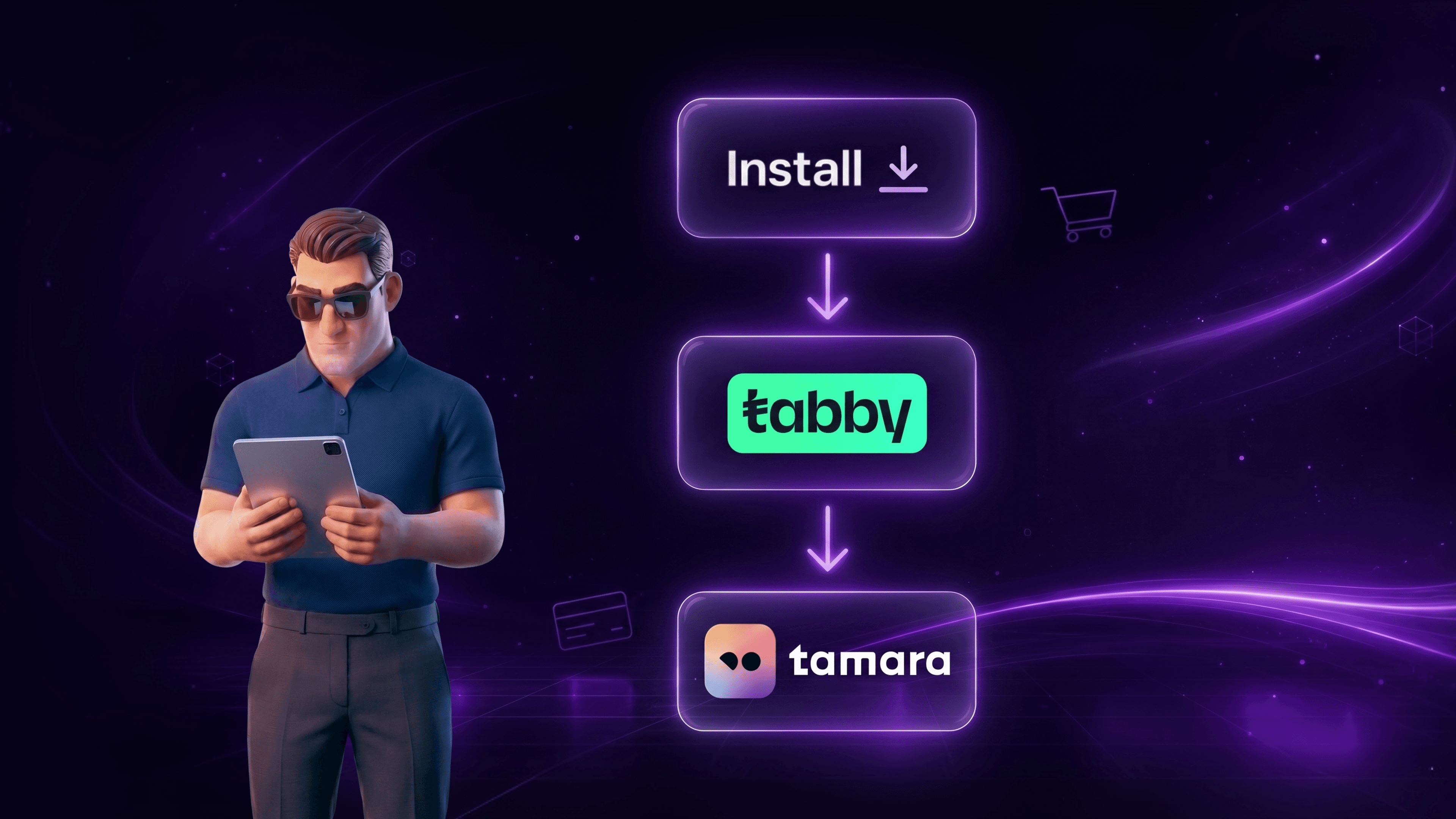
If you’re a UAE-based Shopify Plus merchant about to add BNPL for the first time and want to start with one before adding the second, install Tabby first. Three reasons.
The first is approval rate on the UAE-resident segment. Tabby’s underwriting depth on UAE consumer data delivers slightly higher approval rates, which means slightly more BNPL attempts convert. For a merchant with limited integration bandwidth, starting with the higher-converting option is the right move.
The second is brand recognition. Tabby has built the larger consumer-facing brand presence in the UAE through marketing, the Tabby Card product launch, and merchant logo placement at major UAE retailers. UAE shoppers in the relevant demographic typically recognize Tabby first. That recognition translates into higher click-through on the on-site messaging widget.
The third is the Tabby Card flywheel. Tabby’s debit card product means some UAE shoppers carry a Tabby balance and actively look for merchants that accept Tabby. That demand-side pull doesn’t yet exist for Tamara in the UAE.
Install Tamara second when: - You’ve validated Tabby is converting and the integration is stable - You sell into Saudi Arabia or want to capture the broader GCC audience - You see signal in your analytics that Saudi-resident traffic is unconverting at checkout (typical sign: high traffic share, low conversion on the Saudi IP block) - Your Arabic-language audience is large enough that Tamara’s stronger Arabic on-site messaging matters
For UAE merchants with significant Saudi traffic from day one (typical for fashion, beauty, and luxury categories), the order can flip: install Tamara first if your Saudi share is over 30% of revenue.
For most UAE-based Shopify Plus stores doing more than AED 500K per month in revenue, installing both Tabby and Tamara is the right answer. The argument breaks into three parts.
First, the audiences don’t fully overlap. Shoppers who prefer Tabby don’t always convert via Tamara when Tabby isn’t offered, and vice versa. Offering both captures the union of both audiences rather than just the intersection. We typically see 10-20% additional BNPL conversion lift when the second provider is added to a store that already runs the first.
Second, the fee impact is contained. Both providers charge in similar ranges, so adding the second doesn’t structurally increase your BNPL cost-of-sale. Each transaction routes to whichever provider the customer selects; running both doesn’t double the fee.
Third, the checkout UX cost is small. Both providers integrate cleanly via official Shopify apps and both surface as a payment option at the right step in checkout. The shopper sees the choice and selects the one they prefer. The friction of choice is minimal in our experience, and the friction is offset by the higher conversion rate from offering each shopper their preferred option.
The case against installing both is real but narrow. For very small merchants (under AED 100K per month in revenue) the operational overhead of managing two BNPL relationships (separate accounts, separate dashboards, separate reconciliation in finance) may not yet justify the marginal conversion uplift. For those merchants, picking one (typically Tabby for UAE-focused, Tamara for KSA-focused) is the right starting point. Add the second once you cross the AED 500K monthly threshold.
For broader BNPL context including the global picture beyond the GCC, Shopify’s published Buy Now Pay Later overview covers the platform-level view across regions.
Five mistakes repeat across UAE Shopify Plus stores that install Tabby and Tamara. All five are avoidable.
The first is enabling the checkout integration without the on-site messaging widget. Without the “Pay in 4” or “Pay in 3” badge on the product detail page, shoppers don’t see the installment math until they reach checkout. By then, the affordability decision has already been made. Adding the on-site messaging widget on PDP lifts BNPL conversion 5-15% in our experience.
The second is not negotiating the merchant rate after volume builds. Both providers will renegotiate downward for stores doing meaningful BNPL volume, but the merchant has to ask. Stores that stay on the initial published rate for 24+ months are typically leaving 30-50 basis points on the table.
The third is treating BNPL as competing with other payment methods rather than additive. We’ve seen merchants worry that BNPL “cannibalizes” full-price card payment. The evidence in our client data doesn’t support this. BNPL typically captures incremental conversion (shoppers who would otherwise abandon at the AOV) rather than substituting for card-paying customers. Suppressing BNPL to “protect” card payment usually just reduces total revenue.
The fourth is missing the Arabic-language localization. The on-site messaging widget should display in Arabic for Arabic-language traffic. Tamara handles this more cleanly out of the box; Tabby supports it but requires explicit enablement. For UAE stores with meaningful Arabic-speaking traffic, this single setting can lift BNPL conversion meaningfully.
The fifth is not coordinating with the BFCM and Ramadan campaign cadences. BNPL conversion spikes during high-discount windows because the absolute-dollar saving plus the installment math compounds the affordability perception. Stores that don’t surface BNPL more prominently during BFCM (November) and Ramadan (varies by year) leave conversion on the table. The merchant-side configuration for the BFCM window is covered in the Shopify features for BFCM sale guide, which sits alongside this BNPL setup as part of seasonal prep.
For UAE-based Shopify Plus merchants scoping a BNPL audit, the Huptech Web platform migration team runs these reviews as part of broader UAE commerce engagements.
Yes. Both providers offer official Shopify apps that coexist without conflict. Shoppers see both as payment options at checkout and select their preferred one. There’s no technical issue running both, and most UAE-based Shopify Plus stores doing meaningful revenue do exactly that.
Yes. Both integrate with Shopify Markets, so a UAE merchant with separate storefronts for UAE, KSA, Kuwait, and Bahrain can configure each region independently. This is particularly useful for merchants serving the broader GCC with localized currency and language.
Both providers typically charge in the range of 2.99% to 3.99% of transaction value plus a small per-order fee in AED 1-2 range. Exact rates vary by category, transaction volume, and negotiated agreement. Higher-volume merchants typically negotiate downward from the published rate. [VERIFY current rate card with each provider’s merchant team]
In our experience, Tabby has slightly higher approval rates on the UAE-resident shopper segment (60-80% range) compared to Tamara (55-75% range), reflecting Tabby’s longer underwriting history in the UAE consumer market. In Saudi Arabia, the pattern reverses: Tamara has stronger Saudi approval rates than Tabby.
Yes, on AOV-eligible segments. BNPL typically lifts checkout conversion 10-25% on the AED 200 to AED 1,500 price band and lifts AOV itself 30-80% on orders that use BNPL. The fee cost (2.99-3.99% + per-order fee) is typically much smaller than the conversion and AOV uplift on stores with AOV above AED 150.
Yes. Both providers obtained UAE Central Bank licensing under the BNPL regulatory framework published in 2023. This means UAE merchants integrating Tabby or Tamara are working with licensed financial institutions that have consumer-protection obligations.
Smaller players include Postpay (UAE-based), Spotii (acquired by Zip), PayTabs Now, and Cashew. For most UAE-based Shopify Plus merchants in 2026, Tabby and Tamara cover the vast majority of BNPL share. Smaller providers can be worth evaluating for category-specific niches but typically don’t justify integration alongside the two market leaders.
Generally no. Klarna and Clearpay are dominant in different markets (Klarna in EU/UK/US, Clearpay in UK). Neither has meaningful UAE consumer adoption. If your store has significant UK or EU traffic in addition to UAE, you might run Klarna or Clearpay alongside Tabby and Tamara, configured to display only for the relevant geography via Shopify Markets. The 12 best Shopify apps for UK merchants covers the UK-side BNPL setup for merchants running multi-region stores.
For most UAE-based Shopify Plus merchants in 2026, the BNPL setup that works is Tabby first, Tamara second. Tabby delivers slightly higher conversion on UAE-resident shoppers because of underwriting depth and brand recognition. Tamara captures additional Saudi-resident and broader-GCC demand that Tabby doesn’t fully cover, plus stronger Arabic-language on-site messaging.
The fee structures are similar enough that running both doesn’t structurally increase your blended BNPL cost. The integration overhead is small. The conversion uplift from running both typically outweighs the operational cost of managing two provider relationships.
Skip BNPL only if your AOV is consistently below AED 100, where the math doesn’t work, or if your category has unusual underwriting risk that drives approval rates below 50%. For everyone else, BNPL is now closer to table stakes than competitive advantage in UAE ecommerce.
If you’re a UAE-based Shopify Plus merchant scoping a BNPL setup or auditing your current configuration, the Huptech Web Shopify Plus team runs BNPL optimization reviews as part of broader UAE commerce engagements. We can typically identify the highest-leverage gaps in a half-day review.

Drop your details and we'll email the download link straight to your inbox.