




E-Commerce•11 Min
How Programmatic SEO Delivered 135,000 Organic Clicks and ~830 Ranked Pages Across 5 Client Sites in 16 Months

Written byRishi Thacker
Posted onOct 19, 2026



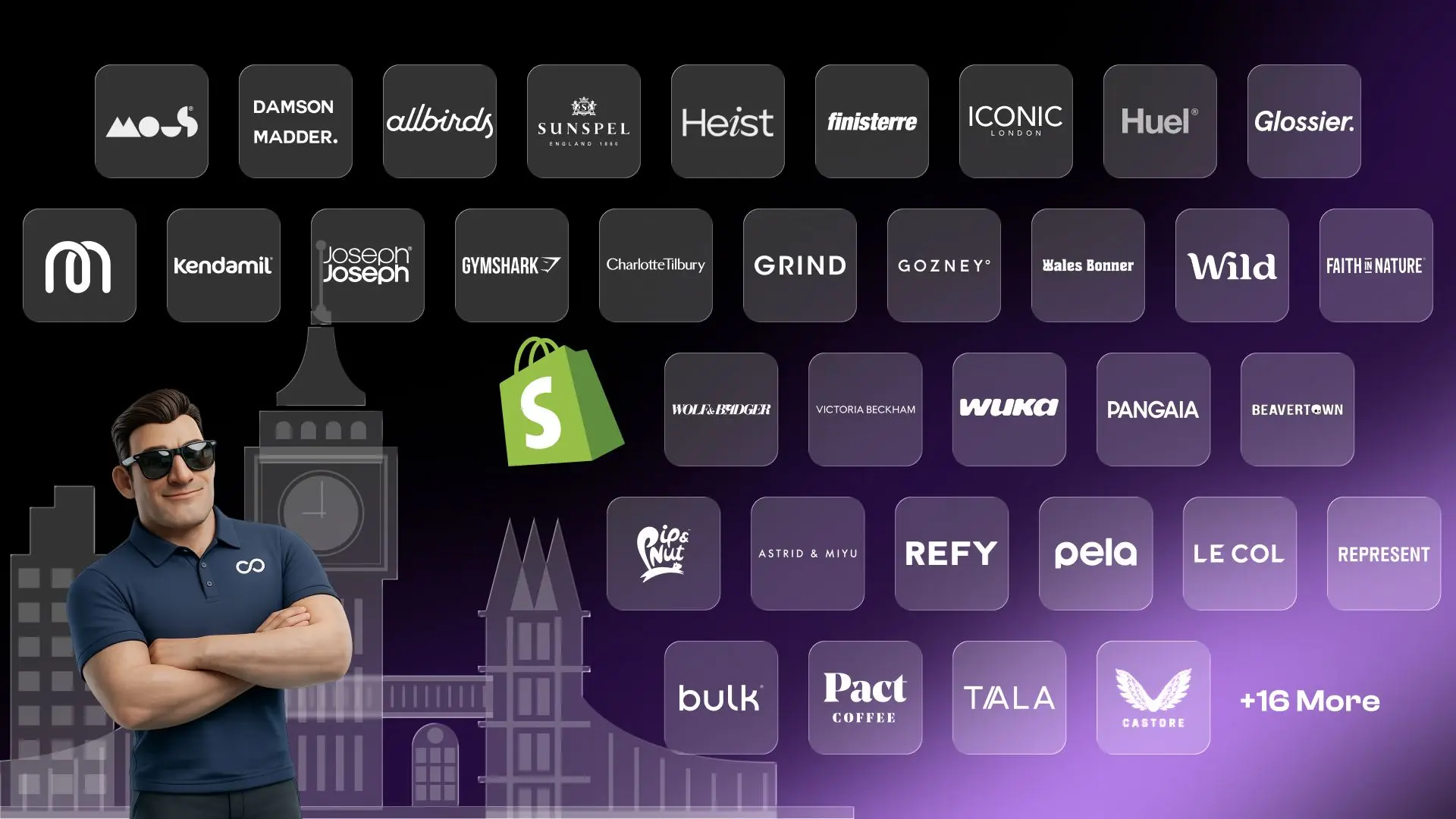
Here's a question worth sitting with: if Shopify was just "a platform for small businesses," why is it powering Gymshark's £500M+ DTC engine, Charlotte Tilbury's global beauty empire, Huel's 100+ country food operation, Victoria Beckham's luxury fashion store, Beauty Pie's member-only cosmetics club, and over 5.66 million active stores worldwide?
The answer is that the framing is out of date. In 2026, Shopify holds over 28% of the US ecommerce market share, processes hundreds of billions of dollars in transactions annually, and its enterprise tier, Shopify Plus has become the platform of choice for the largest DTC, fashion, beauty, food, and sports brands in the UK.
This isn't a list of obscure stores you've never heard of. Every brand on this page is a name you know, or a name you should: heritage British icons (Sunspel, Cambridge Satchel, Twinings), unicorn DTCs (Gymshark, Huel), Royal-adjacent luxury (Strathberry, Charlotte Tilbury), Premier League sportswear (Castore), Drapers Hot 100 newcomers (Damson Madder, Adanola), and a deep bench of category-defining brands across every D2C vertical.
We've expanded the 2026 edition from 50 to 50+ stores. The new ten entries reflect the brands that gained the most cultural and commercial ground through 2025 and into 2026, from Manchester athleisure (Adanola) to member-only beauty (Beauty Pie) to Sunday-lunch fresh flowers (Bloom & Wild)
Whether you're a brand owner evaluating platforms, a marketer scoping the competition, or an operator trying to understand why the biggest names in UK retail are flocking to Shopify, this is the definitive UK-focused guide.
1) 5.66M+ active Shopify stores globally; tens of thousands in the UK
2) £500M+ Gymshark revenue powered on Shopify Plus, the UK's flagship DTC unicorn
3) 28%+ Shopify share of the US ecommerce market (and rising in the UK)
4) 99.9% Shopify Plus uptime SLA, built to absorb Black Friday spikes without an outage
5) 175+ countries supported through Shopify Markets, making cross-border UK-to-EU-to-US a single-admin operation
6) 60 UK Shopify stores documented in this edition, up from 50 in the 2025 list
7) £4.5B+ combined estimated 2025 revenue across the 60 brands featured
Five things make Shopify the default in the UK in 2026:
1. It scales without breaking. Gymshark's 2015 Black Friday Magento crash cost an estimated $100,000+ in 8 hours. They migrated to Shopify Plus shortly after and now process thousands of orders per minute during peak events without an outage. Their story is the canonical "why we left the legacy stack" case study, the rest of the UK D2C cohort took notes.
2. It speaks every market. Shopify Markets enables UK brands to sell to the US, EU, and UAE from a single admin, localised currencies (GBP, EUR, USD, AED), languages, taxes, and compliance handled automatically. For a UK brand with global ambitions (Pangaia, Charlotte Tilbury, Sunspel, Castore, Beauty Pie), it's the cleanest path to international.
3. Headless is now production-grade. Shopify's Hydrogen framework lets brands ship fully custom storefronts, Gymshark, Allbirds, and a growing share of the top 25 ship headless on Shopify's API. The platform is the runtime; the front-end is whatever the brand wants.
4. POS unifies physical and digital. Astrid & Miyu's piercing studios, Whitestuff's 120-store estate, Loaf's flagship showrooms, all share inventory and customer data with their Shopify storefront in real time. Omnichannel without the integration project.
5. The app ecosystem covers the gaps. Subscriptions, loyalty, AR try-ons, B2B pricing, AI personalisation, conversion tooling, all available without a custom build. For UK brands who want to ship features, not maintain plumbing, this is decisive.
Shopify Markets, available to every Shopify Plus merchant, lets a UK brand operate localised storefronts for the UK, US, UAE, and EU from a single admin, local currencies (GBP, USD, AED, EUR), languages, taxes, and compliance handled automatically. No separate platforms. No fragmented data. One platform, global scale.
We've organised these 50+ brands into categories so you can scan to your sector. Each entry includes the brand's founding year and founders, estimated revenue, Shopify plan, target markets, and the specific reason they earned a place on this list. The overall rank (#1-#60) sits in each entry header.Mahabis
The biggest category in this list. From £1B Gymshark to LVMH-Prize-winning Wales Bonner, fashion is where Shopify Plus’s flexibility, custom themes, headless builds, drop scheduling, multi-region orchestration, shows up most clearly.
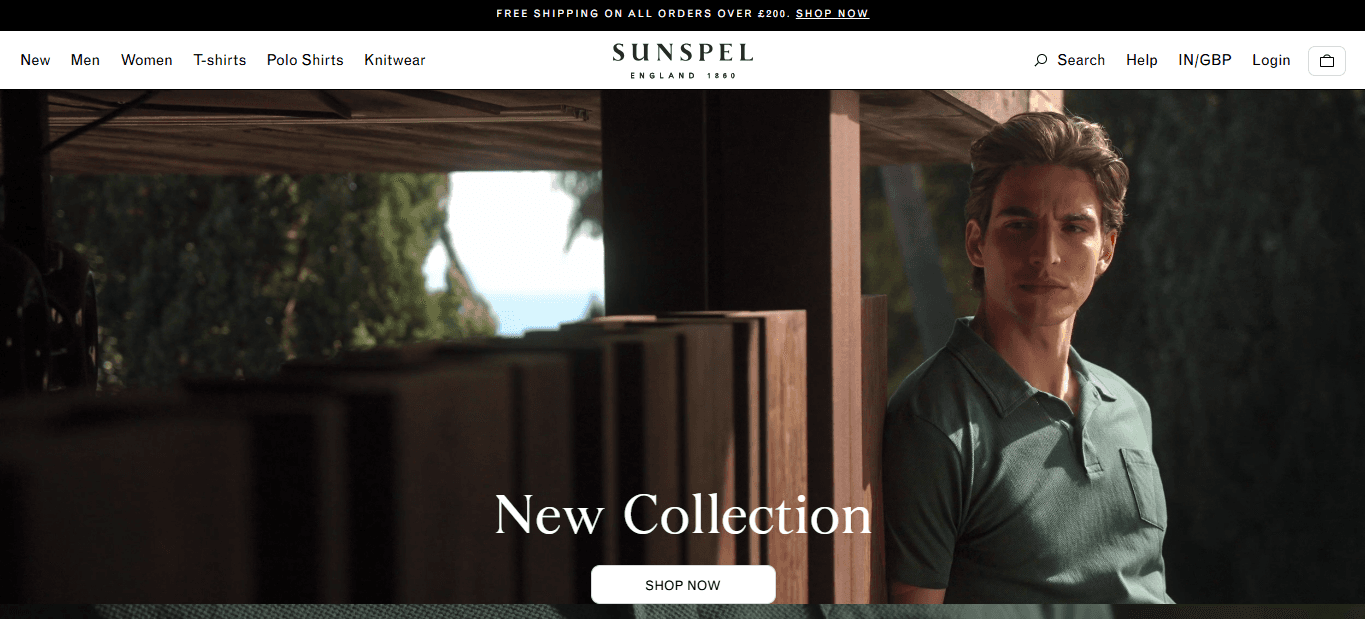
Founded: 1860 in Long Eaton, Derbyshire
Estimated revenue: £30M+ (heritage premium)
Target markets: UK, US, JP, EU
Sunspel is the brand James Bond’s t-shirt comes from, and that’s not marketing, that’s Casino Royale (2006) in the wardrobe credits. A Long Eaton mill founded in 1860, still spinning its own Sea Island cotton, now running its global D2C on Shopify Plus. Proof that a heritage business and a modern commerce stack reinforce each other rather than fight.
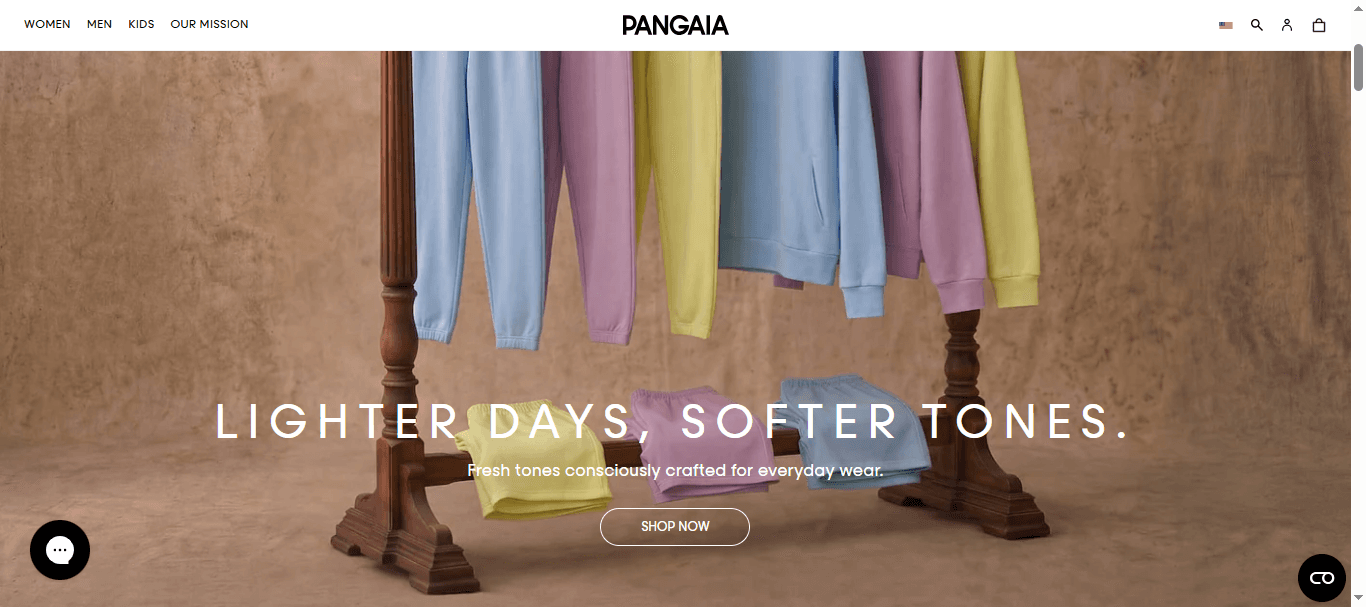
Founded: 2018 by a research collective including Amanda Parkes
Estimated revenue: £50M+ (sustainable premium)
Target markets: UK, US, EU, UAE
Material-science fashion at celebrity scale. Pangaia got Harry Styles, Pharrell, and Rihanna into recycled-fibre tracksuits and built a global D2C on Shopify Plus. Its editorial-grade content layered into product pages, every SKU carries a science callout (FLWRDWN, C-FIBER, GRS-certified) and the platform handles the storytelling-to-checkout transition without breaking stride.
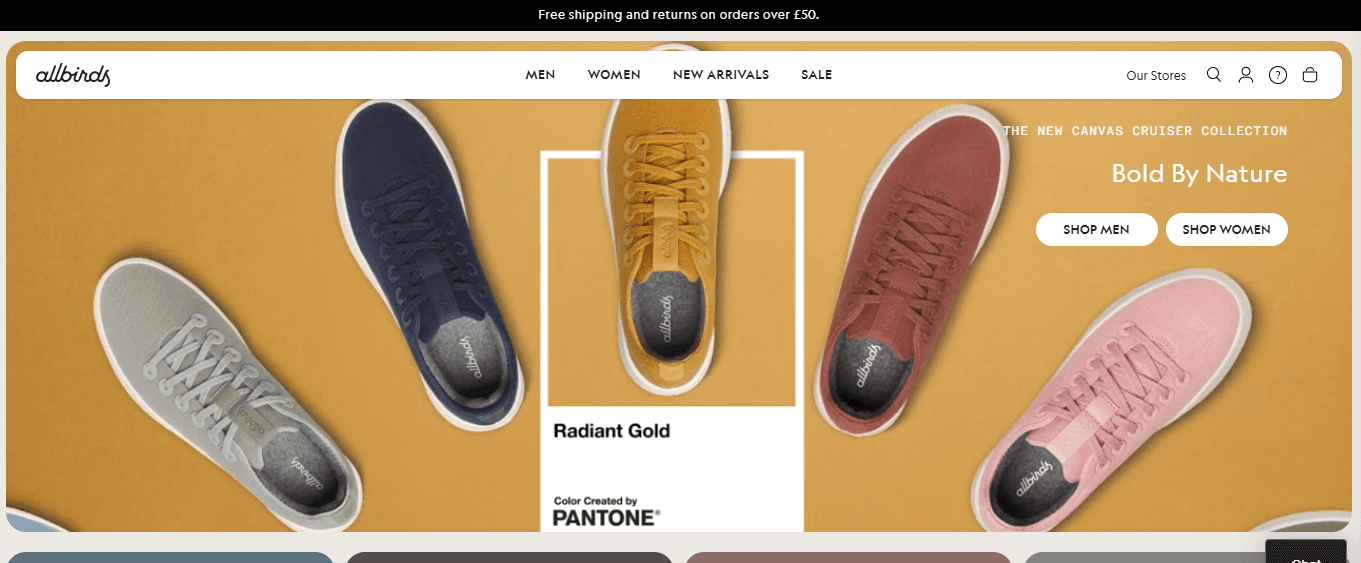
Founded: 2016 by Tim Brown and Joey Zwillinger
Estimated revenue: $200M+ globally (Nasdaq-listed)
Target markets: UK, US, EU, AU, JP
Sustainable footwear’s category creator runs its UK storefront on Shopify. While the parent has weathered share-price punches since the IPO, the Allbirds UK operation remains a textbook example of cross-region Shopify deployment. The “Carbon Footprint” labelling on every PDP, turning sustainability claims into shoppable conversion proof rather than a press-release line.
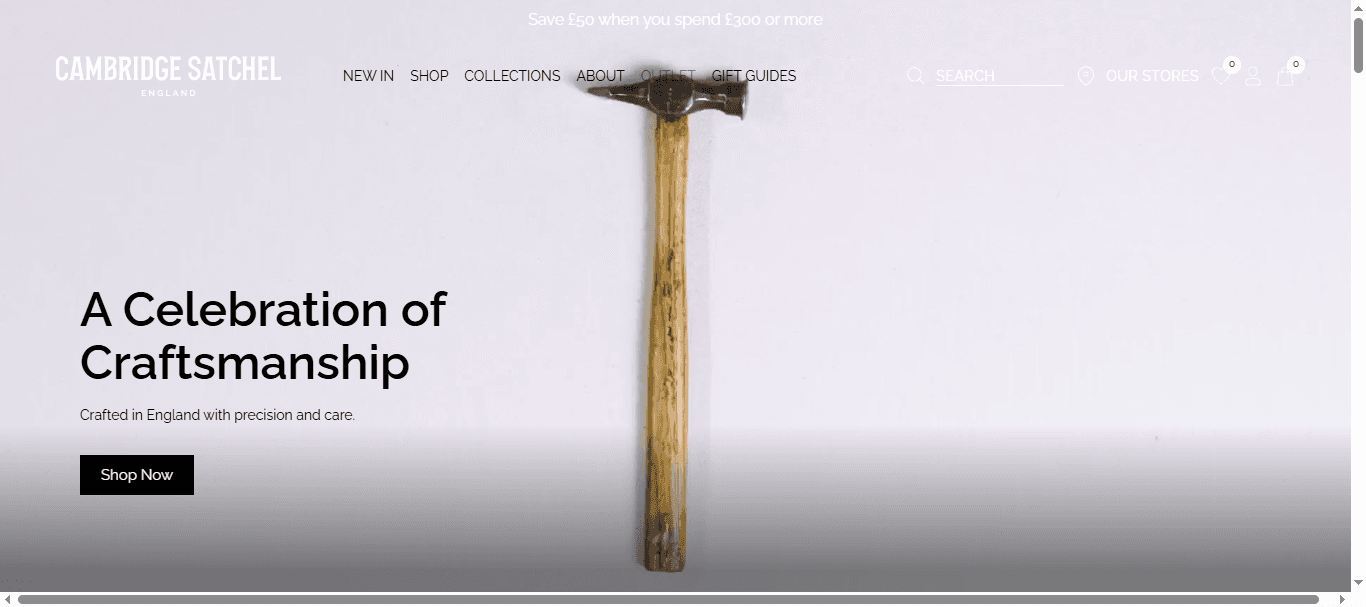
Founded: 2008 by Julie Deane OBE in Cambridge
Estimated revenue: £20M+ (heritage accessories)
Target markets: UK, US, JP, EU
Founded on £600 from Julie Deane’s kitchen table to fund her daughter’s school fees, and now a heritage British accessories brand “Cambridge Satchel” still running on Shopify. Their colour-and-monogram personalisation on every bag PDP, executed on the platform without bolted-on apps that slow checkout. The kitchen-table-to-Plus pipeline, in one brand.
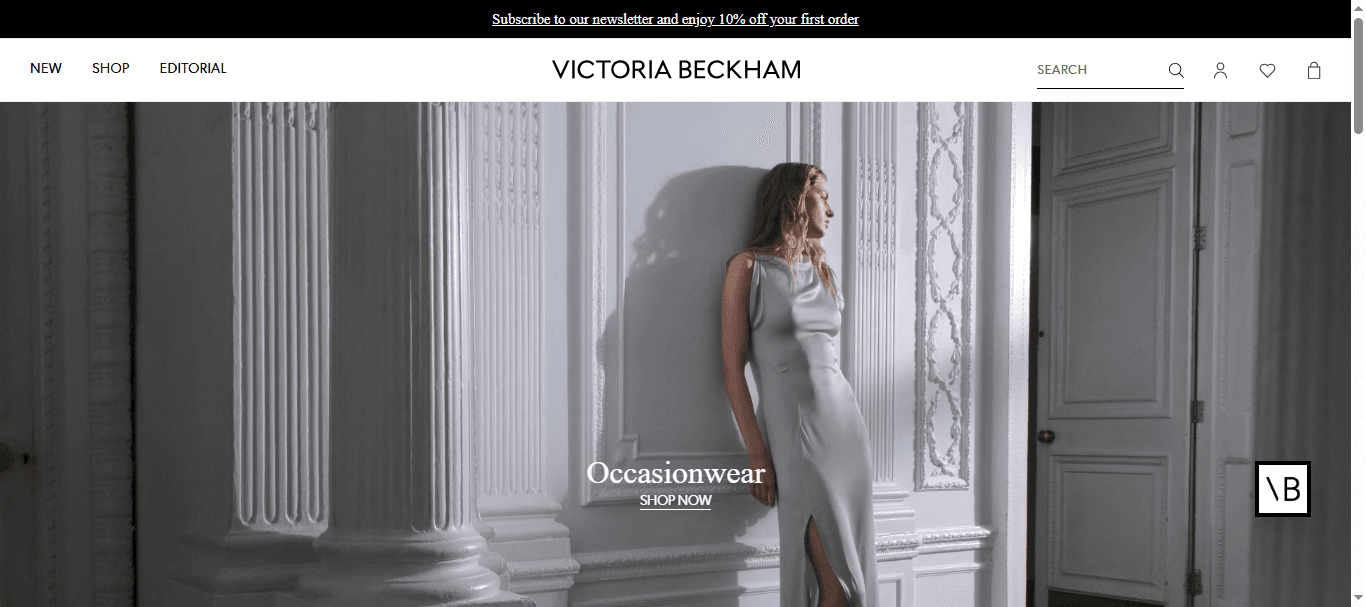
Founded: 2008 by Victoria Beckham
Estimated revenue: £80M+ (luxury fashion + beauty)
Target markets: UK, US, UAE, EU
Victoria Beckham’s eponymous fashion-and-beauty label is one of the finest examples of luxury brand commerce on Shopify. The store uses bespoke customisations to deliver an editorial-style shopping experience that reflects the runway-to-rack pipeline. Available across the UK, US, UAE, and EU, and a marquee proof point that luxury and Shopify are no longer mutually exclusive.
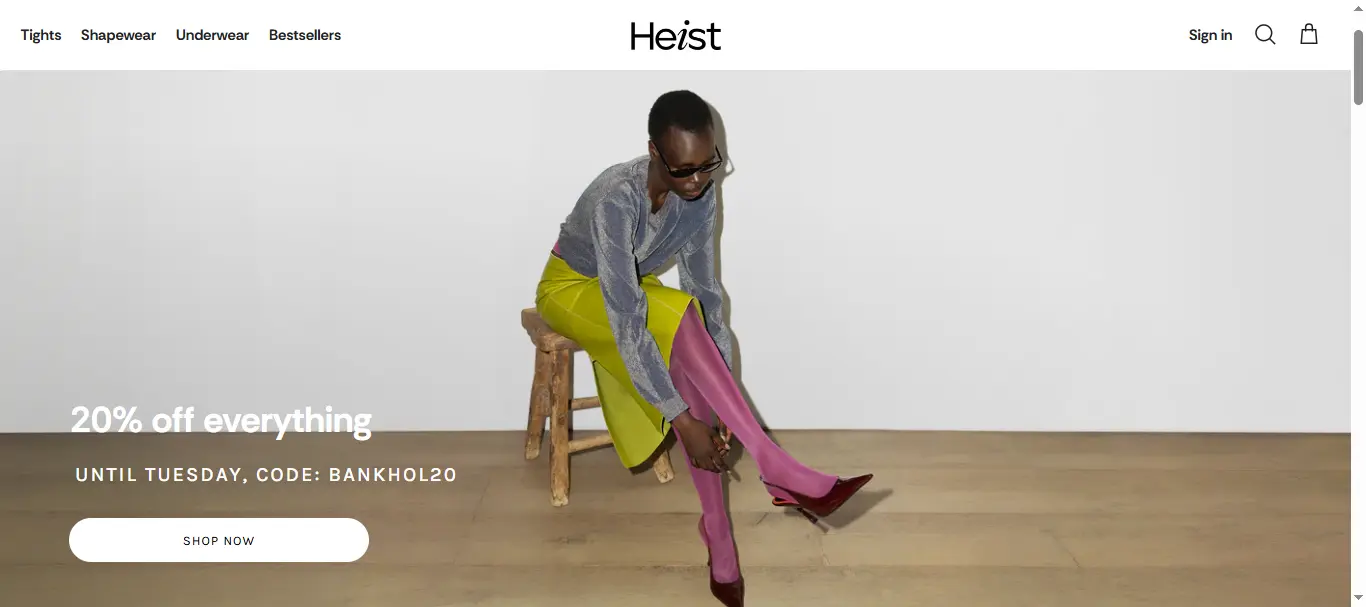
Founded: 2014 by Toby Darbyshire and Fiona Fairhurst (the engineer behind Speedo’s Olympic Fastskin)
Estimated revenue: £20M+ annual
Target markets: UK, US, EU
Heist Studios sells engineered hosiery, they treat tights like a product engineering problem. Shopify Plus runs the storefront; the standout is how they translate Fairhurst’s Olympic-engineering lineage into product copy that explains compression zones and graduated pressure without sounding like a spec sheet. Engineering brand, engineering storefront.
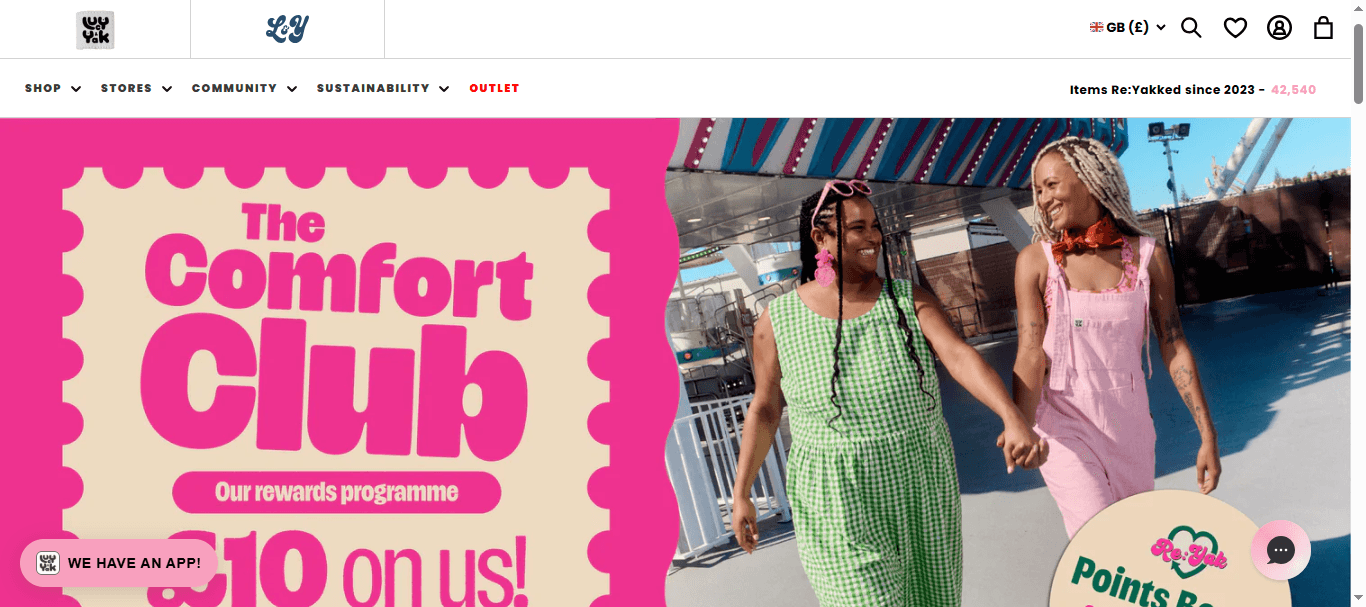
Founded: 2017 by Lucy Greenwood and Chris Renwick
Estimated revenue: £20M+ annual
Target markets: UK, EU, US
From a converted van in India to £20M+ revenue selling dungarees. Lucy & Yak’s standout is the community-led product development loop, every drop is co-designed with their Instagram audience and shipped through Shopify Plus, with size-inclusive runs handled at the platform level rather than as an afterthought.
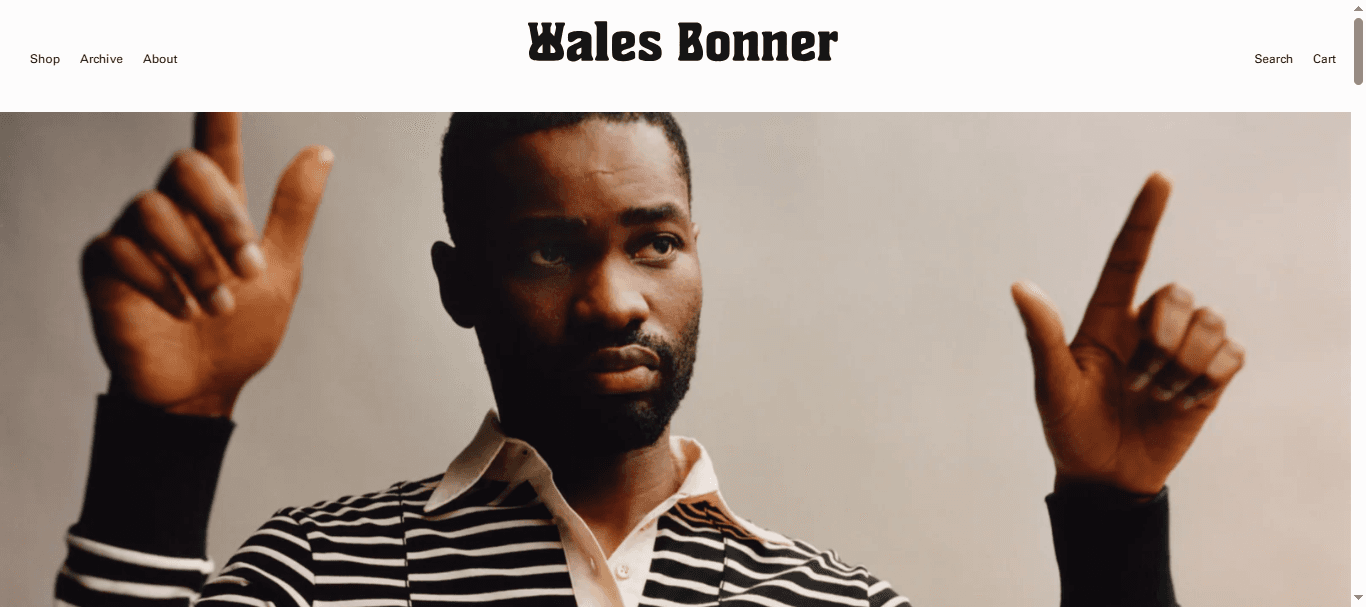
Founded: 2014 by Grace Wales Bonner in London
Estimated revenue: £15M+ (luxury fashion)
Target markets: UK, US, EU, JP
LVMH Prize winner Grace Wales Bonner runs her eponymous label’s D2C on Shopify Plus, proof that the most respected luxury fashion can sit on Shopify without compromise. Editorial PDPs that read like a fashion magazine spread, featuring the brand’s signature Black British cultural references, from cricket whites to Caribbean tailoring, translated into shoppable products.
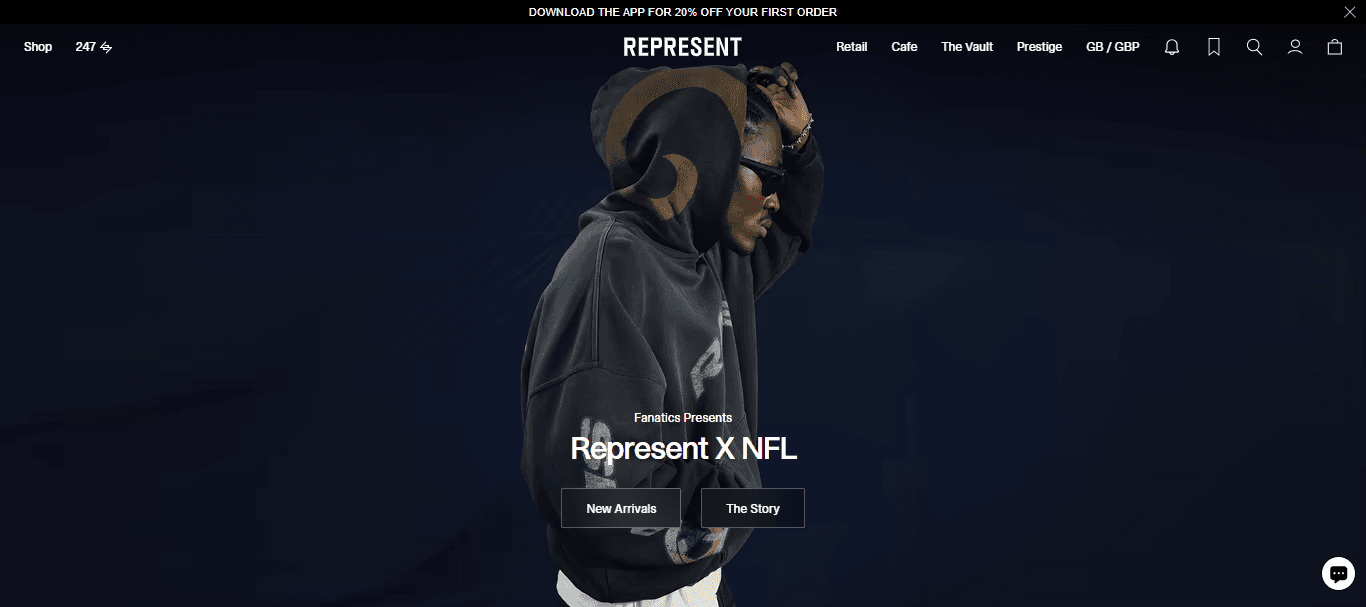
Founded: 2012 by brothers George and Mike Heaton in Manchester
Estimated revenue: £30M+ (premium streetwear)
Target markets: UK, US, EU, AU
Manchester streetwear has gone global. Represent built their Shopify storefront into a drop machine, Drake, Travis Scott, and the British rap establishment all wear it. Drop scheduling and inventory-at-launch handling on Plus, plus the “247” performance-line storefront-within-a-storefront execution.
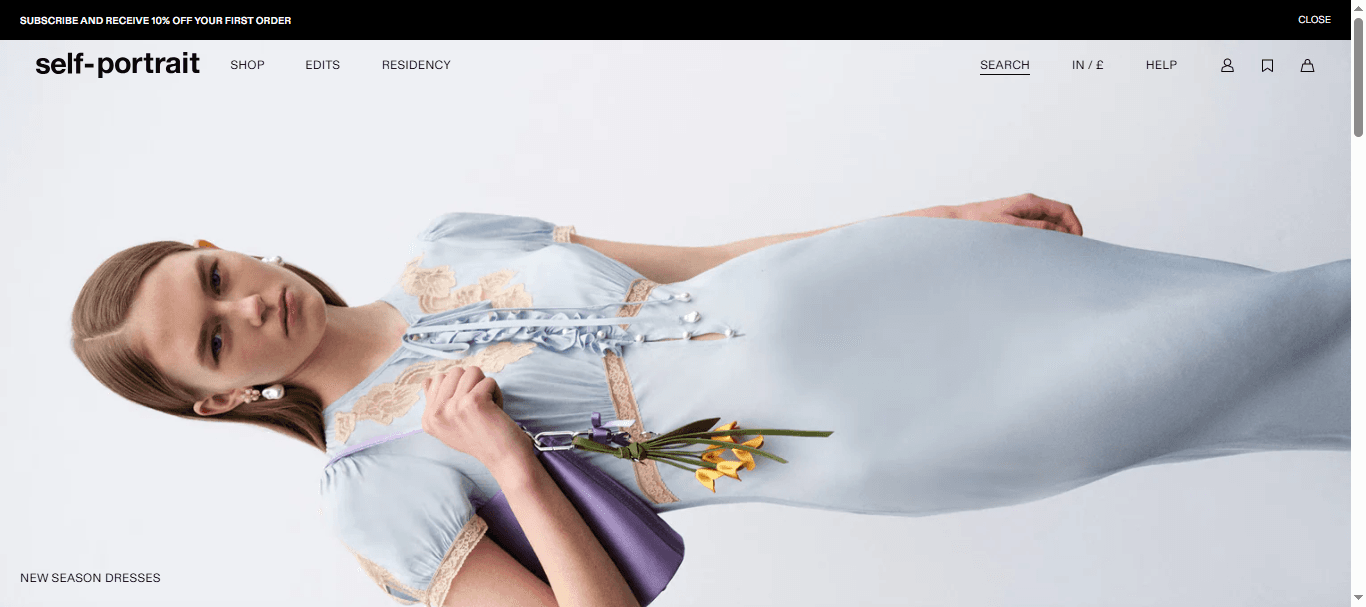
Founded: 2013 by Han Chong in London
Estimated revenue: £40M+ (premium fashion)
Target markets: UK, US, EU, UAE, JP, AU
Han Chong’s Self-Portrait turned guipure-lace dresses into a wedding-and-event wardrobe staple from Beyoncé to Michelle Obama. The brand runs Shopify Plus as a multi-region operation across the UK, US, UAE, and EU. Their PDP video-and-look execution, a dress shown in three settings (red carpet, wedding, dinner) inside a single product page.
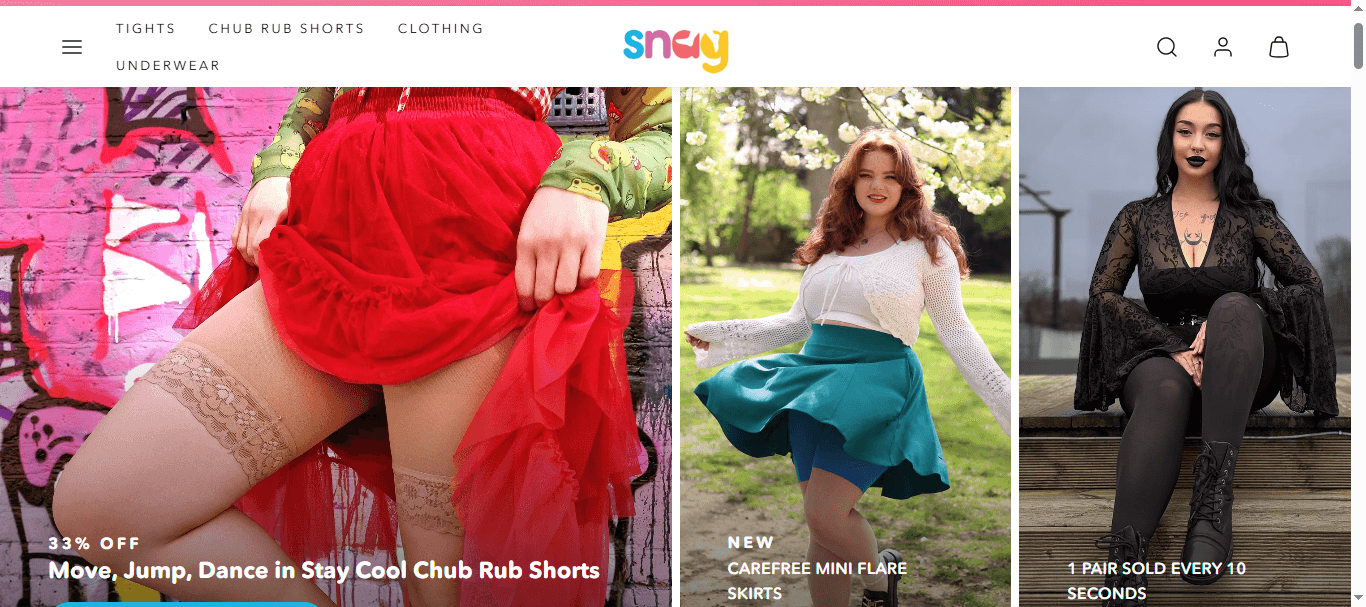
Founded: 2018 by Brie Read
Estimated revenue: £30M+ (size-inclusive)
Target markets: UK, US, EU, AU
Inclusive tights, in 60+ shades and sizes from XS to 6XL+. Snag scaled to £30M+ on Shopify Plus by treating size-inclusivity as a product principle, not a marketing line. Their size-finder quiz and the corresponding deep PLP filtering, sizes 6XL+ aren’t hidden in a “plus” category; they’re surfaced equally.
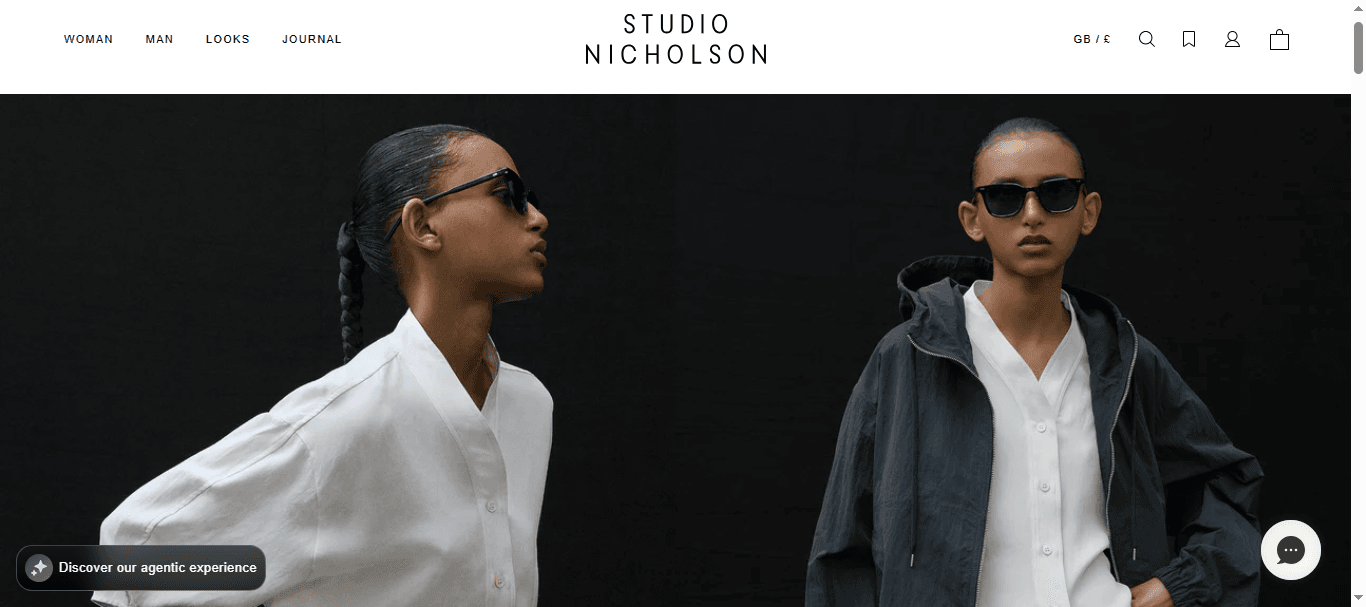
Founded: 2010 by Nick Wakeman in London
Estimated revenue: £15M+ (premium minimal)
Target markets: UK, US, JP, EU
Nick Wakeman’s Studio Nicholson is what a premium minimalist wardrobe looks like, heavy on Japanese-mill cotton, light on logos. The brand runs Shopify Plus and is a study in editorial PDP execution: every garment is shot in three or four ways, with technical fabric notes, all on a fast page. Beloved by editors at Drapers and Vogue Business.
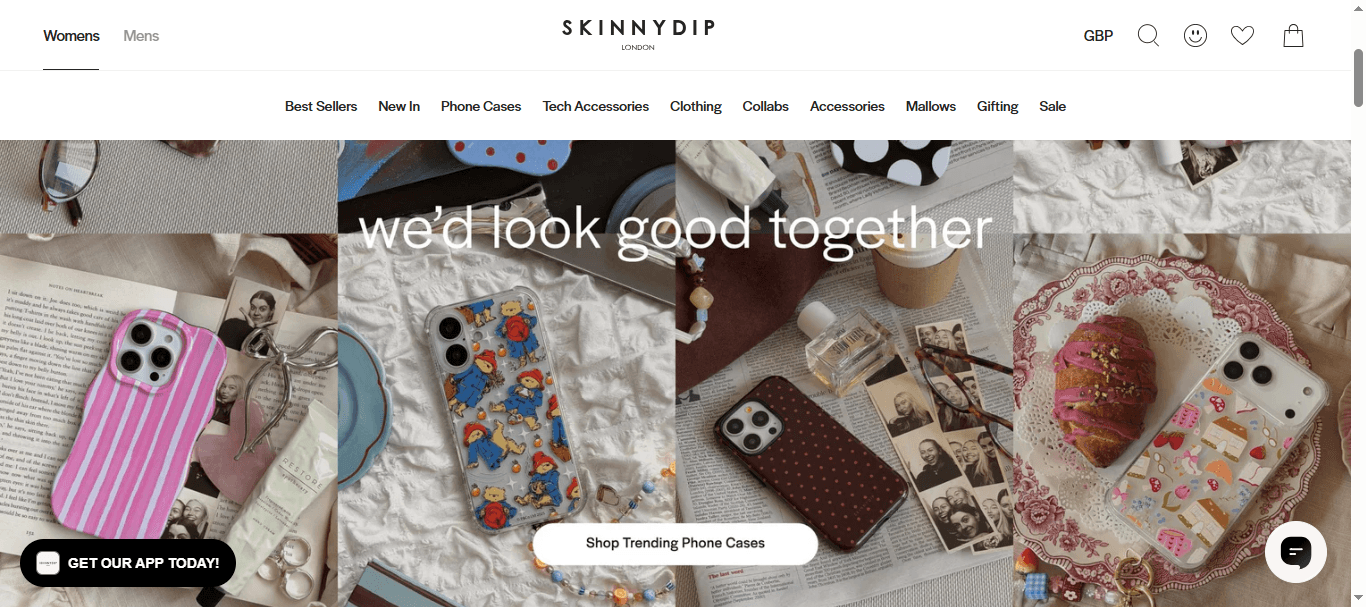
Founded: 2011 by Lewis Blitz, James Gold, and Richard Gold in Camden
Estimated revenue: £20M+ (licensed accessories)
Target markets: UK, US, EU
Camden Market origin to Selfridges concession to Shopify Plus storefront. Skinnydip’s standout feature is how their licensed collaborations (Disney, Warner Bros, Smiley) plug into the same platform without creating a content management mess, every collaboration launches as a section, not a satellite site.
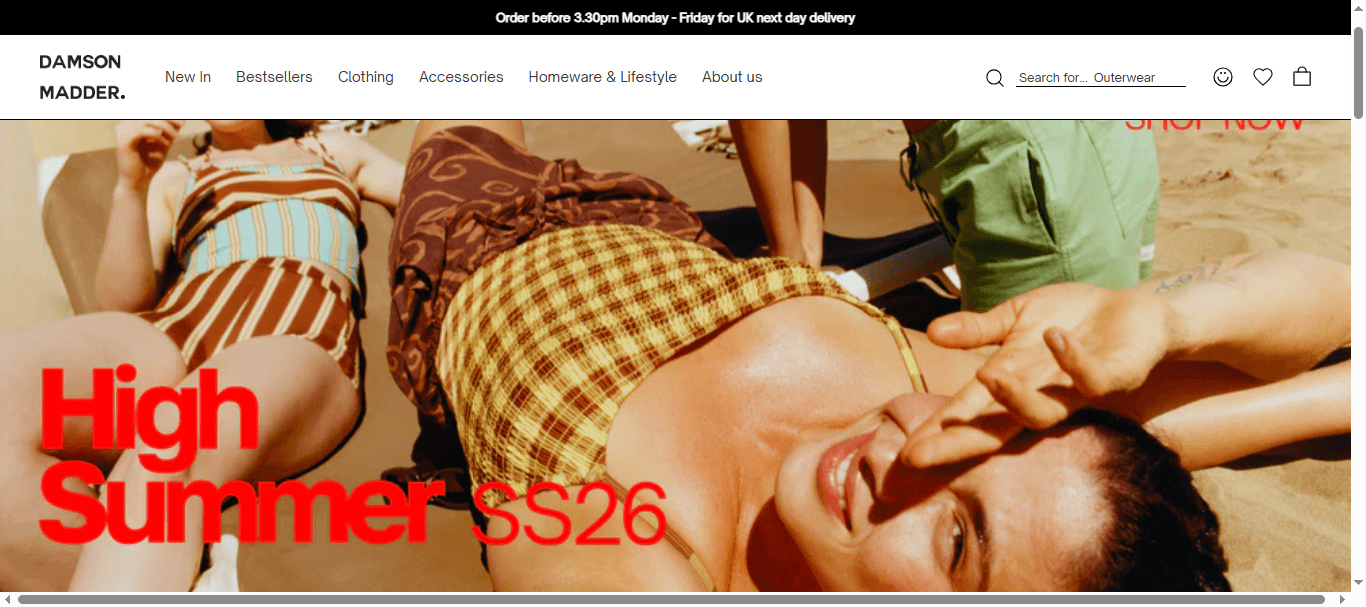
Founded: 2020 by Emma Hill
Estimated revenue: £15M+ (Drapers Hot 100 2023)
Target markets: UK, US, EU
Founded mid-pandemic, Damson Madder hit Drapers Hot 100 by 2023. Sustainable contemporary fashion built native on Shopify Plus from day one, no replatform debt, no legacy theme. Their drop-and-restock cadence, where waitlist-to-purchase is single-click and executed entirely on-platform.
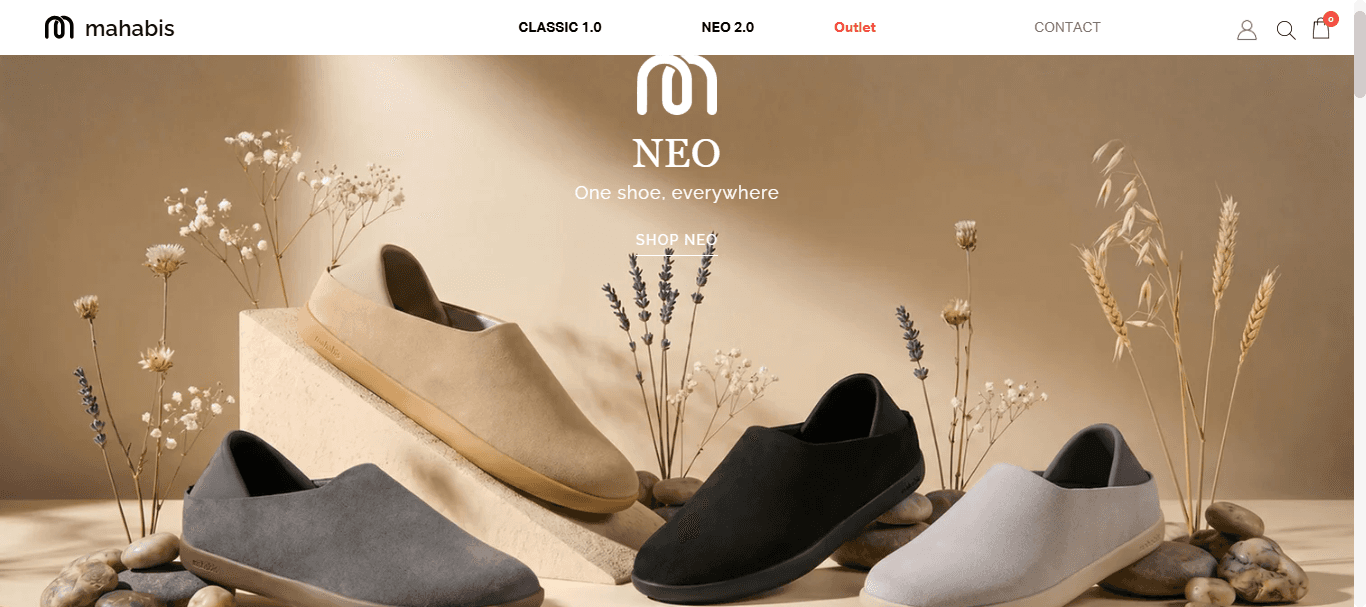
Founded: 2014 by Ankur Shah in London
Estimated revenue: £15M+ (premium slipper DTC)
Target markets: UK, US, EU, AU
The DTC slipper that became a viral 2015–17 ecommerce case study and survived the cycle to become a category staple. Mahabis runs Shopify Plus across the UK/US/EU/AU. Their gift-purchase flow, Mahabis is one of the most-gifted DTC products in UK retail, and the storefront’s gift-mode (no price on packing slip, custom message, multi-recipient cart) is built natively on Shopify.
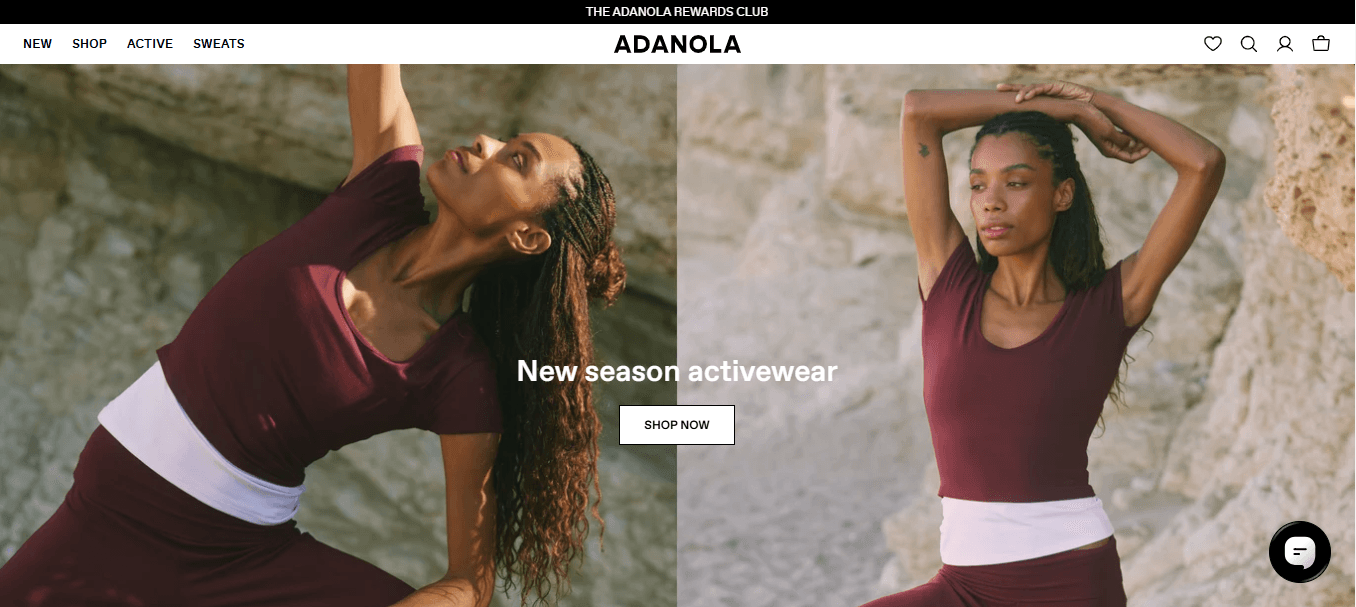
Founded: 2015 by Hyrum Cook in Manchester
Estimated revenue: £40M+ (athleisure and everyday wear)
Target markets: UK, US, EU, AU
Manchester-founded, celebrity-adopted, and one of the fastest-growing UK athleisure brands of the last three years. Adanola runs its rapid-drop model on Shopify Plus with a heavily edited product line, small SKU counts, high sell-through, and a Klaviyo-driven waitlist flow that turns every restock into a launch event.
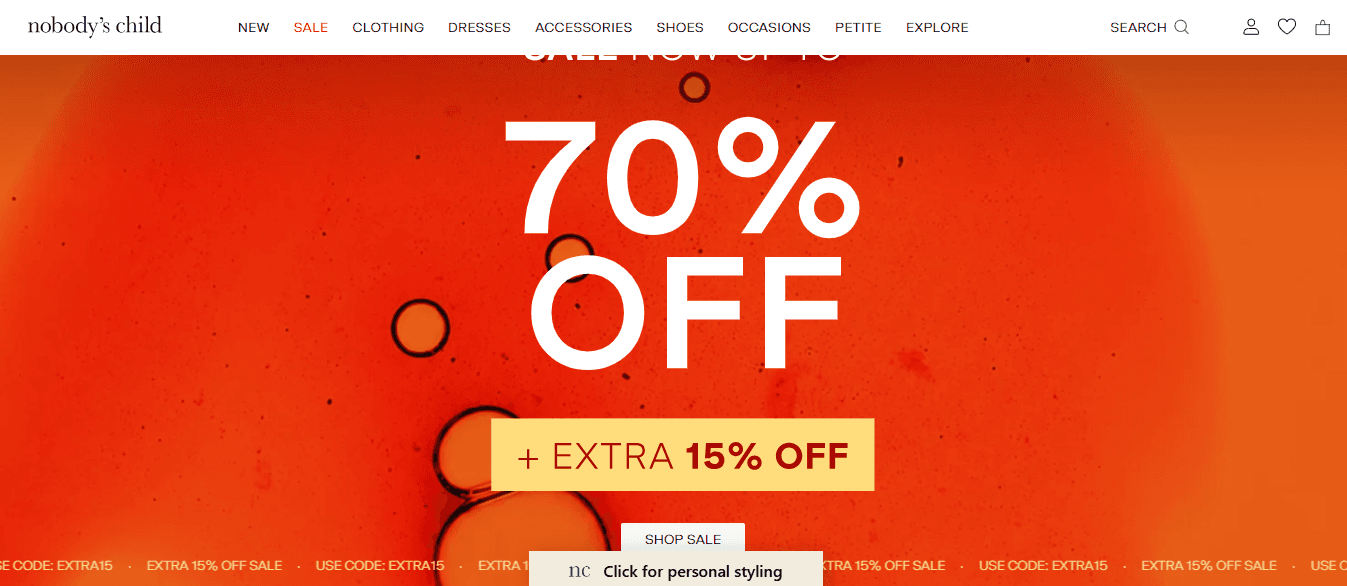
Founded: 2015 by Jody Plows in London
Estimated revenue: £20M+ (sustainable womenswear)
Target markets: UK, US, EU
The Holly Willoughby collaboration turned this sustainable womenswear brand into a household name. Nobody's Child runs Shopify Plus with a curated collaboration model, celebrity edits merchandised alongside the core line, one commerce instance, multiple brand narratives without fracturing the customer database.
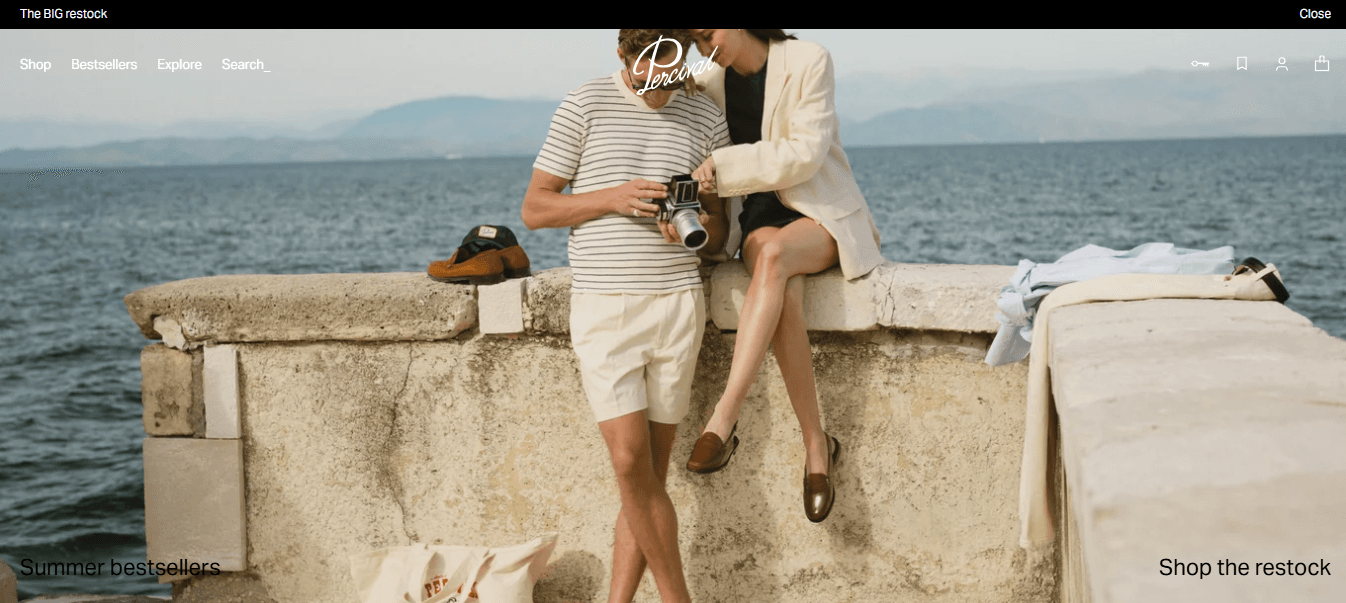
Founded: 2009 by Chris Gove in London
Estimated revenue: £8M+ (contemporary menswear)
Target markets: UK, US, EU
Percival has quietly built one of the most content-heavy menswear storefronts on Shopify, its "Journal" section runs like an editorial magazine, and product pages carry the same visual language. The blog-to-checkout continuity is a case study in content commerce done right.
Activewear and outdoor is where the biggest UK Shopify success story (Gymshark) sits, and where Shopify Plus’s headless capability gets its hardest test.
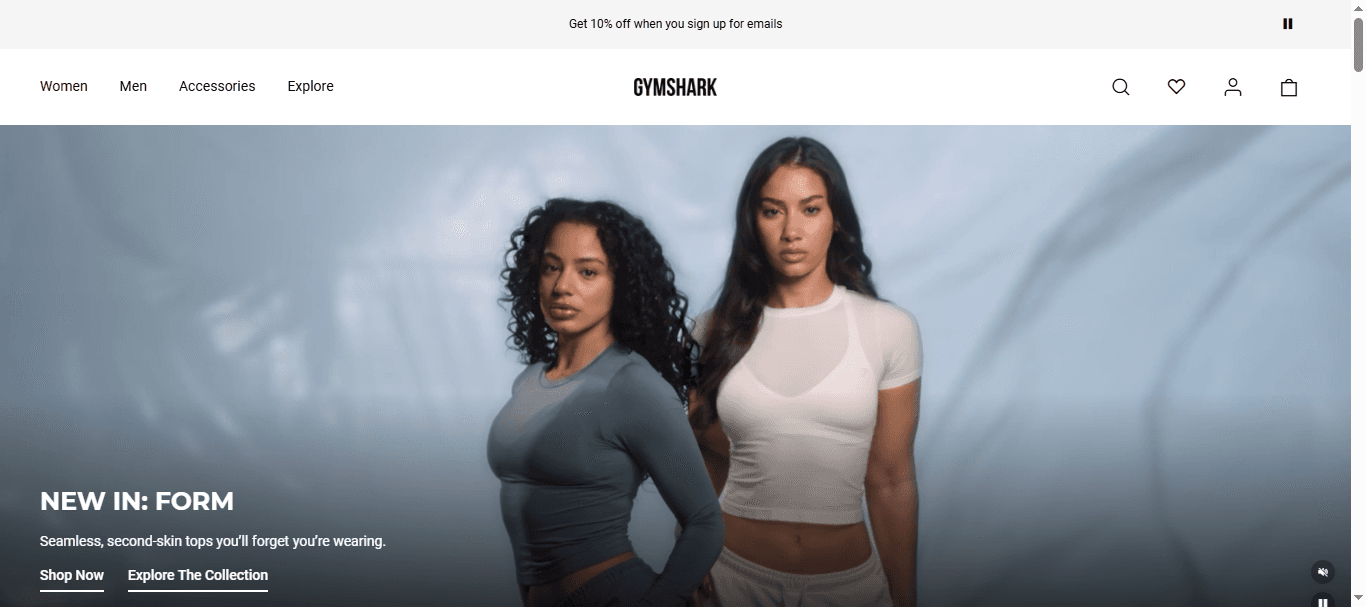
Founded: 2012 by Ben Francis and Lewis Morgan in Solihull, UK
Estimated revenue: £500M+ annual; £1B+ valuation [1][2]
Target markets: UK, US, EU, AU; global D2C
Gymshark is the defining UK DTC story of the past decade. After their Magento site crashed on Black Friday 2015, costing an estimated $100,000+ in 8 hours, they migrated to Shopify Plus and never looked back. Today, the brand processes thousands of orders per minute during peak events across 230+ countries. Their headless storefront work and cross-region orchestration on Plus set the benchmark the rest of this list is measured against.
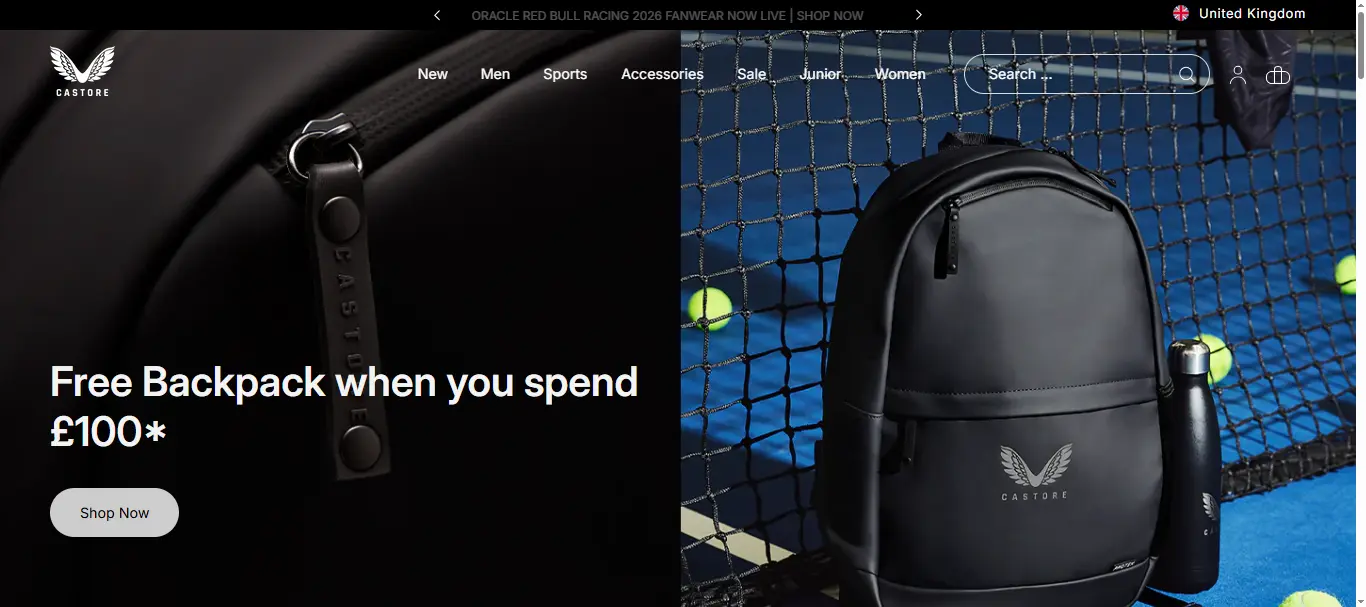
Founded: 2015 by brothers Tom and Phil Beahon in Manchester
Estimated revenue: £100M+ annual
Target markets: UK, US, EU
The British technical sportswear brand backed by Andy Murray and worn by Premier League sides. Castore engineered themselves into licensed kit deals (England Cricket, Wolves, Rangers, Saudi Pro League) while keeping their DTC engine on Shopify Plus. Their “Better Never Stops” content + commerce loop is a textbook example of how athlete partnerships ship products live to the same storefront within hours.
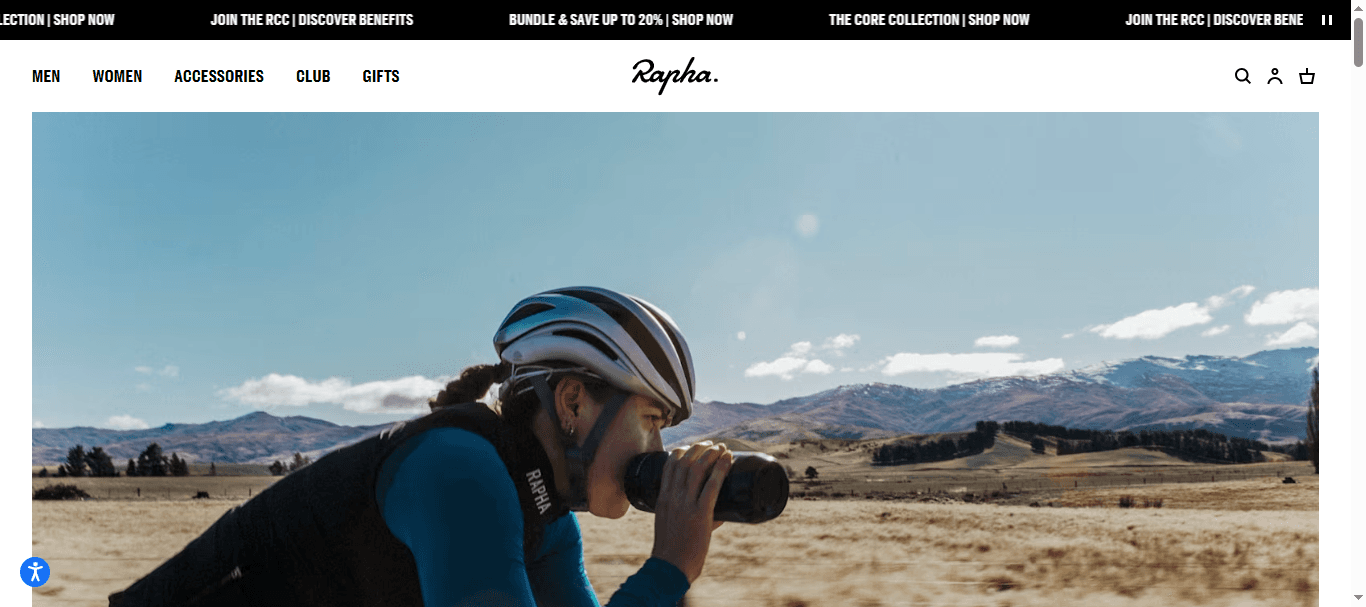
Founded: 2004 by Simon Mottram in London
Estimated revenue: £100M+ (cycling premium)
Target markets: UK, US, EU, AU, JP
Cycling’s premium brand. Rapha sells kit, runs the global Rapha Cycling Club, and operates Clubhouse cafés in 20+ cities, the storefront tying all that together is Shopify Plus. Membership-aware merchandising, RCC members see different pricing, products, and exclusive drops without leaving the storefront. Membership-as-commerce, executed on-platform.
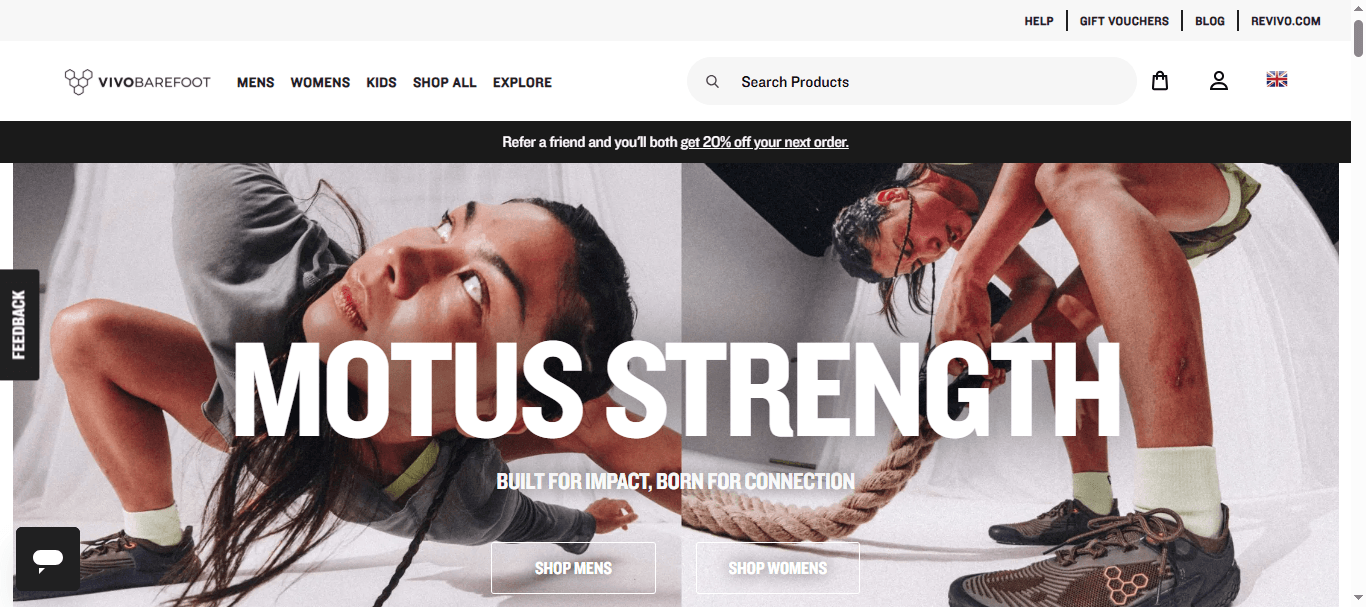
Founded: 2012 by cousins Galahad and Asher Clark (of the Clarks shoe family)
Estimated revenue: £40M+ annual
Target markets: UK, US, EU, AU
The category creator for barefoot footwear. Vivobarefoot’s standout on Plus is their ReVivo refurbishment programme integrated with the main storefront, circular commerce mechanics live alongside the new product, not on a separate microsite. B-Corp credentials backed by checkout-level practice.
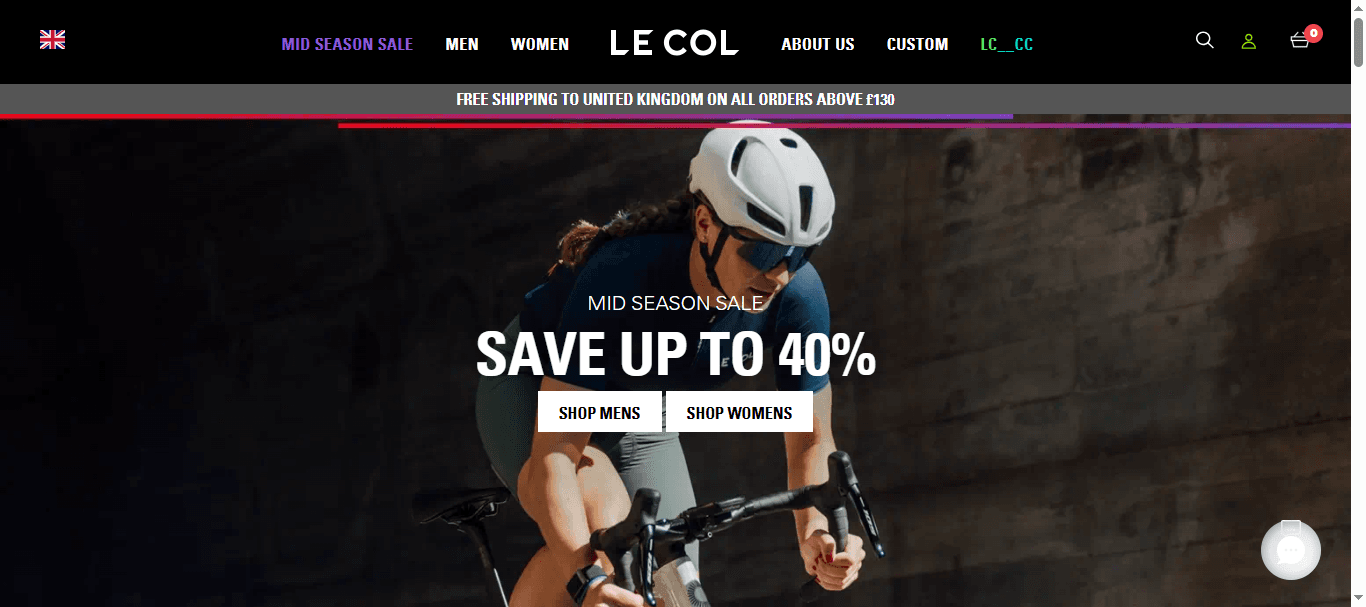
Founded: 2011 by Yanto Barker (former pro cyclist) in London
Estimated revenue: £25M+ (premium cycling)
Target markets: UK, US, EU, AU
What happens when a former pro cyclist builds a brand for the riders he respects. Endorsed by INEOS Grenadiers and Bradley Wiggins, Le Col runs Shopify Plus as a multi-region cycling-apparel operation. Ride-data-led merchandising, kit recommendations sorted by ride condition (rain, wind, temperature), surfaced as a homepage filter.
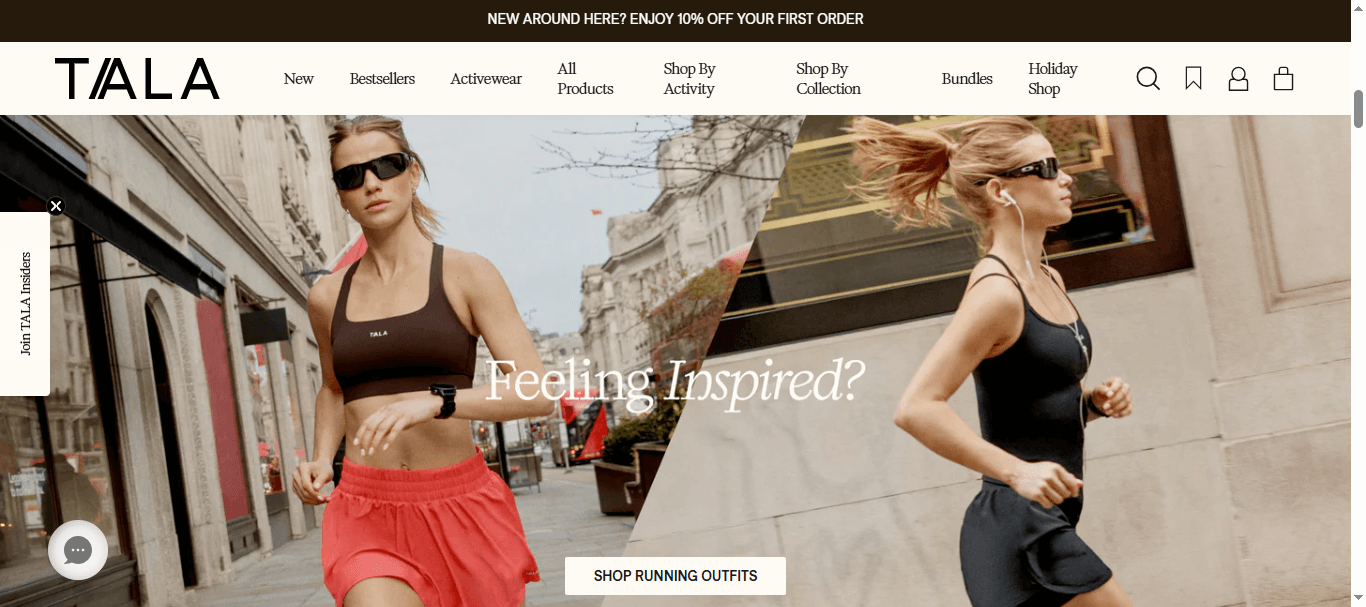
Founded: 2019 by Grace Beverley
Estimated revenue: £15M+ (sustainable activewear)
Target markets: UK, US, EU, AU
Influencer-founded but operator-built. Grace Beverley turned a fitness audience into a sustainable activewear brand “Tala” on Shopify Plus, with material transparency baked into every product page. The “Material Mix” callouts on PDPs, sustainability as a conversion lever, not a content slot.
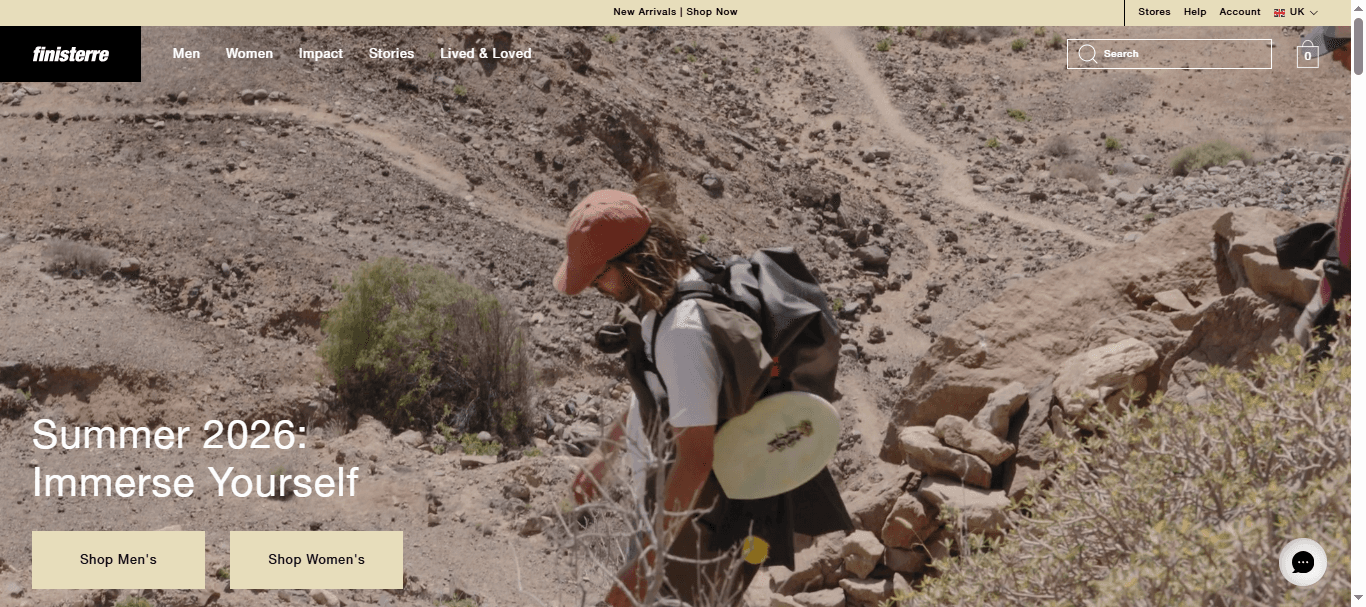
Founded: 2003 by Tom Kay in St Agnes, Cornwall
Estimated revenue: £20M+ (B-Corp surf)
Target markets: UK, US, EU
Cornish-founded cold-water surf brand and B-Corp. Finisterre runs a Shopify Plus storefront that ties its repair-and-resole programme directly into the main shop. The “Lived & Loved” pre-loved marketplace integrated as a section of the same site, circular commerce as a product line, not a press release.
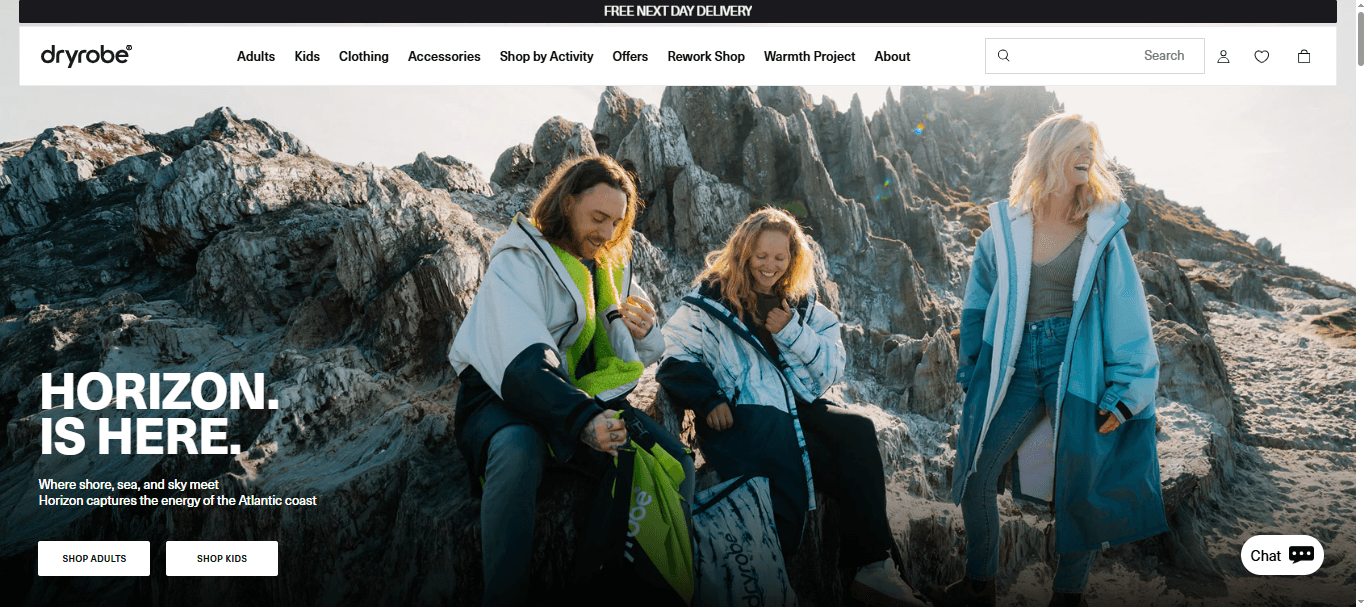
Founded: 2010 by Gideon Bright in Bude, Cornwall
Estimated revenue: £30M+ (cult outerwear)
Target markets: UK, US, EU, AU
The original “change-anywhere robe” that became a cold-water swimming and surf-school staple, and then crossed into general outerwear. Dryrobe runs Shopify Plus on a single SKU empire (a few dozen variants) executed at category-leader scale. The photo-bombed homepage, every banner image is a community member tagged on Instagram, surfaced as social proof at the top of the funnel.
Beauty is one of the fastest-growing categories on Shopify in the UK. Charlotte Tilbury, Trinny London, and Glossier UK alone account for hundreds of millions in DTC revenue.
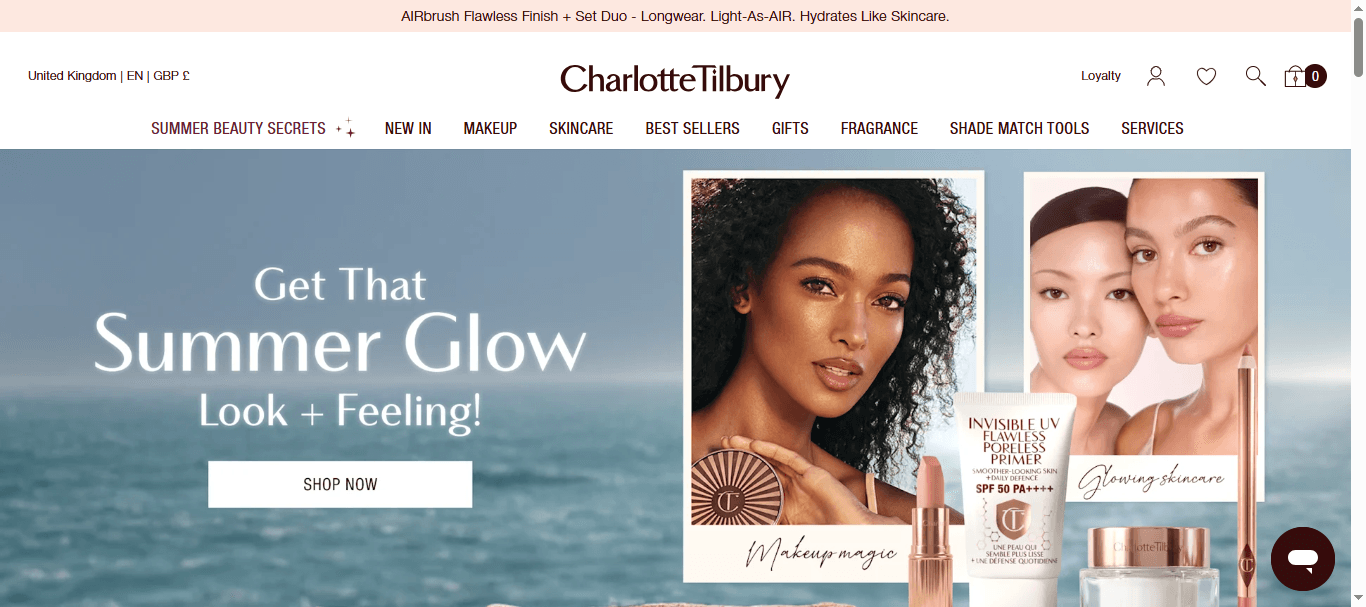
Founded: 2013 by Charlotte Tilbury MBE
Estimated revenue: £300M+ (acquired by Puig 2020)
Target markets: UK, US, EU, UAE, AU
Premium beauty’s case study on a fast scale. Charlotte Tilbury moved to Shopify Plus to power a global D2C operation that grew through Pixiwoo virality, the cult “Magic Cream” loop, and Hollywood seeding. The standout is their unified storefront across 50+ regions on a single Plus instance, luxury beauty execution that legacy platforms still struggle to match.
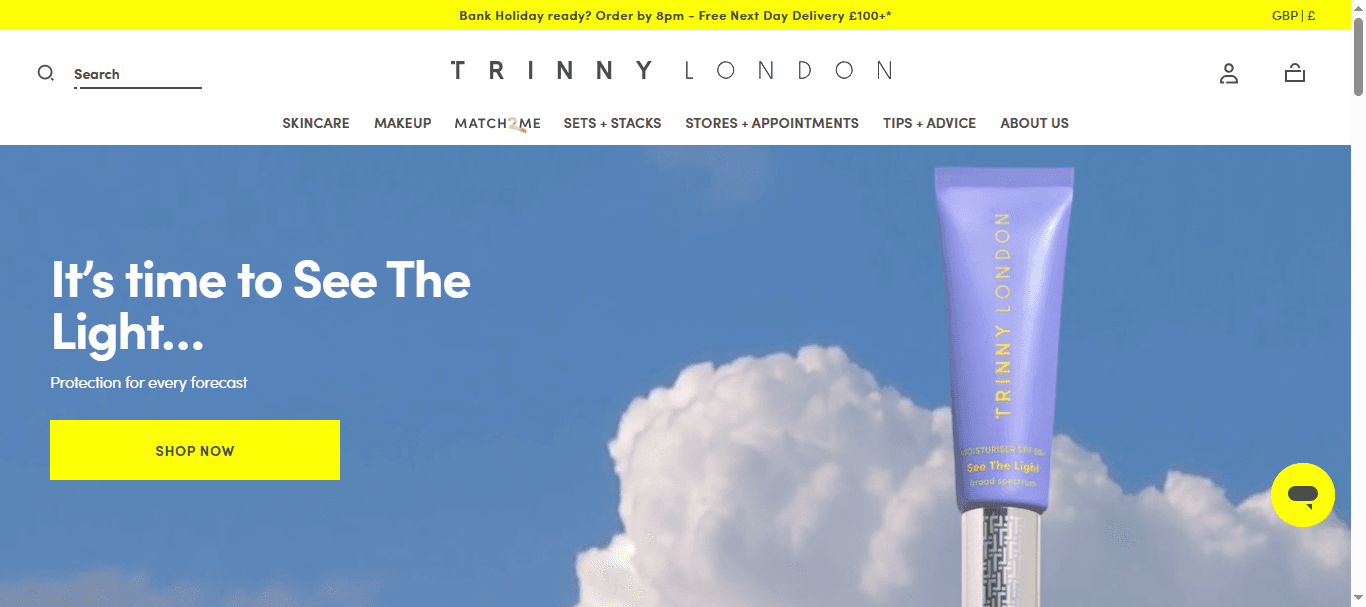
Founded: 2017 by Trinny Woodall
Estimated revenue: £50M+ annual
Target markets: UK, US, AU
Started by selling stackable Match2My pots to women over 50, the demographic Sephora forgot. Trinny Woodall went viral with daily Facebook Live tutorials and converted that audience into a £50M+ business on Shopify Plus named Trinny London. The colour-match quiz is one of the best on-platform personalisation engines on Shopify, period, turning a buyer into a repeat-purchase plan in 90 seconds.
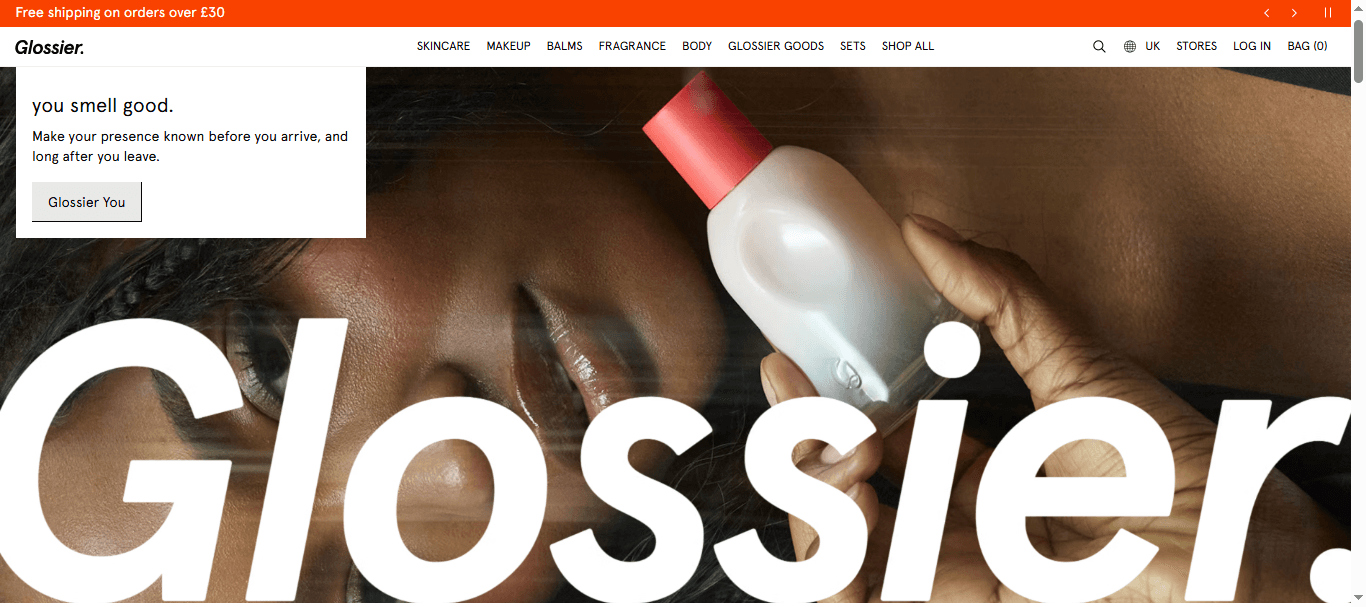
Founded: 2014 by Emily Weiss
Estimated revenue: $200M+ annual (parent); peak valuation $1.2B
Target markets: UK, US, EU
Glossier’s UK store is where “Into the Gloss”-era community marketing meets Shopify Plus operational scale. They migrated to Plus to handle product launch surges that frequently broke their previous platform. The launch-day mechanics, limited-drop allocation, queue handling, and email-list-to-storefront orchestration that makes a Glossier launch feel like a sneaker drop.
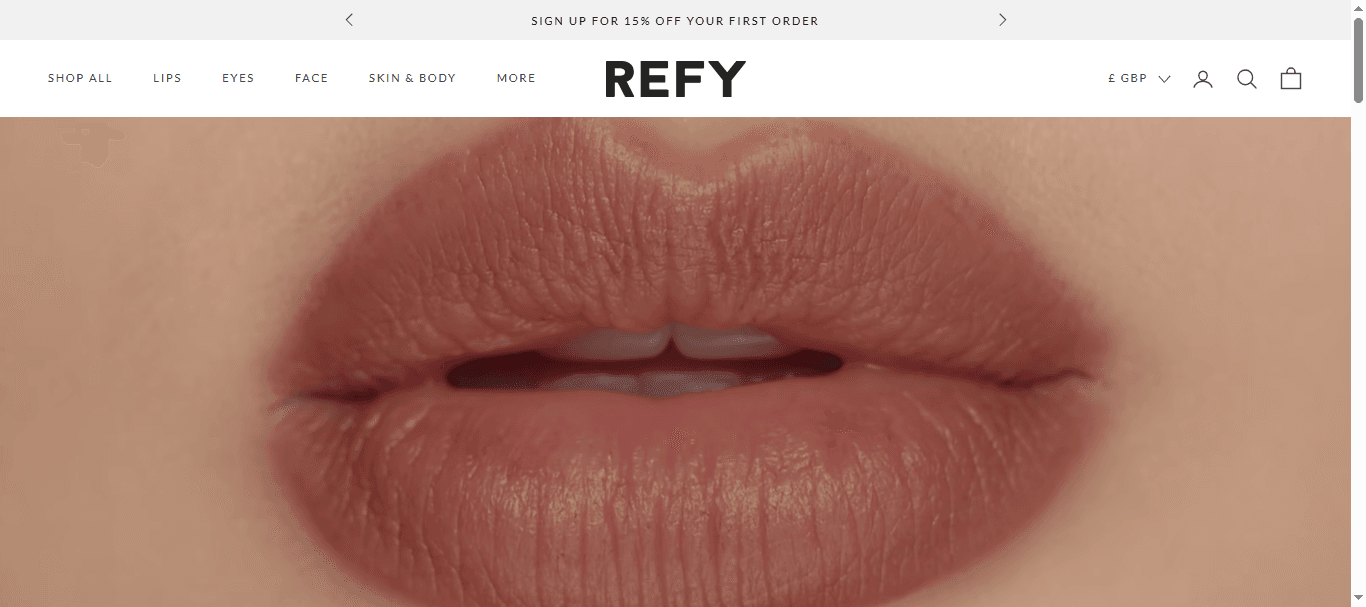
Founded: 2020 by Jess Hunt and Jenna Meek
Estimated revenue: £30M+ (viral beauty)
Target markets: UK, US, EU, AU
Jess Hunt’s Refy is the post-2020 viral beauty playbook executed at platform level. Built native on Shopify Plus from launch, the brand turned brow shaping into a £30M+ category. The content-to-conversion loop, every TikTok tutorial Hunt films lands as a PDP video on the same storefront within 48 hours, executed without the team leaving Shopify’s admin.
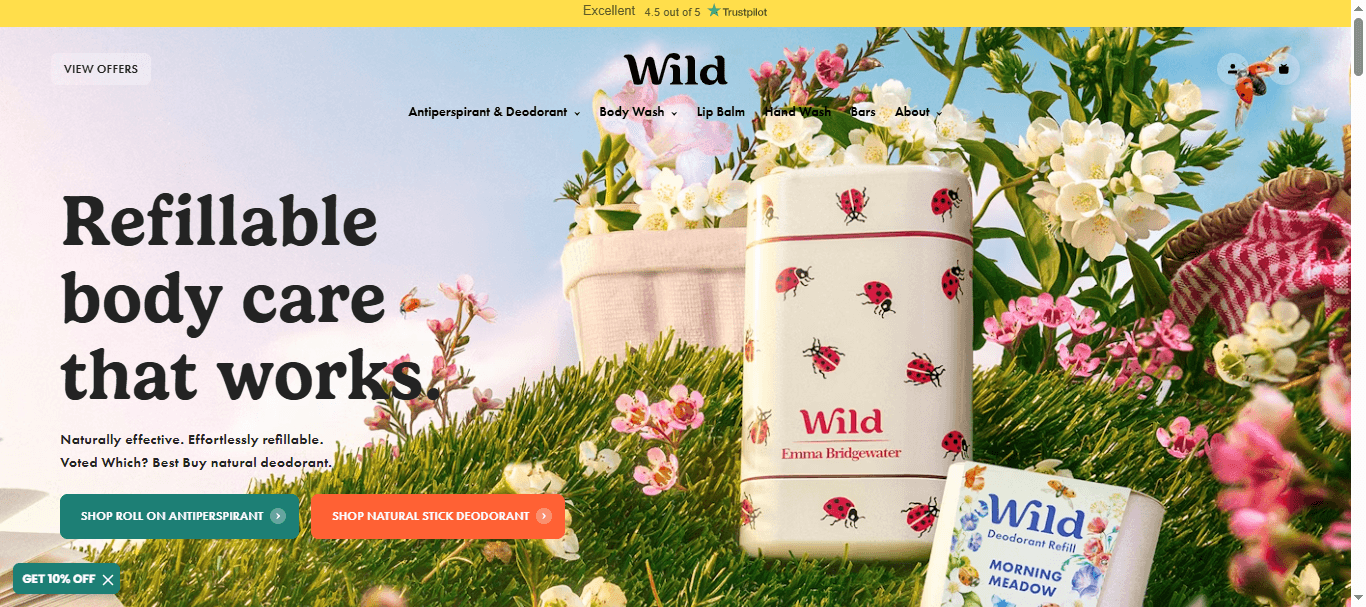
Founded: 2019 by Freddy Ward and Charlie Bowes-Lyon
Estimated revenue: Acquired by Unilever 2023 for £230M
Target markets: UK, EU, US, AU
Refillable deodorant subscription pioneer. Wild’s exit to Unilever in 2023 was a Shopify Plus case study even before the deal. Subscription-with-flavour-swap mechanics, change your scent without breaking the recurring order, handled at platform level, not bolted-on. The blueprint of other refill-led D2Cs are now copying.
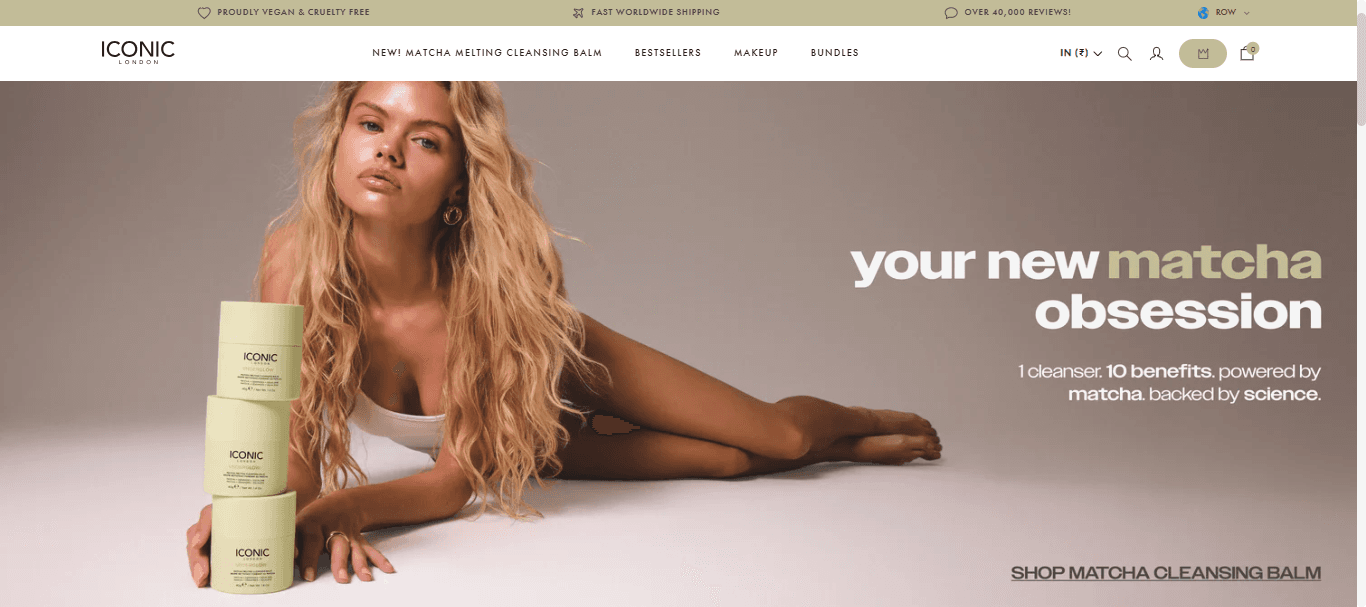
Founded: 2016 by Sandi Patel in London
Estimated revenue: £30M+ (cult highlighter)
Target markets: UK, US, EU
Iconic London’s Prep-Set-Glow setting spray and Illuminator highlighter built a viral cult on TikTok, the brand’s storefront on Shopify Plus is engineered to absorb that traffic. Tutorial-first PDPs, every product page leads with a how-to video before specs, mirroring how the audience actually shops.
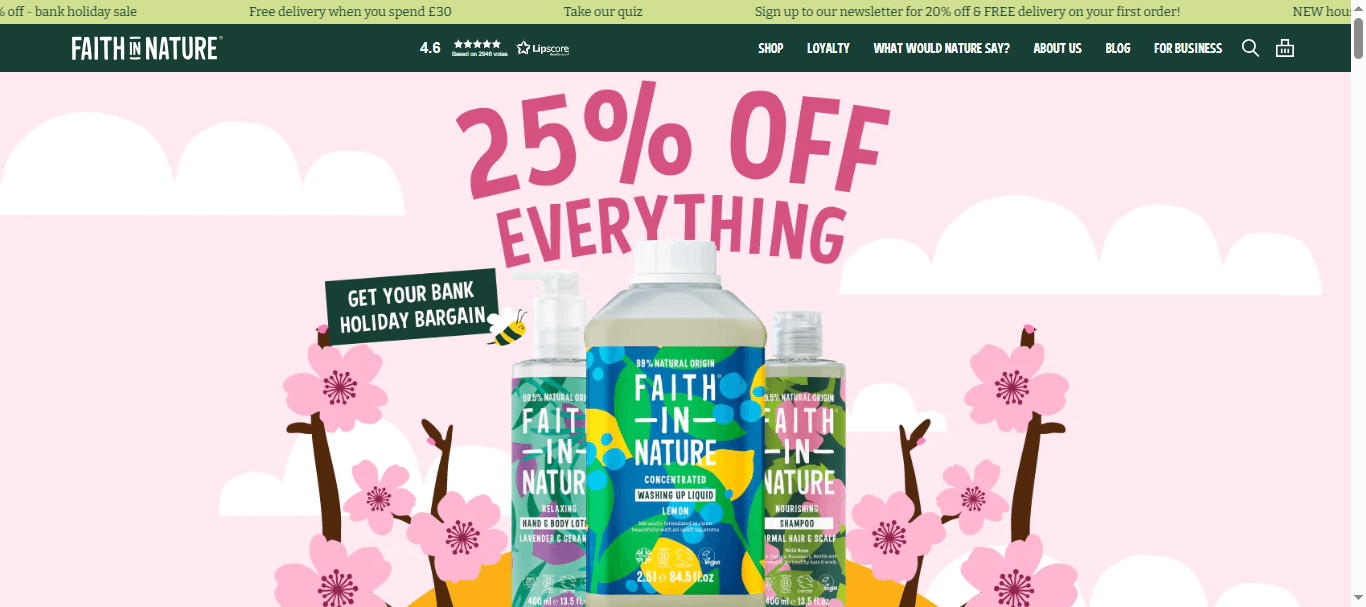
Founded: 1974 by Rivka Rose
Estimated revenue: £20M+ (B-Corp; 52 years in 2026)
Target markets: UK, EU
Founded 1974, vegan and cruelty-free from the start, and famously appointed Nature itself to its board in 2022. Faith In Nature’s Shopify Plus storefront is where heritage personal care meets a refill-led commerce model. Their refill-vs-buy-new toggle on every PDP, with pricing and SKU handled cleanly.
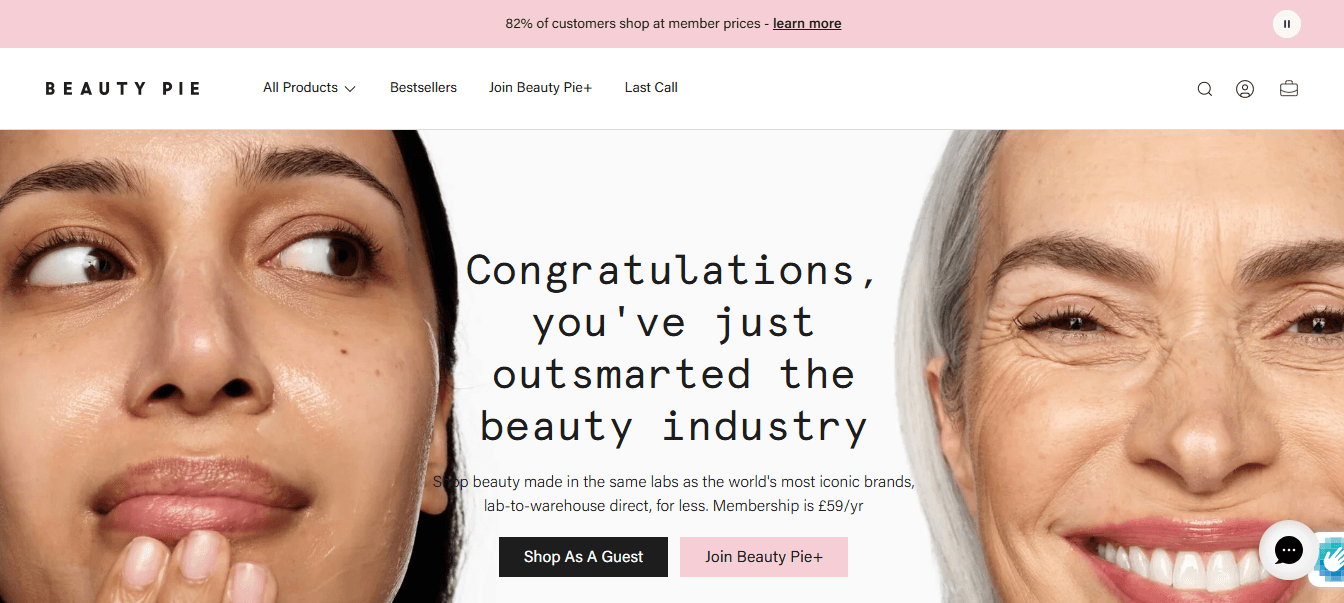
Founded: 2016 by Marcia Kilgore in London
Estimated revenue: £150M+ (member-only luxury beauty)
Target markets: UK, US
The disruptor beauty model, factory-direct prices for members, luxury quality without the retail markup. Beauty Pie runs Shopify Plus with a membership paywall built into the storefront, non-members see the product; members see the price. Membership-commerce done cleanly on Plus.
Food on Shopify rewards subscription, content, and recurring-revenue mechanics, and the UK has produced some of the platform’s most-cited case studies.
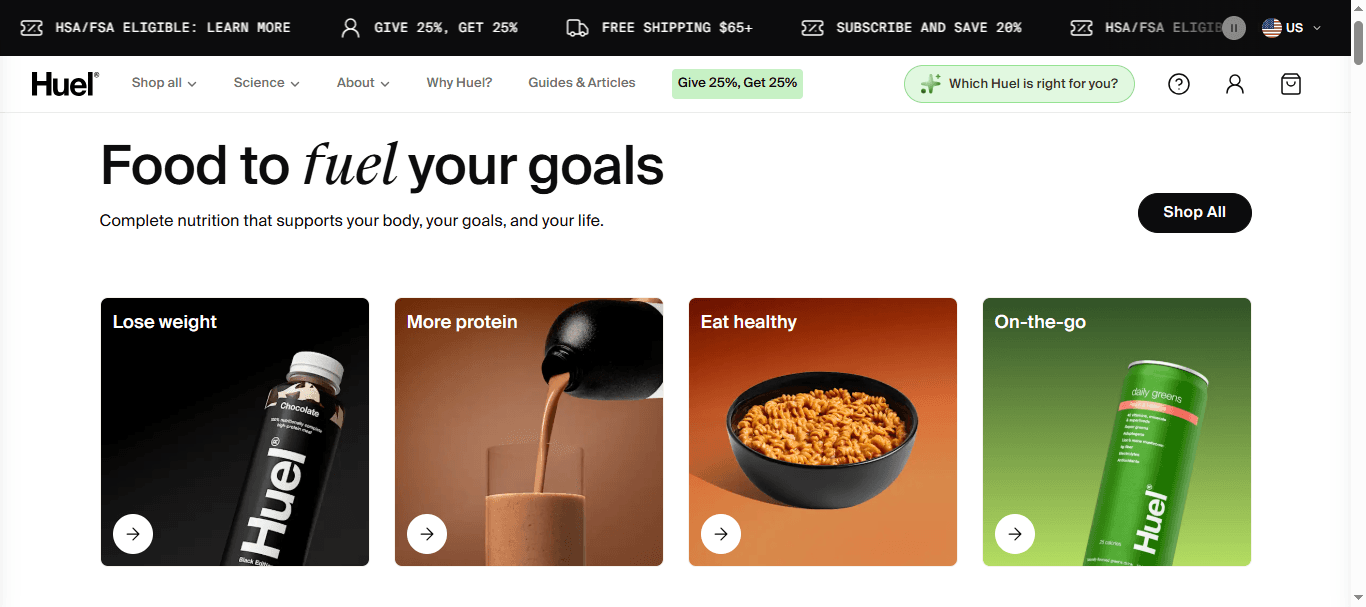
Founded: 2014 by Julian Hearn and James Collier in Hertfordshire
Estimated revenue: £200M+ annual; sold in 100+ countries
Target markets: UK, US, EU, AU, JP
The DTC nutrition juggernaut. £200M+ revenue, sold in 100+ countries, all running on Shopify Plus. Huel’s standout is subscription mechanics layered on Shopify, recurring revenue at meaningful scale without leaving the platform, plus content-engine throughput that turns every science claim into a shoppable product.
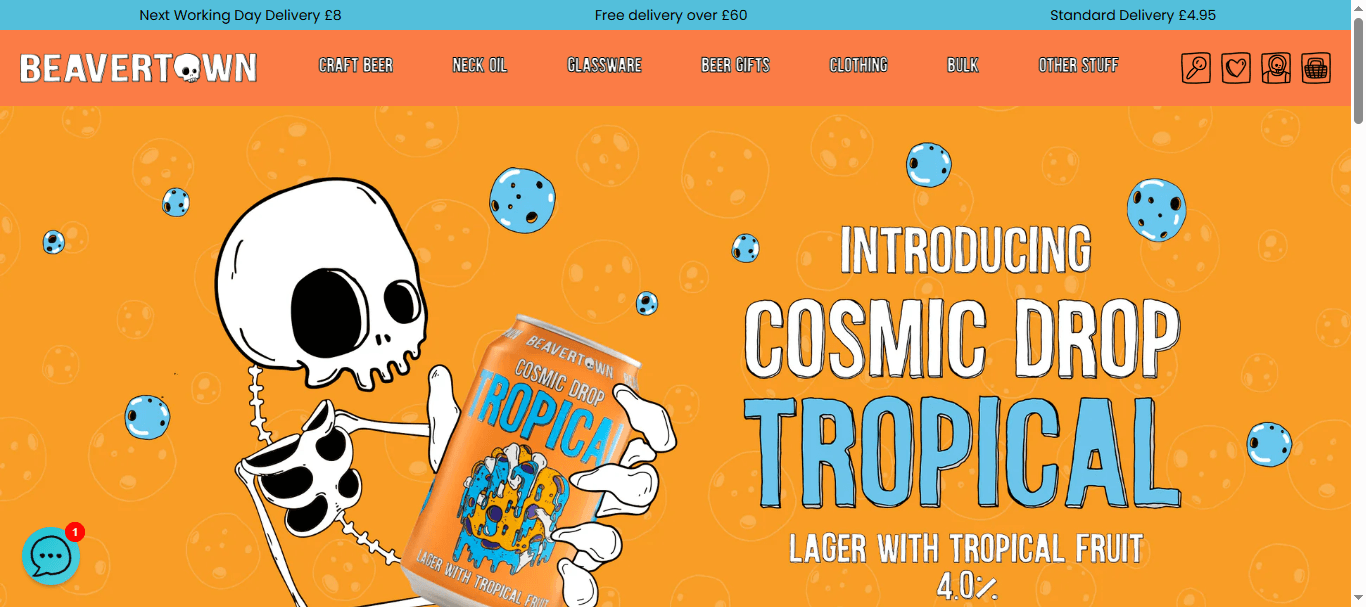
Founded: 2011 by Logan Plant (son of Robert Plant)
Estimated revenue: £30M+ (Heineken-stake-held since 2018)
Target markets: UK
The cult Tottenham craft brewer runs a Shopify storefront named “Beavertown Brewery” for direct-to-fan beer drops, merch, and event tickets. Heineken took a stake in 2018, but the Beavertown shop still feels like a band’s merch table. Their illustrative brand work translating onto product pages without losing the punch.
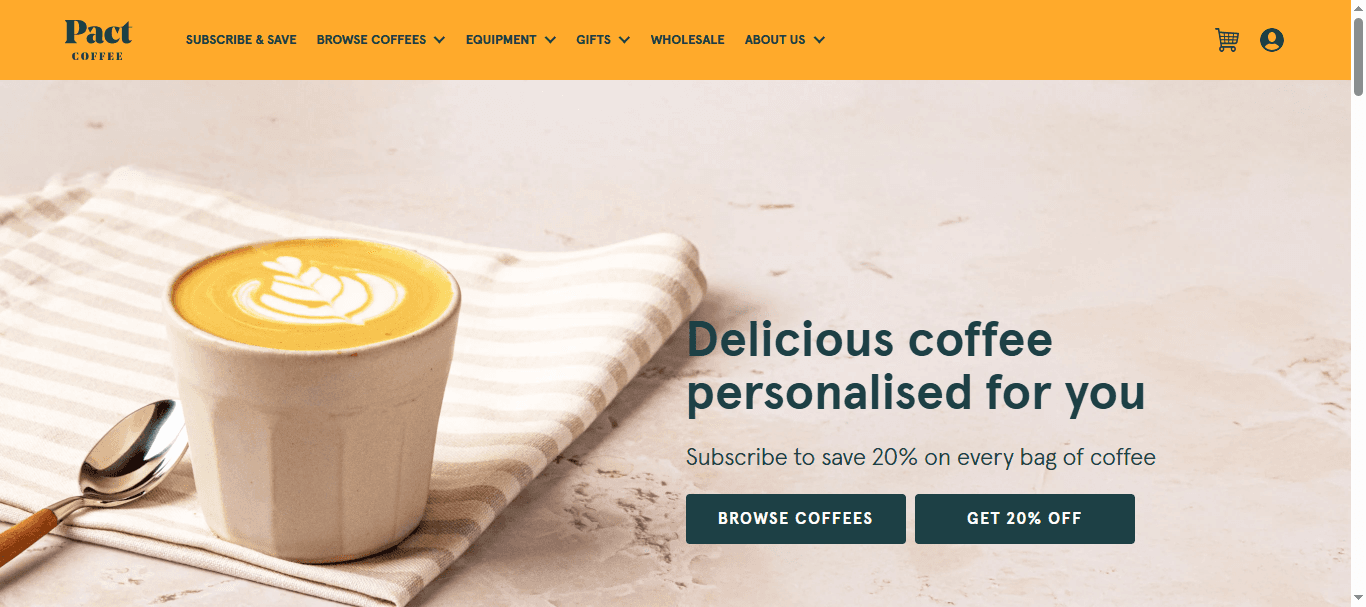
Founded: 2012 by Stephen Rapoport in London
Estimated revenue: £20M+ (subscription)
Shopify plan: Plus (with subscription)
Target markets: UK
UK speciality coffee subscription pioneer. Pact Coffee replatformed onto Shopify Plus to handle a subscription engine that ships to tens of thousands of households weekly. Their grind-customisation logic at SKU level, choose your machine, get the right grind, no support ticket required.
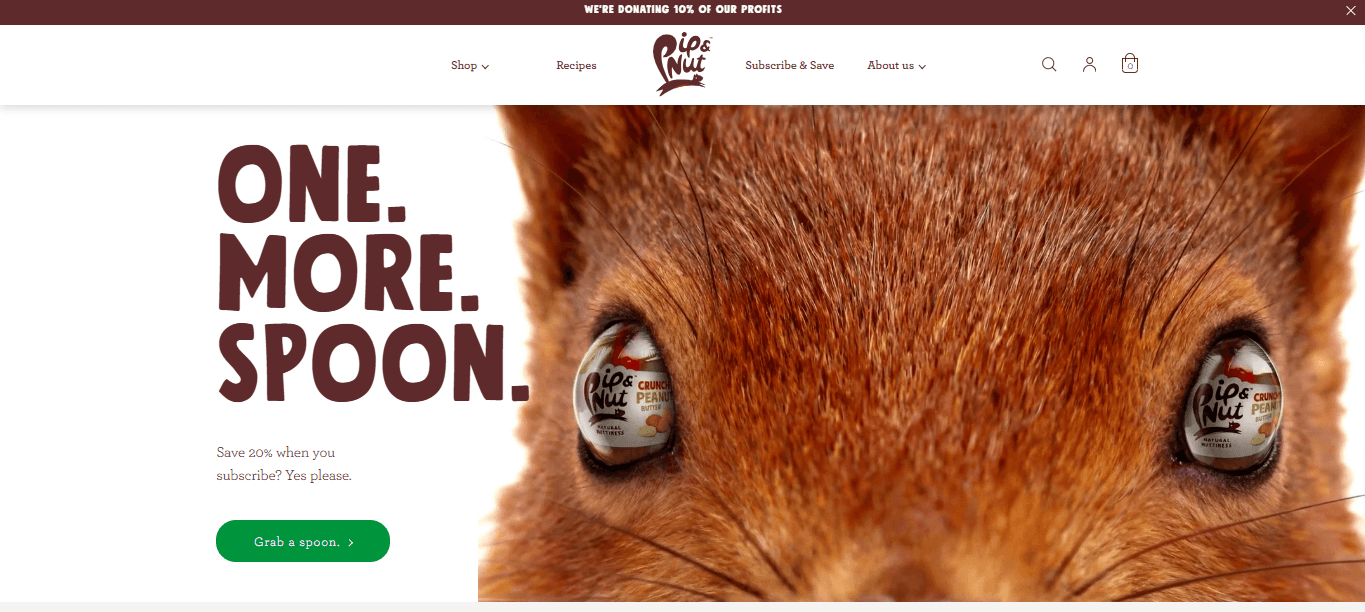
Founded: 2013 by Pip Murray
Estimated revenue: £15M+ (food DTC + retail)
Target markets: UK
Healthy nut butter that broke into Tesco, Sainsbury’s, and Waitrose, and still runs a thriving DTC engine on Shopify named Pip & Nut. The bundle-builder for office and household-stock orders, plus founder-led content (Pip’s own recipe blog) that ladders directly into shoppable product feeds.
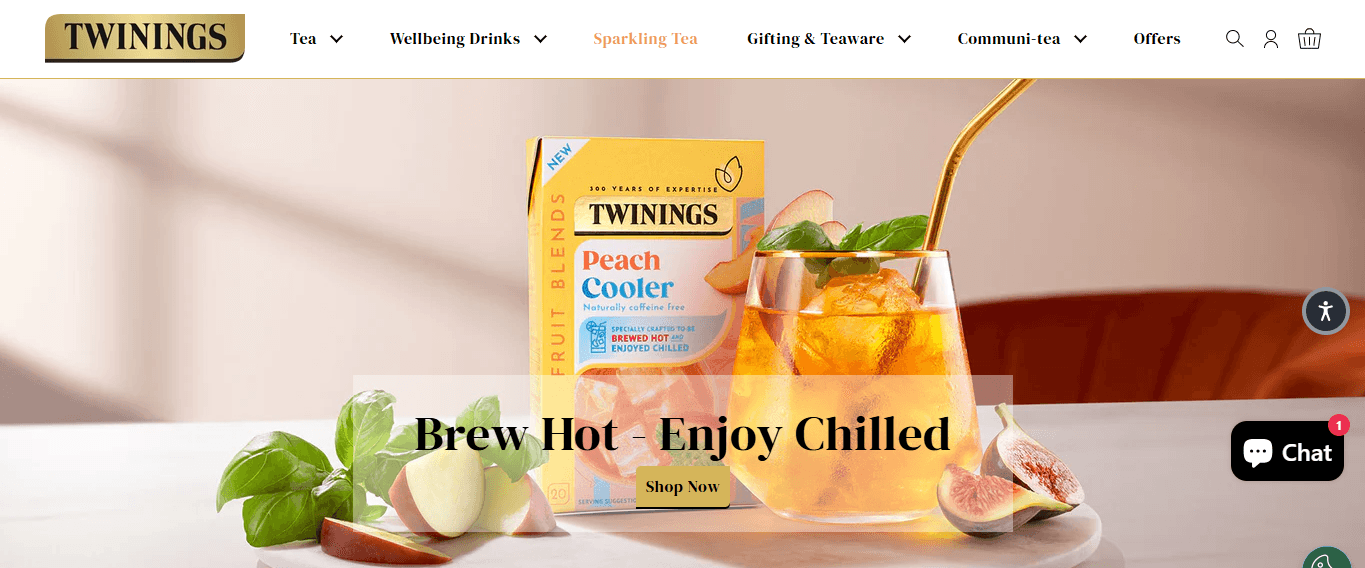
Founded: 1706 (Strand, London), running on Shopify in 2026
Estimated revenue: £15M+ (Source: ECBD)
Target markets: UK, US, EU
Yes, Twinings, 320 years old, by Royal Appointment, runs its DTC on Shopify. The brand’s storefront is a clean execution of category curation (loose leaf, bagged, pyramid, cold infuse) with subscription mechanics for the recurring tea drinker. Heritage F&B brands, take note: this is what a 320-year-old brand running on Shopify looks like.
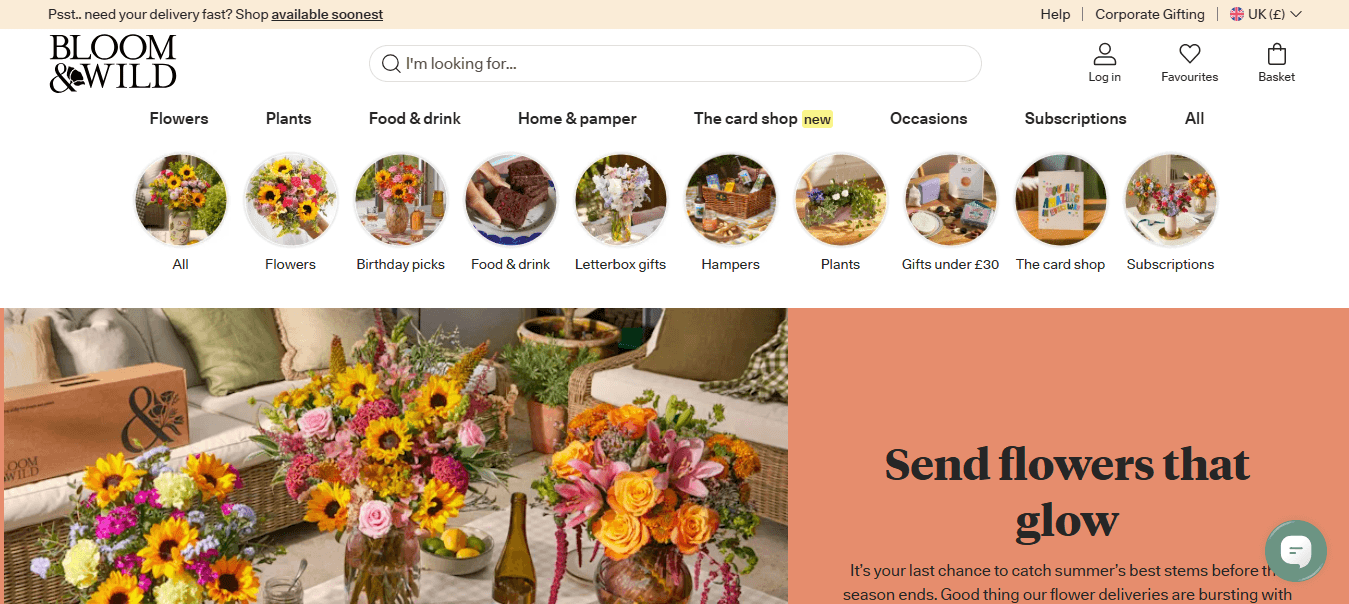
Founded: 2013 by Aron Gelbard in London
Estimated revenue: £120M+ (letterbox flowers, multi-brand group)
Target markets: UK, IE, DE, FR
The category creator for letterbox flowers, now a multi-brand group also owning Bloomon and Bergamotte. Bloom & Wild runs Shopify Plus with a subscription-and-one-off gift orchestration that handles the highest single-day GMV events in UK ecommerce, Valentine's Day, Mother's Day, and Christmas, without an outage.
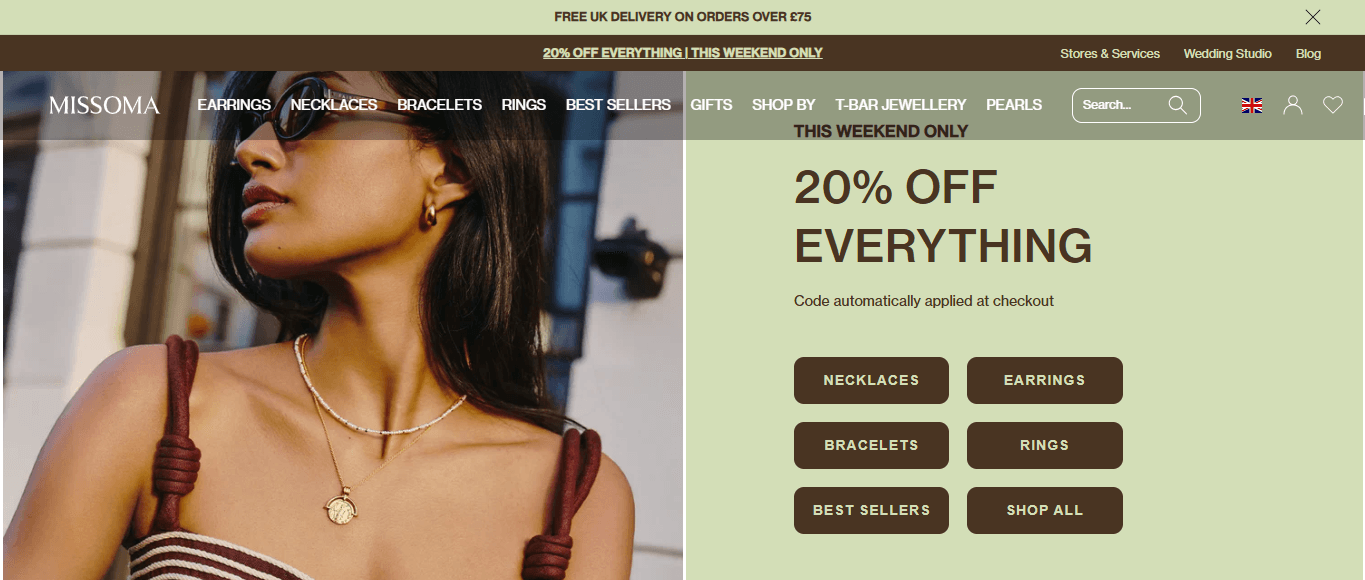
Founded: 2008 by Marisa Hordern in London
Estimated revenue: £40M+ annual
Target markets: UK, US, EU, AU
Missoma turned demi-fine jewellery into a viral UK D2C category. How cleanly they merchandise their stack-and-layer collections on Shopify Plus, the “Build the Stack” tool on PDPs is one of the cleanest on-platform configurators in jewellery, period. Worn by Meghan Markle, Hailey Bieber, and a generation of UK influencers.
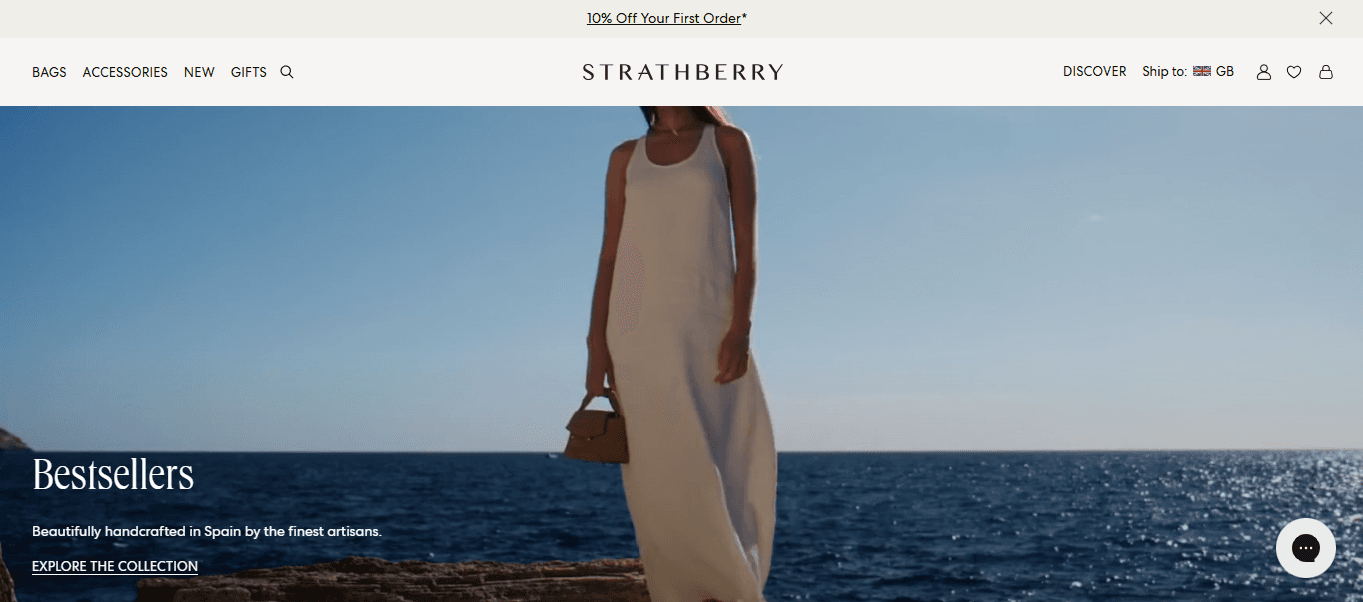
Founded: 2013 by Leeanne and Guy Hundleby in Edinburgh
Estimated revenue: £20M+ (luxury leather)
Target markets: UK, US, EU, UAE, JP
Scottish luxury leather goods, famously worn by Meghan Markle on her first Royal engagement (the “Strathberry effect” sold out the bag in minutes). Strathberry runs Shopify Plus as a multi-region operation. Craftsmanship-storytelling integrated into PDPs, every bag carries the artisan’s name and atelier, without slowing the page.
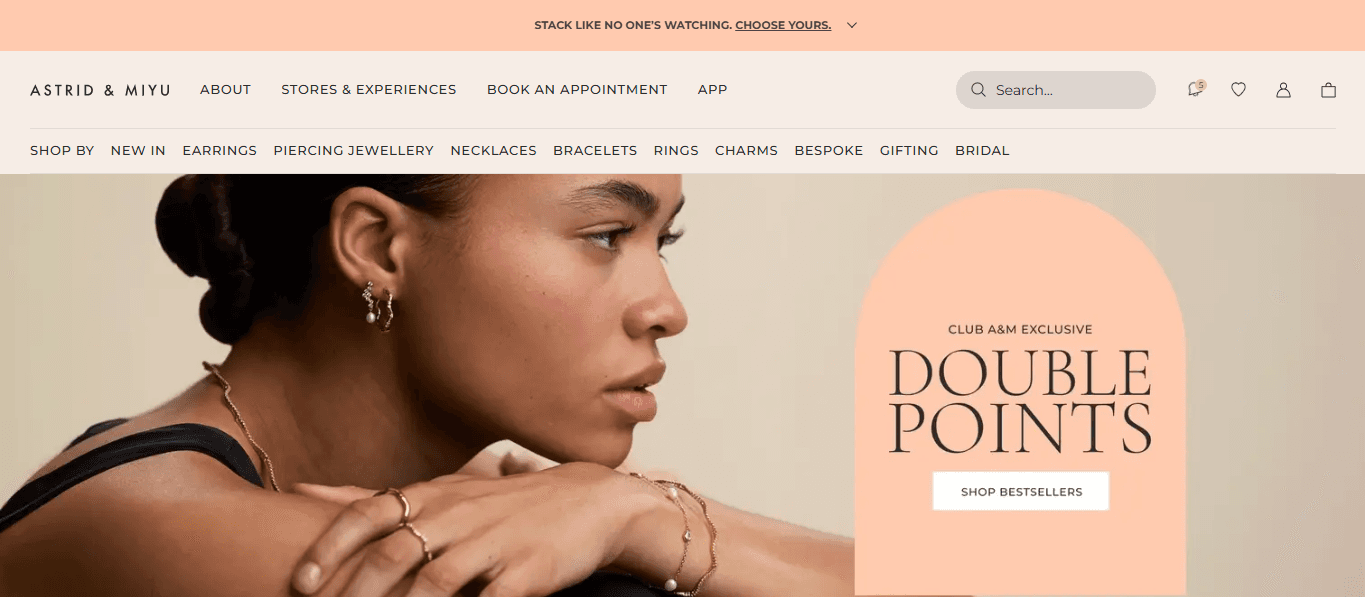
Founded: 2012 by Connie Nam in London
Estimated revenue: £30M+ (with retail expansion)
Target markets: UK, US, EU
Piercing studio meets DTC jewellery. Astrid & Miyu’s hybrid model, book a piercing in-store or shop the same pieces online, runs on Shopify Plus with appointment booking and inventory shared via Shopify POS. How the in-store piercing experience drives social content that drives back to the same storefront.
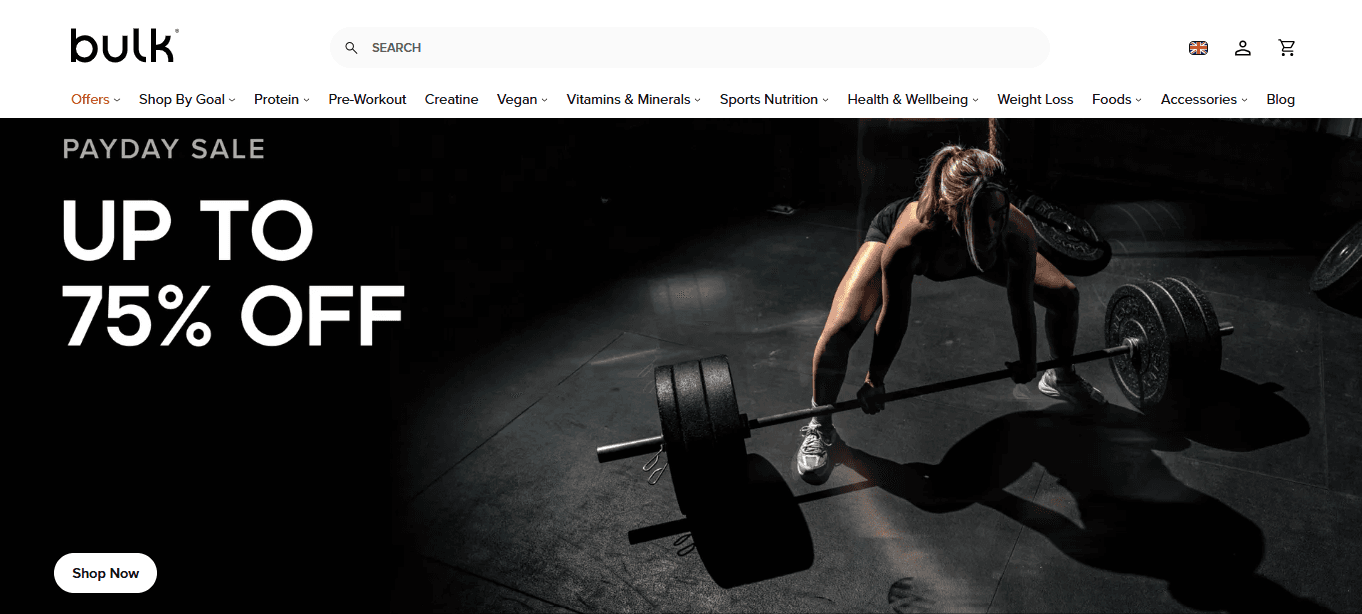
Founded: 2006 by Mike Edge (rebranded from Bulk Powders 2020)
Estimated revenue: £100M+ annual
Target markets: UK, EU, US
Sports nutrition at category-leader scale. Bulk’s rebrand from Bulk Powders coincided with a Shopify Plus push, expanding from powders into clothing, food, and supplements. Subscription-and-bundle merchandising, buy-the-stack product configurators that take the friction out of multi-SKU sports nutrition orders.
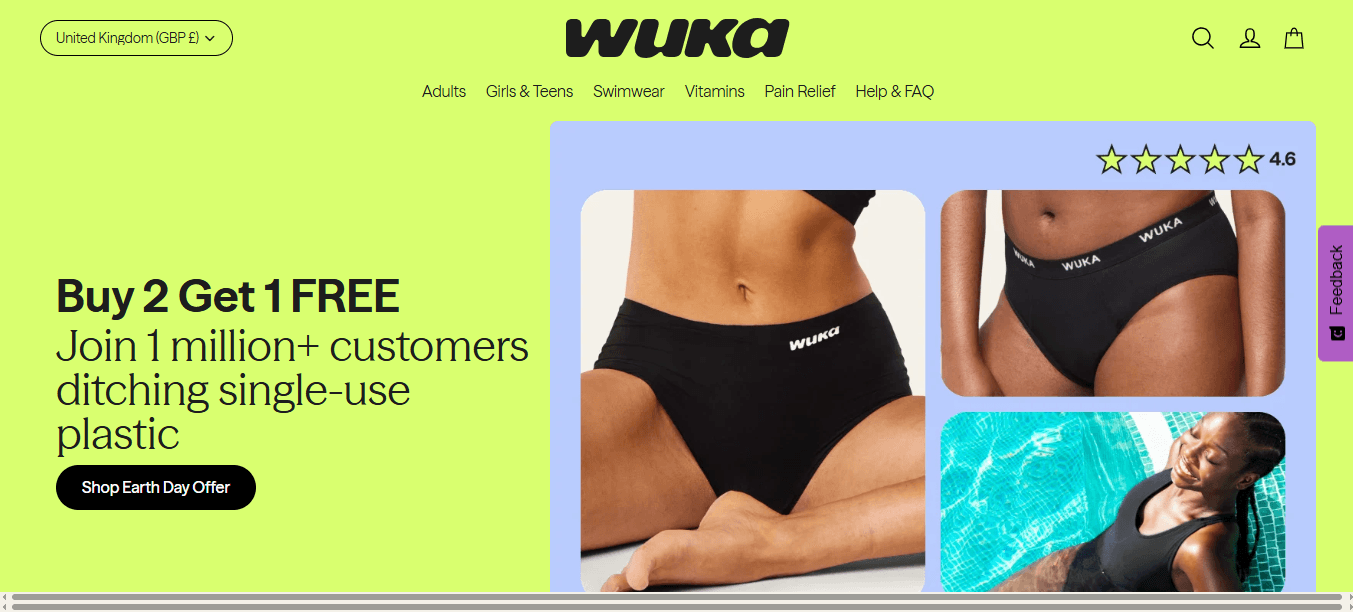
Founded: 2017 by Ruby Raut
Estimated revenue: £15M+ (period care)
Target markets: UK, EU
The UK’s first period pant brand. Wuka went from a kitchen-table operation to a national Boots rollout on Shopify. The flow-finder quiz on the homepage, five questions to a personalised recommendation set, executed on-platform. A masterclass in turning category education into conversion.
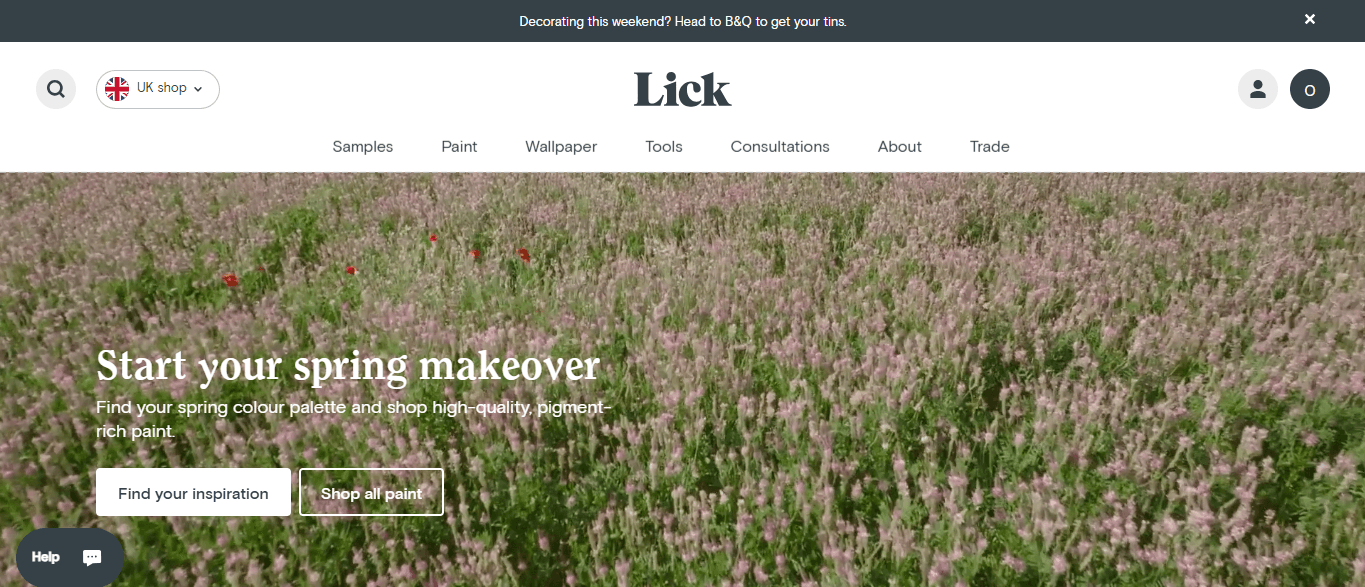
Founded: 2020 by Lucas London and Sam Bentley
Estimated revenue: £20M+ (DTC paint)
Target markets: UK
DTC paint, born in lockdown. Lick built a Shopify Plus storefront engineered for the lowest-friction colour decision in the category, sample swatches, AR visualisation hooks, and a configurator that turns “what colour” into “added to cart” in under two minutes. The “Wall Visualiser” tool integrated directly into PDPs.
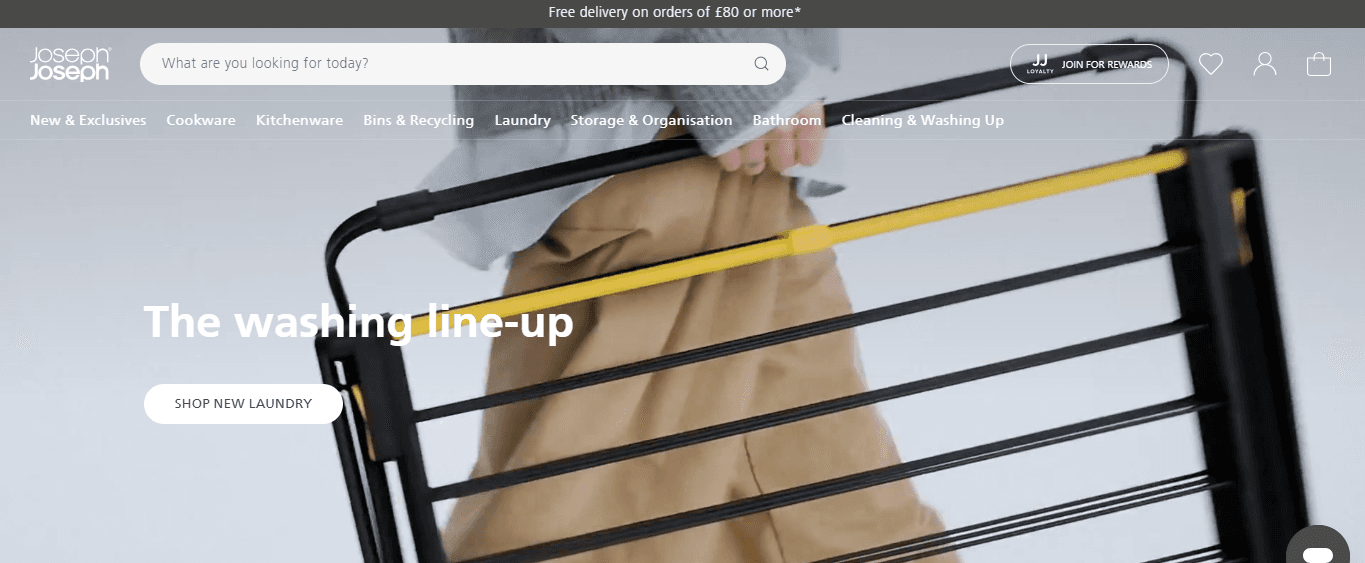
Founded: 2003 by twins Antony and Richard Joseph
Estimated revenue: £100M+ (homewares, 100+ retailers globally)
Target markets: UK, US, EU, AU
British design-led kitchenware in 100+ retailers globally, and a robust DTC engine on Shopify Plus. Their PDP video execution showing every product in use, demonstrating that Shopify can carry design-heavy content without sluggish PDPs.
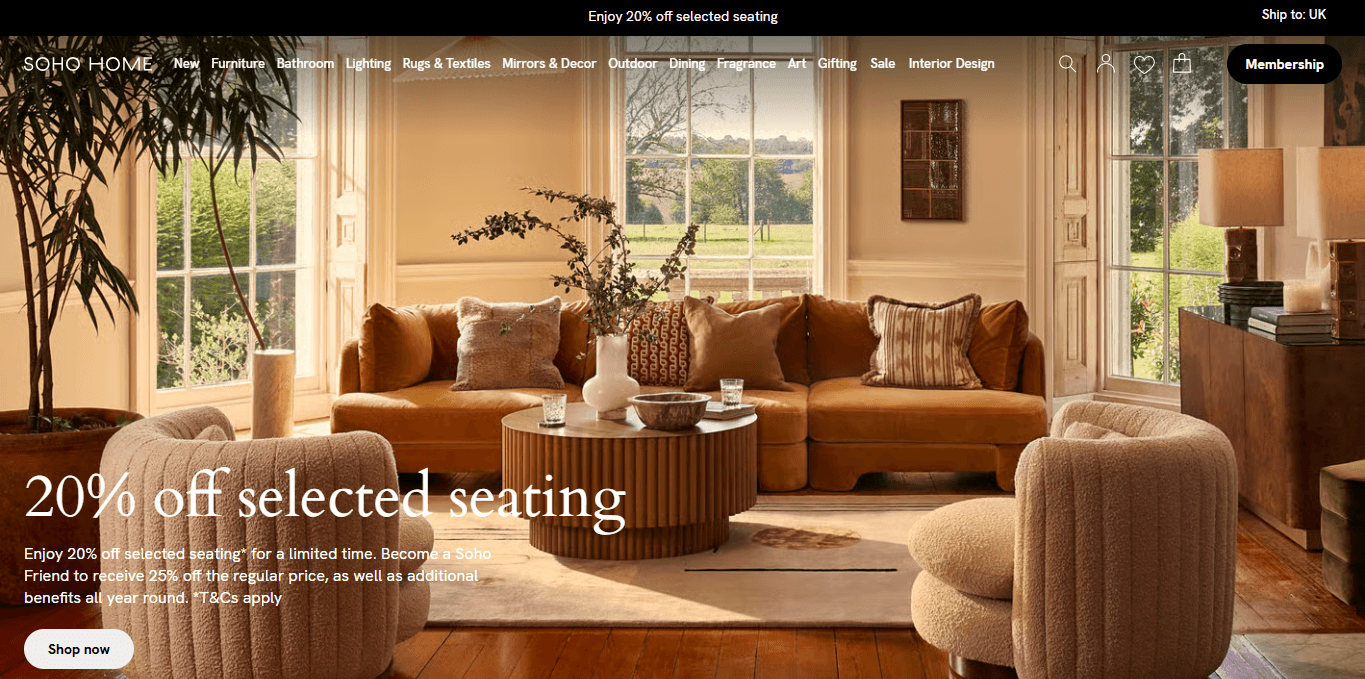
Founded: 2016 by Soho House Group
Estimated revenue: £50M+ (lifestyle brand)
Target markets: UK, US, EU
Soho House’s homeware extension. Members get pricing privileges; non-members get the curation. Soho Home’s standout is the membership-aware storefront on Shopify Plus, a member’s view and a guest’s view of the same site without two stores to maintain.
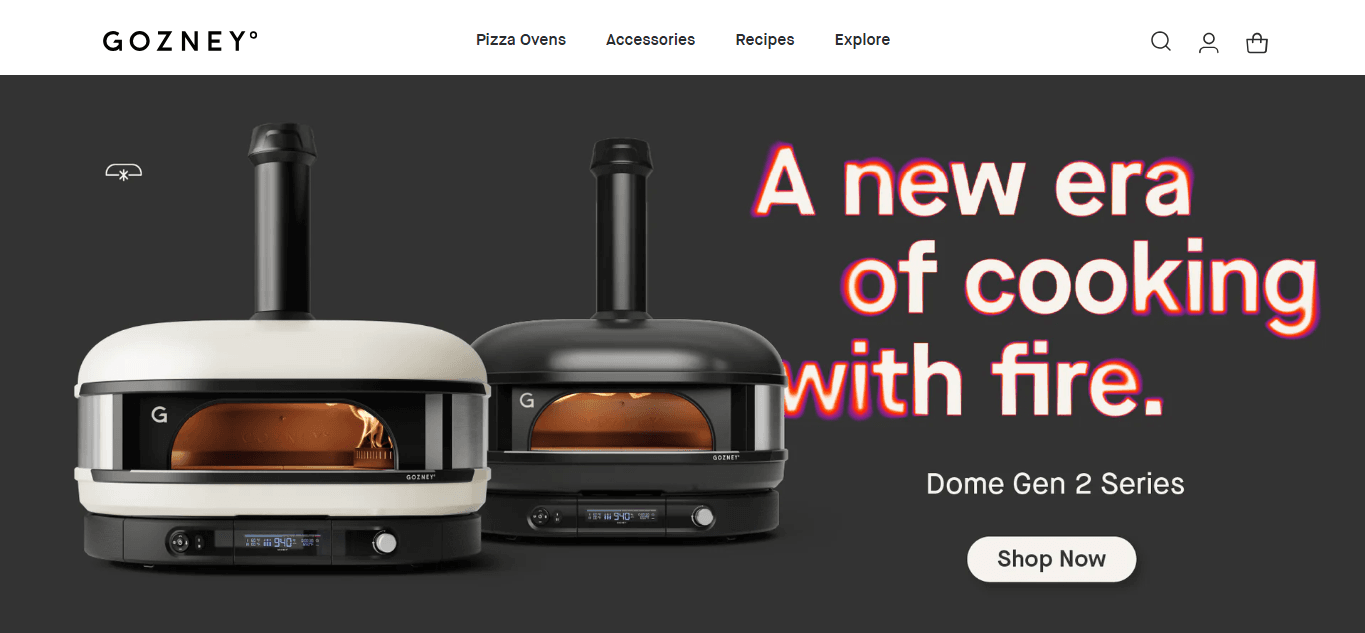
Founded: 2010 by Tom Gozney in Dorset
Estimated revenue: £50M+ (premium pizza ovens)
Target markets: UK, US, EU, AU
UK-engineered pizza ovens that built a global cult around the Roccbox and Dome. Gozney runs Shopify Plus to handle high-AOV products with extensive accessory cross-sell. The content engine, recipe library, video production, community fires, all anchored to the same shoppable storefront.
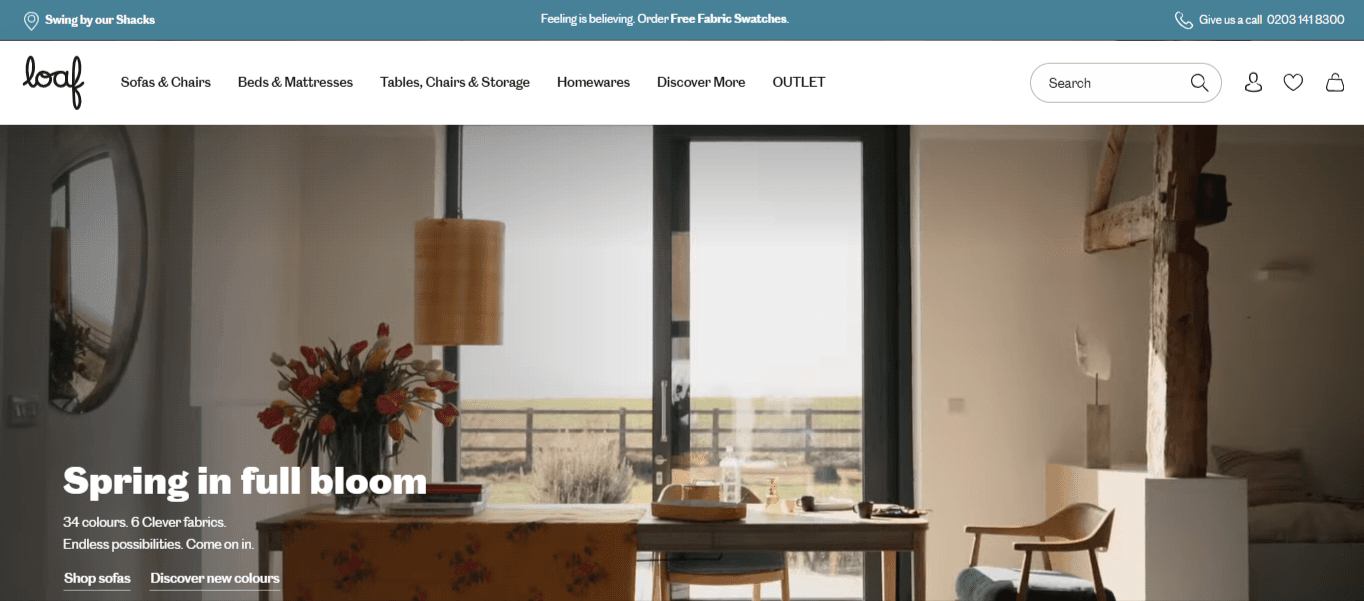
Founded: 2008 by Charlie Marshall
Estimated revenue: £100M+ (DTC furniture)
Target markets: UK
The Loaf DTC sofa business that made furniture-online actually feel safe. £100M+ revenue on Shopify Plus, with the standout being the sample-swatch-to-purchase flow, order swatches free, decide, configure, buy all on a single platform without an offline handoff.
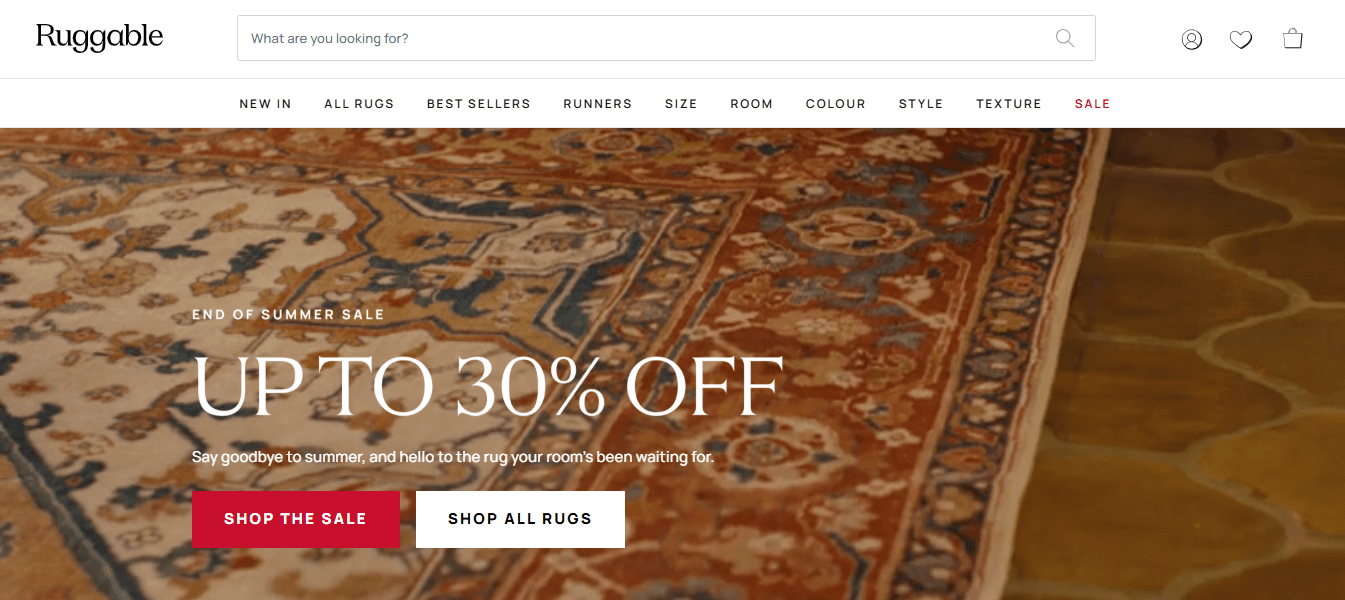
Founded: 2010 by Jeneva Bell (US brand, huge UK operation)
Estimated revenue: $300M+ globally
Target markets: UK, US, CA, EU, AU
Washable rugs at scale. Ruggable UK is a case study in cross-region Shopify Plus deployment, the UK storefront runs on the same Plus instance as the US parent with region-aware sizing (UK metric, US imperial), pricing, and shipping. Multi-region orchestration executed inside Plus.
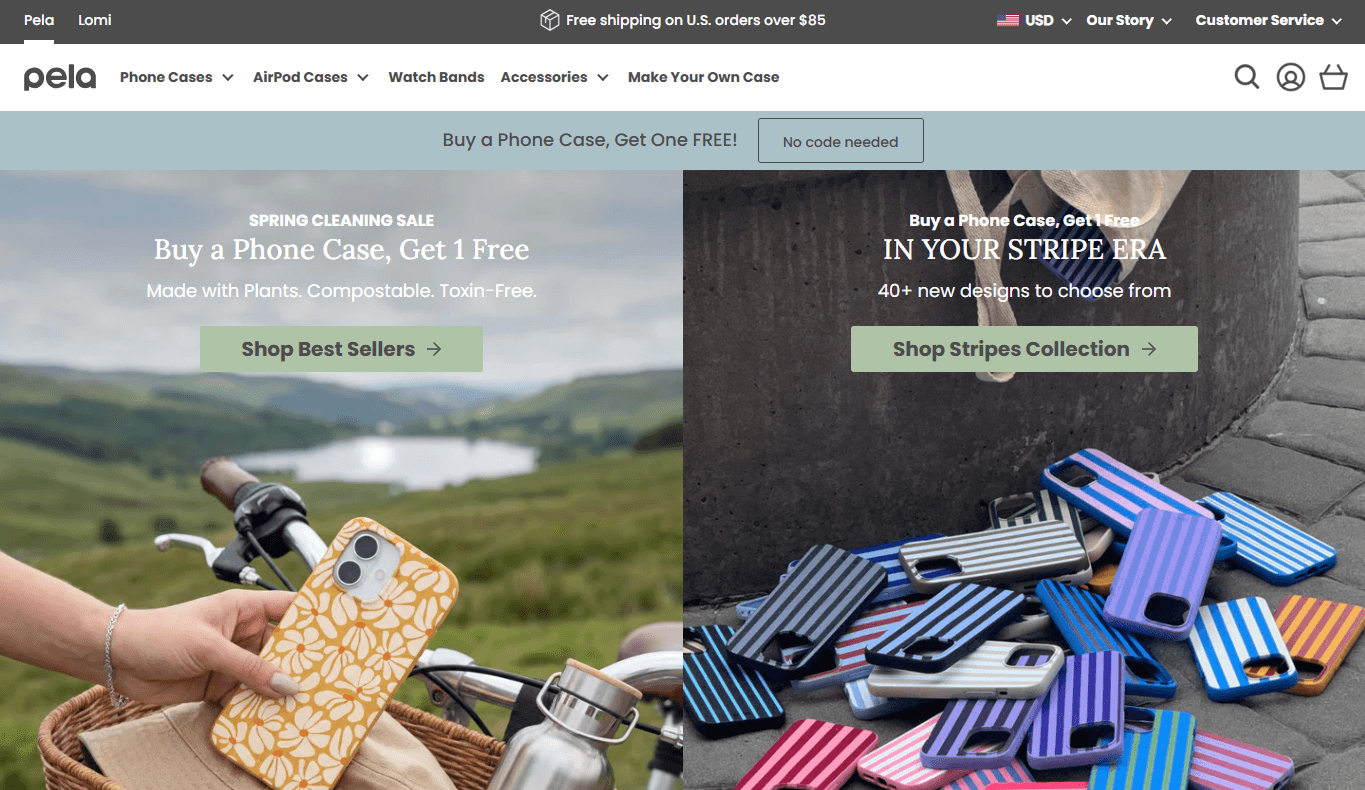
Founded: 2010 by Jeremy Lang
Estimated revenue: $30M+ globally
Target markets: UK, US, EU, AU
Compostable phone cases at multi-region scale. Pela runs an aggressive cross-geo Shopify Plus deployment pricing, currency, and compliance handled by region. Their “Lomi” ecosystem extension (a connected counter-top composter brand) merchandised alongside cases, demonstrating Shopify’s capacity for adjacent-product expansion.
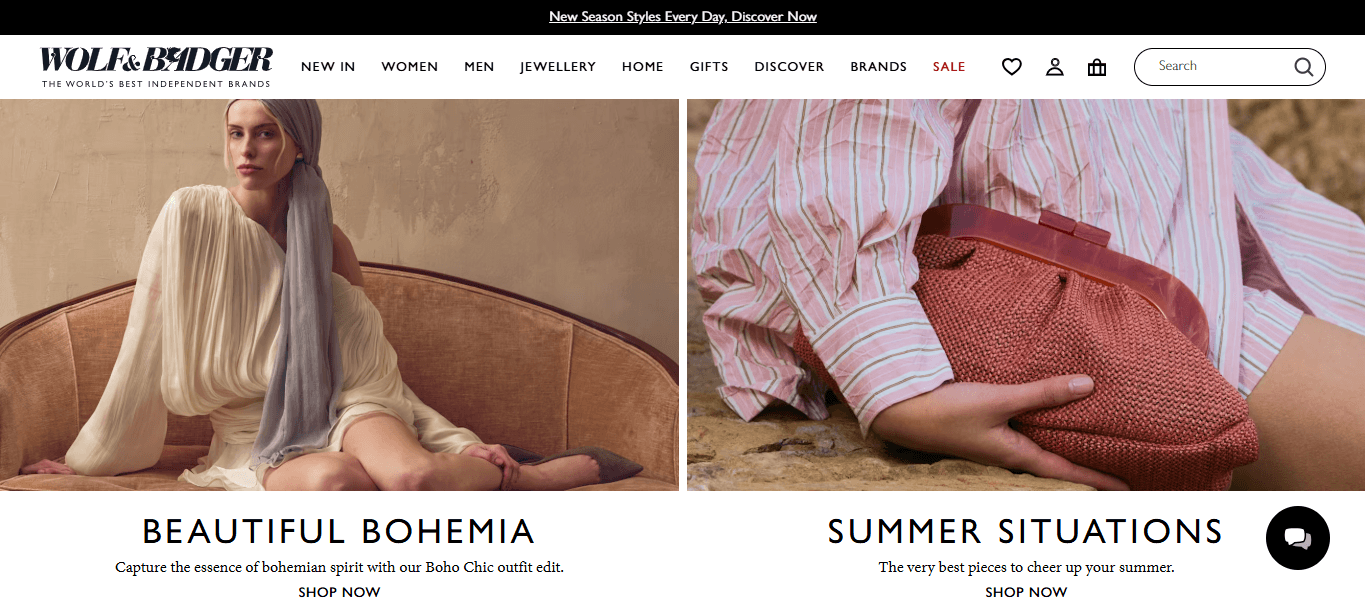
Founded: 2010 by brothers George and Henry Graham in London
Estimated revenue: £30M+ (B-Corp marketplace)
Target markets: UK, US, EU
Marketplace model, not a single brand, Wolf & Badger curates 1,000+ independent designers across UK, US, and Berlin retail and online. Wolf & Badger running a multi-vendor marketplace on Shopify Plus is non-trivial; W&B’s standout is how cleanly they handle vendor onboarding, payouts, and discovery without the marketplace feeling like a marketplace.
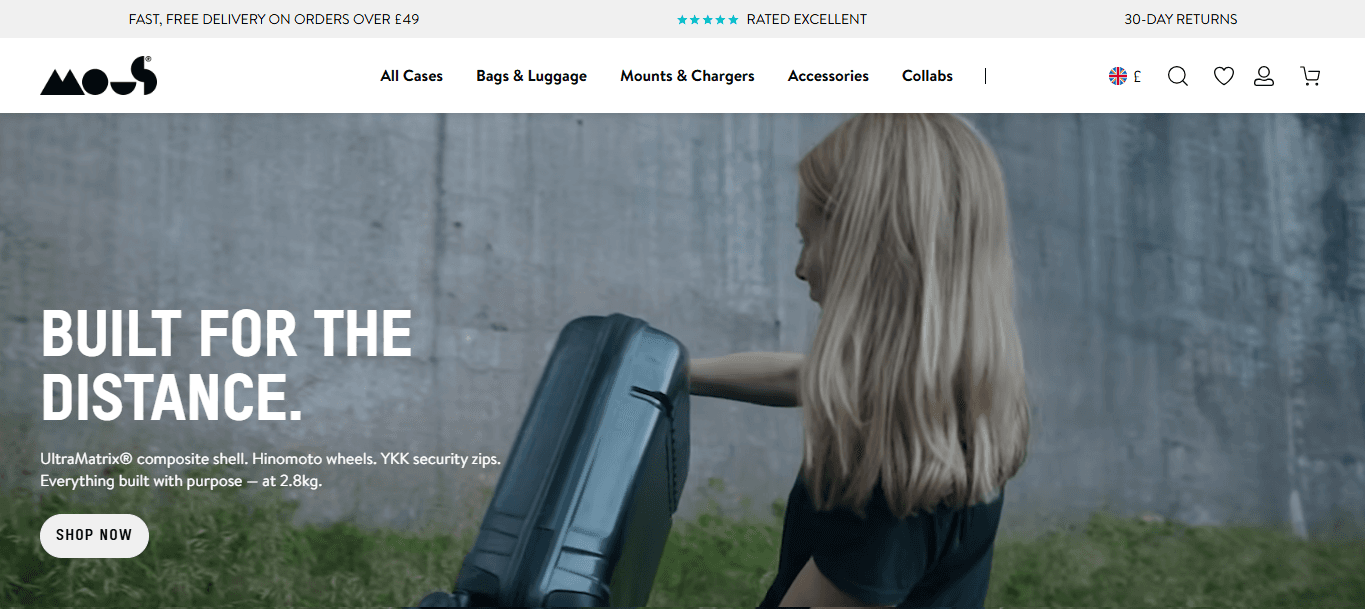
Founded: 2015 by James Griffith and Will Rooke
Estimated revenue: £30M+ annual
Target markets: UK, US, EU, AU
Phone case engineering as a performance brand. Mous made viral drop tests of their content engine, and converted that into a multi-device Shopify Plus operation with cross-sell logic per phone model. Device-detection-driven PDPs that show only compatible cases, removing the #1 confusion point in phone accessory commerce.
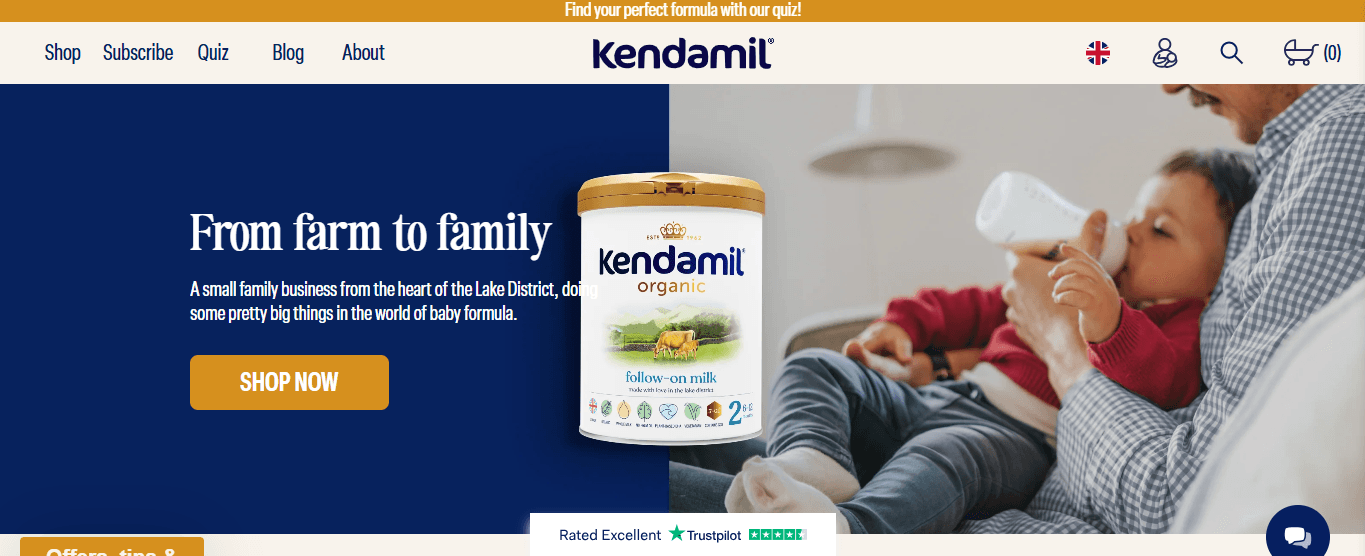
Founded: 1962 (modern relaunch by Will and Ross McMahon)
Estimated revenue: £100M+ (UK infant formula)
Target markets: UK, US, EU, UAE
The Lake District-made infant formula that became a US-policy story during the 2022 formula shortage (the Biden administration approved emergency Kendamil imports). The Kendamil brand runs Shopify Plus as a multi-region operation. Stage-by-stage merchandising on the storefront, newborn, follow-on, toddler with the relevant compliance language localised per market.
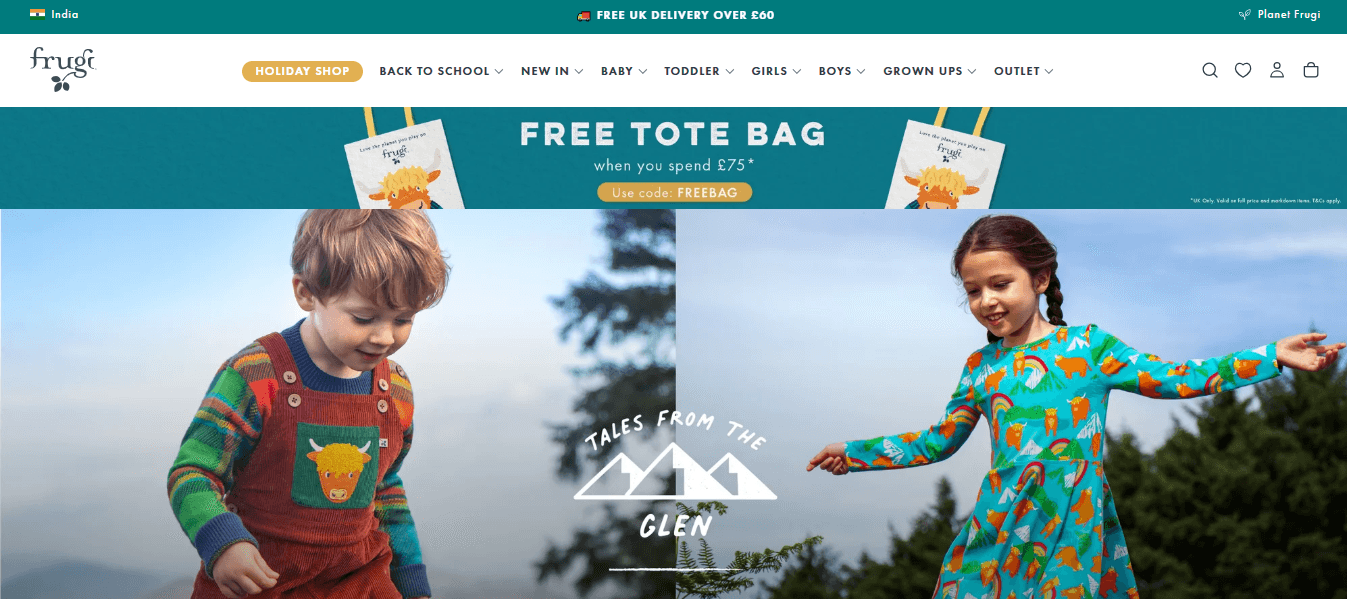
Founded: 2004 by Kurt and Lucy Jewson in Cornwall
Estimated revenue: £20M+ (organic children's clothing)
Target markets: UK, US, EU, AU
Cornwall's organic children's clothing brand, GOTS-certified, B-Corp, and one of the UK's oldest DTC ethical fashion labels for kids. Frugi runs Shopify Plus with a size-progression subscription mechanic, register a baby's date of birth, receive age-appropriate outfits as they grow. Family-lifecycle commerce on Plus.
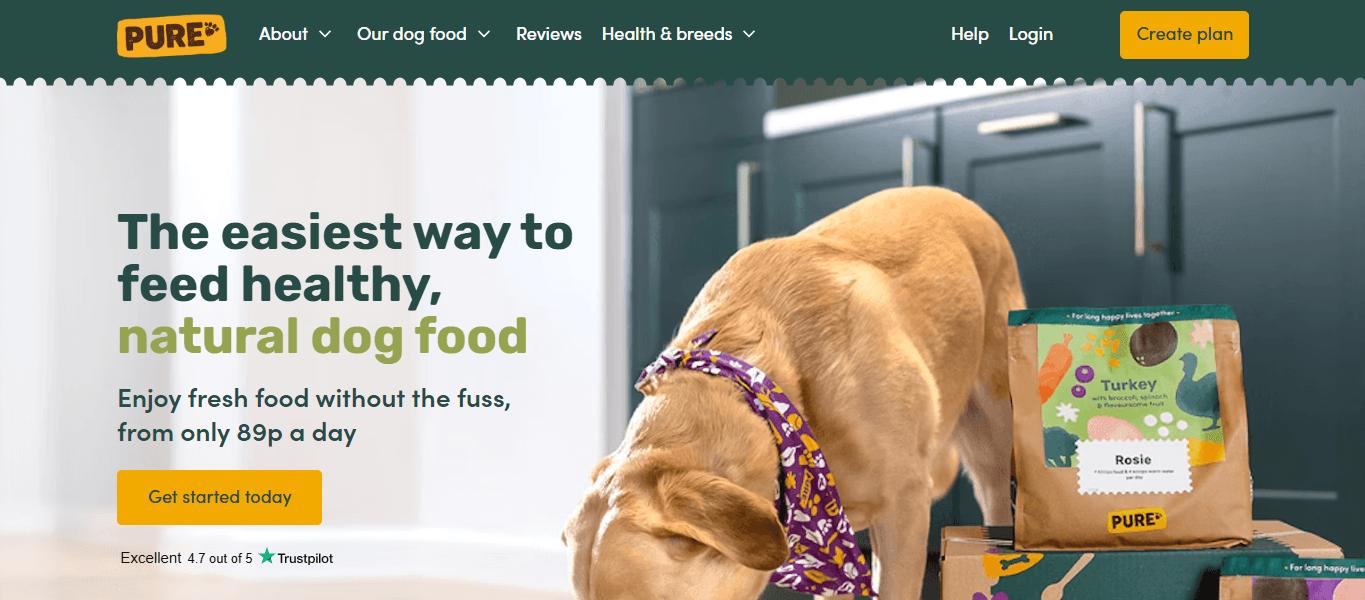
Founded: 2013 by Mat Bennett, Andrew Cope, and Damien Phillips in Hull
Estimated revenue: £30M+ (premium dog food DTC)
Target markets: UK
The “fresh” UK dog food category leader, air-dried, human-grade, subscription. Pure Pet Food runs Shopify Plus with a personalised-meal-plan engine that takes a dog’s age, breed, weight, and allergens at signup and ships a subscription tailored to the pet. The at-signup quiz is the cleanest pet-food personalisation flow on Shopify in the UK.
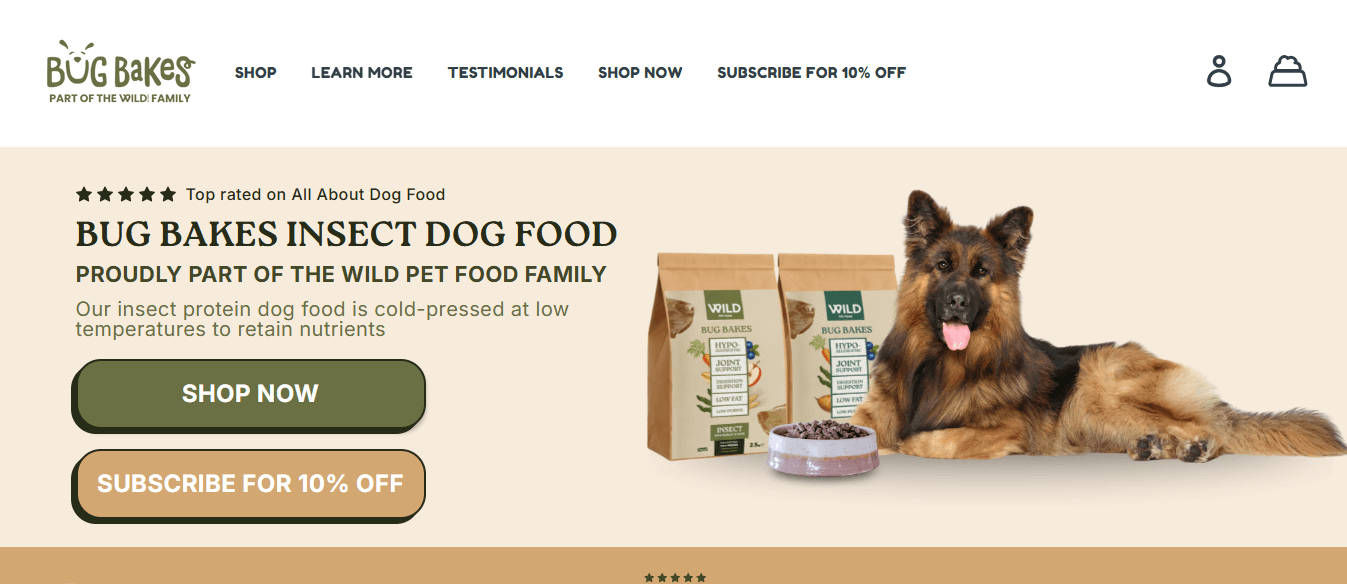
Founded: 2019 by Aneisha Soobroyen and Jorge Prieto in London
Estimated revenue: £5M+ (insect-protein dog food)
Target markets: UK
Insect-protein dog food, the sustainability-first category the UK trade press has spent 2025 covering. Bug Bakes runs Shopify Plus with a subscription model and an education-heavy storefront, the customer journey involves reading before buying, and the storefront is designed for that. A small brand with an outsized brand narrative on Plus.
Five things stand out across the 50+ list.
1. Custom theme work dominates the top 25. Almost no brand in the top half of this list runs a stock theme. Gymshark, Charlotte Tilbury, Pangaia, Castore, Trinny London, Sunspel, Beauty Pie, Bloom & Wild, Adanola, all sit on extensively customised or fully headless builds. At scale, Shopify is the runtime; the customer-facing layer is engineered. The takeaway. If you're at the top of your category, your theme is a competitive asset, not a download.
2. Shopify Plus is the default at £10M+. Every brand we verified above the £10M GMV threshold is on Plus. The ones who aren't on Shopify (Monica Vinader, Aspinal of London, parts of THG) tend to be on legacy enterprise stacks predating the Plus platform's maturity. New entrants pick Plus.
3. Beauty and food are the fastest-growing categories. Beauty (Charlotte Tilbury, Trinny, Glossier UK, Refy, Faith In Nature, Wild, Iconic, Beauty Pie) and food (Huel, Bulk, Pact, Pip & Nut, Beavertown, Twinings, Kendamil, Bloom & Wild) carry disproportionate weight in our top 30. Both reward subscription, content, and community mechanics, areas Shopify Plus has invested in hardest.
4. Headless is no longer rare. Five years ago, "headless Shopify" was an enterprise novelty. In our top 25, you'd be hard-pressed to find a brand that hasn't either gone fully headless via Hydrogen or split out major journeys (search, PDPs, checkout) from a custom front end. The platform has become the API, and the front end is whatever the brand wants.
5. Sustainability is a checkout-level commitment, not a content slot. Pangaia's material callouts. Allbirds' carbon labelling. Vivobarefoot's ReVivo. Faith In Nature's refill toggle. Wild's flavour-swap subscription. Tala's material-mix percentages. Finisterre's "Lived & Loved" pre-loved section. Frugi's GOTS certification on every PDP. Bug Bakes' insect-protein storytelling. The pattern. Sustainability shows up in the product spec on the page, not in a brand video buried in the footer. Shopify's flexibility is what lets these brands ship that integration without forking off into a side stack.
The UK has produced some of Shopify's most celebrated success stories. Gymshark, Huel, Castore, Charlotte Tilbury, Beauty Pie, Adanola all started here. The UK market embraces DTC brands with strong ethical or lifestyle identities, and Shopify's flexibility, to tell a brand story while delivering seamless commerce, makes it the natural platform of choice.
For brands targeting the UK and the US and the UAE and the EU simultaneously, Shopify Plus offers the cleanest multi-market setup in the industry. Strathberry, Pangaia, Kendamil, Self-Portrait, Sunspel, and Charlotte Tilbury all run UK-anchored D2Cs that ship to four+ regions on a single Plus instance, with localised currencies (GBP, USD, AED, EUR), languages, and tax handling, without a separate platform per geography.
Shopify Markets, built into Shopify Plus, lets a UK brand operate fully localised storefronts for the UK, US, UAE, and EU from one admin. Local pricing in GBP, USD, AED, and EUR; languages and tax calculations handled automatically; one SKU master, one customer database, one analytics view. No separate platforms. No fragmented data. One platform, global scale.
Three takeaways for the operator reading this.
1. Shopify is enterprise-grade in the UK. If the question is whether the platform can hold up at £10M, £50M, £200M+ GMV, the answer is in the first ten entries on this list. The infrastructure isn’t your bottleneck. Whether you’ve engineered the experience to convert is.
2. The brands winning on Shopify treat it like a runtime, not a template. Gymshark, Charlotte Tilbury, Castore, Sunspel, none of them shipped a stock theme and called it done. The competitive edge comes from how you customise the storefront, the checkout, the subscription logic, and the content-to-commerce path. The platform handles the heavy lifting; the build is yours.
3. Replatforming is solved on the way in, not on the way up. Every brand in this list that migrated did it earlier than they “had to.” The teams that wait until their old platform breaks tend to do migrations under duress. The ones who lead from this list moved when they were ready to scale, not when they were forced.
If you’re sitting on a Magento 1 migration deadline, a custom-built monolith you’ve outgrown, or a Shopify Standard store that’s hit Plus-sized problems, the playbook in this list is the one to copy.
Huptech Web is a Shopify Plus partner agency for ambitious UK and global brands. We've shipped 420+ stores and engineered $200M+ in revenue impact. Every store we build has one goal. Revenue.
If that's the conversation, talk to a Shopify expert. Partners, not vendors. That's it. That's the pitch.
Yes. Shopify powers a meaningful share of UK D2C commerce, from heritage brands (Cambridge Satchel, Sunspel, Twinings) to category-defining D2Cs (Gymshark, Huel, Charlotte Tilbury, Beauty Pie) to Drapers Hot 100 newcomers (Damson Madder, Refy, Adanola). The 50+ brands in this list are illustrative, not exhaustive, Shopify's UK roster runs into thousands of stores at meaningful scale.
Shopify Plus is the enterprise tier with custom checkout, dedicated infrastructure, multi-store/region orchestration, Shopify Functions, advanced API access, unlimited staff accounts, and priority support. UK Plus customers documented or verified in this list include Gymshark, Charlotte Tilbury, Huel, Castore, Rapha, Pangaia, Trinny London, Sunspel, Strathberry, Glossier UK, Cambridge Satchel, Beauty Pie, Bloom & Wild, Adanola, and the majority of the top 30 entries.
By revenue, Gymshark, at £500M+ annual revenue and a £1B+ valuation, it's the UK's flagship Shopify Plus DTC. Charlotte Tilbury (£300M+), Huel (£200M+), Beauty Pie (£150M+), Bloom & Wild (£120M+), Castore (£100M+), Loaf (£100M+), Bulk (£100M+), Joseph Joseph (£100M+), and Kendamil (£100M+) are also nine-figure UK Shopify operations.
Inspect the page source. Look for cdn.shopify.com references in and
No. The list above includes a publicly-traded company (Allbirds, Nasdaq-listed), a Puig-owned beauty empire (Charlotte Tilbury), a Heineken-stake-held brewer (Beavertown), a Unilever-acquired DTC (Wild), and an Associated British Foods heritage brand (Twinings). "Small business platform" is a 2014 framing of Shopify. The reality in 2026 is enterprise.
Yes, and the evidence is in this list. Victoria Beckham, Wales Bonner, Self-Portrait, Sunspel, Strathberry, Beauty Pie, and Charlotte Tilbury all use Shopify Plus for editorial-quality, bespoke storefronts. Shopify's fully customisable themes and headless commerce capabilities allow luxury brands to build experiences indistinguishable from a £1M custom platform, with the operational reliability of an enterprise platform underneath.
Yes, at scale. Gymshark processes thousands of orders per minute during Black Friday on Shopify Plus. Glossier's product launches drive surges that frequently broke their previous platform. Lick handled the 2020 lockdown DIY surge. Refy absorbs TikTok spikes. Bloom & Wild absorbs the largest single-day gifting spikes in UK ecommerce (Valentine's, Mother's Day) without an outage. Shopify's 99.9% uptime SLA and globally-distributed elastic infrastructure mean the platform doesn't crash, regardless of demand.
Shopify Markets, available to Shopify Plus merchants, lets a UK brand operate localised storefronts for the UK, US, UAE, and EU from a single admin, local currencies (GBP, USD, AED, EUR), languages, taxes, and compliance handled automatically. Charlotte Tilbury, Pangaia, Strathberry, Castore, Sunspel, and Self-Portrait all run multi-region UK-anchored Shopify Plus operations.
By cultural relevance, scored 1-10 across five sub-factors. UK consumer awareness, mainstream and trade press footprint, founder profile and origin story, category leadership, and longevity. Weighted average produced the order. Editorial judgment, not GMV or traffic.
The list refreshes quarterly. Q1 covers founders/funding for the top 20. Q2 re-verifies all 50+. Q3 swaps the weakest five to ten entries. Q4 is a full re-rank for the year-end edition. Reach out via the Huptech Web contact page for consideration.
Pet care and functional food. Pure Pet Food and Bug Bakes are on this list. Watch for Lily's Kitchen DTC, Wellbeloved, Kavee, and Butternut Box gaining trade press traction in 2025-2026. In functional food, Trip, Symprove UK, and Free Soul are building strong DTC footprints on Shopify Plus. Expect a stronger pet-care and functional-food representation in the 2027 edition.
Ten new entries reflect the brands that gained the most cultural and commercial ground in the last 12 months. Adanola (Manchester athleisure), Nobody's Child (sustainable womenswear with the Holly Willoughby collab), Percival Menswear (content-heavy menswear), Beauty Pie (member-only luxury beauty), Bloom & Wild (letterbox flowers group), Ruggable UK (washable rugs), Frugi (organic children's clothing), Bug Bakes (insect-protein pet food), and rank shifts across the top 30 based on updated revenue and cultural-relevance scoring.


Drop your details and we'll email the download link straight to your inbox.